Connect with us

Culture

Yul Edochie Traditional Rulers Remark Sparks Emotional Debate on Igbo Customs

Published

on

Yul Edochie traditional rulers

Yul Edochie traditional rulers appeal urges return to ancestral Igbo customs, rejecting government interference and elections in monarch selection

Yul Edochie traditional rulers appeal has triggered widespread reactions after the controversial Nollywood actor urged the Igbo community to return to ancestral methods of selecting traditional leaders.

Also read: Ekiti traditional rulers pledge to support Oyebanji on tourism development

In a passionate Instagram post, Edochie criticised the increasing use of elections and political influence in the installation of monarchs across Igbo land.

The actor and filmmaker, who has never shied away from controversy, insisted that only the deities and age-old customs should determine who wears the crown.

“A traditional ruler must be selected traditionally, not by election or the government. He must be a core traditionalist,” he declared.

Edochie warned that entrusting traditional leadership to modern political systems weakens the sacred institutions and values that once held communities together.

He lamented the erosion of indigenous identity and spiritual connection, blaming it for the growing levels of disorder and crime.

“We have embraced too many of the white man’s ways and destroyed our society with it. That’s why there’s so much crime in our communities today,” he wrote.

His words resonated with some who feel that traditional institutions have lost their legitimacy due to political interference.

In the post, Edochie described what he believed to be the proper process of choosing a traditional ruler. According to him, the deity of the land must play a central role in the selection.

The chosen leader must then take an oath before the gods, pledging to uphold truth, peace, and unity.

He further stated, “A traditional ruler must be selected by the deity of the land. Then he will swear before the deity… Any day he goes against the oath, the deity will strike him down.”

He argued that such divine accountability ensures rulers serve the people honourably.

His appeal has reignited conversations around the authenticity and relevance of traditional institutions in modern Nigeria. Critics of the current system argue that monarchs are now often installed based on political affiliations, wealth, or manipulation, not community consensus or ancestral tradition.

Supporters of Edochie’s view say that a return to spiritual selection would eliminate corrupt leaders and restore community trust. However, others feel that integrating democratic principles offers checks and balances that prevent abuses of power.

This is not the first time Edochie has courted controversy over traditional or religious matters. He previously made headlines for claiming a divine calling to lead a revival of ancestral worship in Nigeria.

His recent remarks have once again divided public opinion between those who admire his boldness and those who see his ideas as impractical or regressive.

“This idea of rulers taking oaths before the gods could bring back honesty in leadership,” said one follower. “Modern politics has made everything a business.”

Another user disagreed, calling Edochie’s view “dangerous” and “backward,” warning that a return to spiritualism could open the door to exploitation.

Nonetheless, the actor’s comments have opened an emotional national debate, especially among the Igbo who value both tradition and modern governance.

Many communities continue to struggle with the balance between respecting their roots and adapting to democratic governance.

As traditional leadership remains a crucial part of cultural identity in Nigeria, the method of selecting monarchs may remain a contentious issue for years to come.

Also read: Ooni Charges Government On Constitutional Roles For Traditional Rulers Over Insecurity

Whether Edochie’s vision will inspire any meaningful change is yet to be seen, but his voice has once again stirred the waters of cultural discourse.

Continue Reading
Click to comment

Leave a Reply

Culture

Ofala festival: Obi of Onitsha marks 25 Years on throne

Published

on

 Ofala Festival 2026 celebrated Onitsha’s royal heritage as Obi Nnaemeka Achebe marked 25 years on the throne and addressed Nigeria’s economic challenges.

(more…)

Continue Reading

Culture

Crowds Gather for Rare Sunrise at Egypt’s Abu Simbel Temple

Published

on

Abu Simbel

Hundreds of tourists gathered at Egypt’s Abu Simbel temple to witness the twice-yearly sunrise ceremony illuminating Pharaoh Ramses II’s statue

Hundreds of tourists gathered at Egypt’s Abu Simbel temple on Thursday to witness a spectacular sunrise phenomenon in which sunlight illuminated the face of the statue of Pharaoh Ramses II, an event that occurs only twice a year.

Also read: 16 Famous Cultural Festivals That Define India

The ancient astronomical ceremony drew visitors from different parts of the world to the archaeological site in southern Egypt on October 22, one of two dates associated with the phenomenon.

The second occurrence takes place on February 22, when the rising sun illuminates the temple’s interior.

Egyptian tour guide Yasser Fouad described the occasion as extraordinary, saying some visitors had stayed overnight to secure the opportunity to witness the event.

“Today is an extraordinary day, everyone is keen, there are people who stayed over the night, foreigners who actually spent the night in Abu Simbel to see this phenomenon,” Fouad said.

The Great Temple of Ramses II at Abu Simbel dates back to the 13th century BC and is among Egypt’s most prominent archaeological attractions.

Built during the reign of Ramses II, one of ancient Egypt’s most powerful pharaohs, the temple is renowned for its monumental statues and sophisticated architectural design.

The twice-yearly sunrise phenomenon is a major attraction, drawing visitors eager to witness the interaction between sunlight and the temple’s ancient structure.

The dates have traditionally been associated with significant moments in Ramses II’s life.

October 22 is commonly linked to his birthday, while February 22 is associated with his accession to the throne.

However, the precise historical reasons behind the dates remain debated.

Some archaeologists have proposed alternative explanations, including that they may have marked the pharaoh’s coronation and birthday.

Abu Simbel underwent a major international rescue operation in the 1960s, when archaeologists and engineers relocated the temples to protect them from flooding caused by the construction of the Aswan High Dam.

The monumental structures were cut into large blocks and reassembled at a higher location, preserving the site for future generations.

The relocation was one of the most significant archaeological preservation projects of the 20th century.

Despite the move, the temple continues to attract visitors for its ancient Egyptian art, monumental architecture and remarkable alignment with the rising sun.

Also read: 16 Famous Cultural Festivals That Define India

The annual gatherings highlight the enduring appeal of Egypt’s archaeological heritage and the continuing fascination with the astronomical knowledge and engineering achievements of its ancient civilisation.

Continue Reading

Culture

16 Famous Cultural Festivals That Define India

Published

on

India

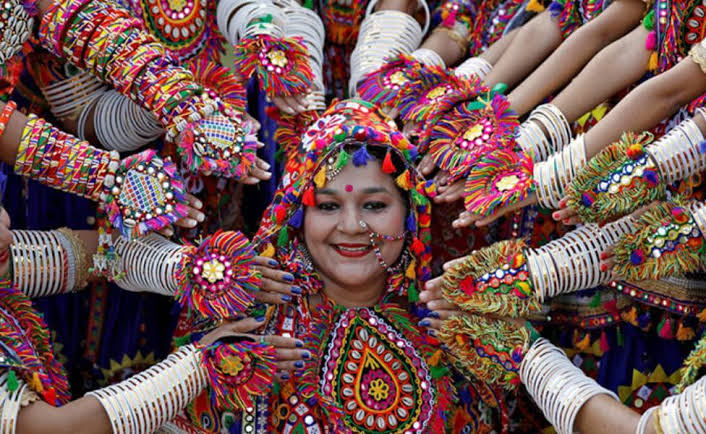
Discover 16 famous cultural festivals in India, from Diwali and Holi to Rath Yatra and the Pushkar Camel Fair, celebrating the country’s rich heritage (more…)

Continue Reading

Trending