Connect with us

Culture

Ojora Dethrones Six Chiefs for Political Disloyalty at Labour Party Campaign

Published

on

Ojora Dethrones Six Chiefs

Ojora dethrones six chiefs for violating palace protocol by attending a Labour Party event without royal consent, citing impersonation and insubordination

Ojora dethrones six chiefs after their unauthorised appearance at a Labour Party campaign flag-off in Apapa, Lagos.

Also read: You’re wrong, Aworis are Lagos’ first settlers, Lagos monarch counters Oba of Benin

The monarch, Oba AbdulFatai Oyegbemi, accused them of impersonating him and flouting palace protocol by attending the event without prior royal consent.

The affected titleholders are Chief Lateef Ojora (Bale Alaba Oro), Chief Saliu Biliamin (Bale Alafia Dodoro), Chief Taiwo Hassan (Bale Oke Ira), Chief Idris Ojora (Bale Abule Kere), Chief Hakeem Oseni (Bale Mosafejo Amukoko), and Chief Sule Balogun (Balogun of Abule Kere).

In a statement issued after a decisive palace meeting on Monday, the traditional ruler condemned the actions of the six chiefs, describing their conduct as a breach of duty and a disrespect to the throne they represent.

“Following the outcome of this event, which unfolded without his prior knowledge, Kabiyesi Ojora summoned the Bales, Balogun, and the Ojora Councils to his ancient Palace for clarification,” the statement read.

The monarch expressed strong disapproval of the chiefs’ participation in partisan political activity in his name. He clarified that such actions were neither authorised nor reflective of the values of the Ojora Kingdom.

“In a tone marked by disappointment and authority, Kabiyesi stated that the Chiefs’ actions were in violation of their duties,” the palace noted.

“He reiterated that no Chief should make decisions or act on his behalf without his explicit consent, as they all serve to represent him and uphold the traditions of the land.”

The dethronement, according to the palace, serves as a stern warning and an effort to preserve discipline within the traditional institution.

The Ojora emphasised the need for all chiefs to remain loyal to the palace and refrain from aligning with any political party unless officially sanctioned.

Oba Oyegbemi used the opportunity to restate his support for the current administration in Lagos State.

He praised the ongoing development projects within Ojora Land and affirmed his palace’s commitment to stability and good governance.

“During this assembly, Kabiyesi also took the opportunity to commend the present Government’s ongoing development initiatives in Ojora Land, expressing his commitment to continue supporting the Administration as it fosters growth and progress for the Kingdom,” the statement added.

This episode has sparked renewed debate over the role of traditional rulers and their representatives in the political space.

While some observers argue for complete neutrality, others believe traditional institutions must engage with politics to protect communal interests.

Oba Oyegbemi concluded his message by stressing the importance of transparency, unity, and decorum among palace officials, particularly when engaging in public or political events.

He reminded all traditional titleholders of their sacred responsibilities, warning that any further breach of protocol will attract similar or more severe consequences.

The action taken by the Ojora of Ijora and Iganmu underscores a larger effort among Nigeria’s traditional rulers to reassert their authority amid increasing political involvement by royal representatives.

As the 2027 election cycle looms, observers expect more scrutiny on the roles traditional leaders play behind the scenes.

Also read: Ooni asks Obi, Atiku followers to embrace Tinubu’s govt.

With this trending across social platforms, the palace has reaffirmed its control and sent a clear message to all who serve under its revered institution.

Continue Reading
Click to comment

Leave a Reply

Culture

Ofala festival: Obi of Onitsha marks 25 Years on throne

Published

on

 Ofala Festival 2026 celebrated Onitsha’s royal heritage as Obi Nnaemeka Achebe marked 25 years on the throne and addressed Nigeria’s economic challenges.

(more…)

Continue Reading

Culture

Crowds Gather for Rare Sunrise at Egypt’s Abu Simbel Temple

Published

on

Abu Simbel

Hundreds of tourists gathered at Egypt’s Abu Simbel temple to witness the twice-yearly sunrise ceremony illuminating Pharaoh Ramses II’s statue

Hundreds of tourists gathered at Egypt’s Abu Simbel temple on Thursday to witness a spectacular sunrise phenomenon in which sunlight illuminated the face of the statue of Pharaoh Ramses II, an event that occurs only twice a year.

Also read: 16 Famous Cultural Festivals That Define India

The ancient astronomical ceremony drew visitors from different parts of the world to the archaeological site in southern Egypt on October 22, one of two dates associated with the phenomenon.

The second occurrence takes place on February 22, when the rising sun illuminates the temple’s interior.

Egyptian tour guide Yasser Fouad described the occasion as extraordinary, saying some visitors had stayed overnight to secure the opportunity to witness the event.

“Today is an extraordinary day, everyone is keen, there are people who stayed over the night, foreigners who actually spent the night in Abu Simbel to see this phenomenon,” Fouad said.

The Great Temple of Ramses II at Abu Simbel dates back to the 13th century BC and is among Egypt’s most prominent archaeological attractions.

Built during the reign of Ramses II, one of ancient Egypt’s most powerful pharaohs, the temple is renowned for its monumental statues and sophisticated architectural design.

The twice-yearly sunrise phenomenon is a major attraction, drawing visitors eager to witness the interaction between sunlight and the temple’s ancient structure.

The dates have traditionally been associated with significant moments in Ramses II’s life.

October 22 is commonly linked to his birthday, while February 22 is associated with his accession to the throne.

However, the precise historical reasons behind the dates remain debated.

Some archaeologists have proposed alternative explanations, including that they may have marked the pharaoh’s coronation and birthday.

Abu Simbel underwent a major international rescue operation in the 1960s, when archaeologists and engineers relocated the temples to protect them from flooding caused by the construction of the Aswan High Dam.

The monumental structures were cut into large blocks and reassembled at a higher location, preserving the site for future generations.

The relocation was one of the most significant archaeological preservation projects of the 20th century.

Despite the move, the temple continues to attract visitors for its ancient Egyptian art, monumental architecture and remarkable alignment with the rising sun.

Also read: 16 Famous Cultural Festivals That Define India

The annual gatherings highlight the enduring appeal of Egypt’s archaeological heritage and the continuing fascination with the astronomical knowledge and engineering achievements of its ancient civilisation.

Continue Reading

Culture

16 Famous Cultural Festivals That Define India

Published

on

India

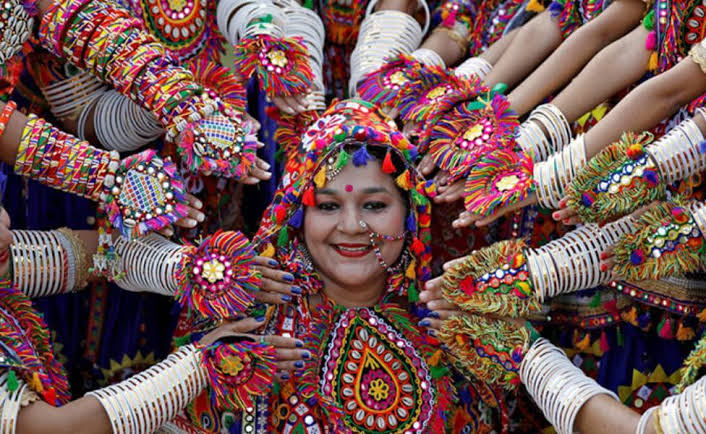
Discover 16 famous cultural festivals in India, from Diwali and Holi to Rath Yatra and the Pushkar Camel Fair, celebrating the country’s rich heritage (more…)

Continue Reading

Trending