
Travels
Most visited countries in 2023: France leads global tourism

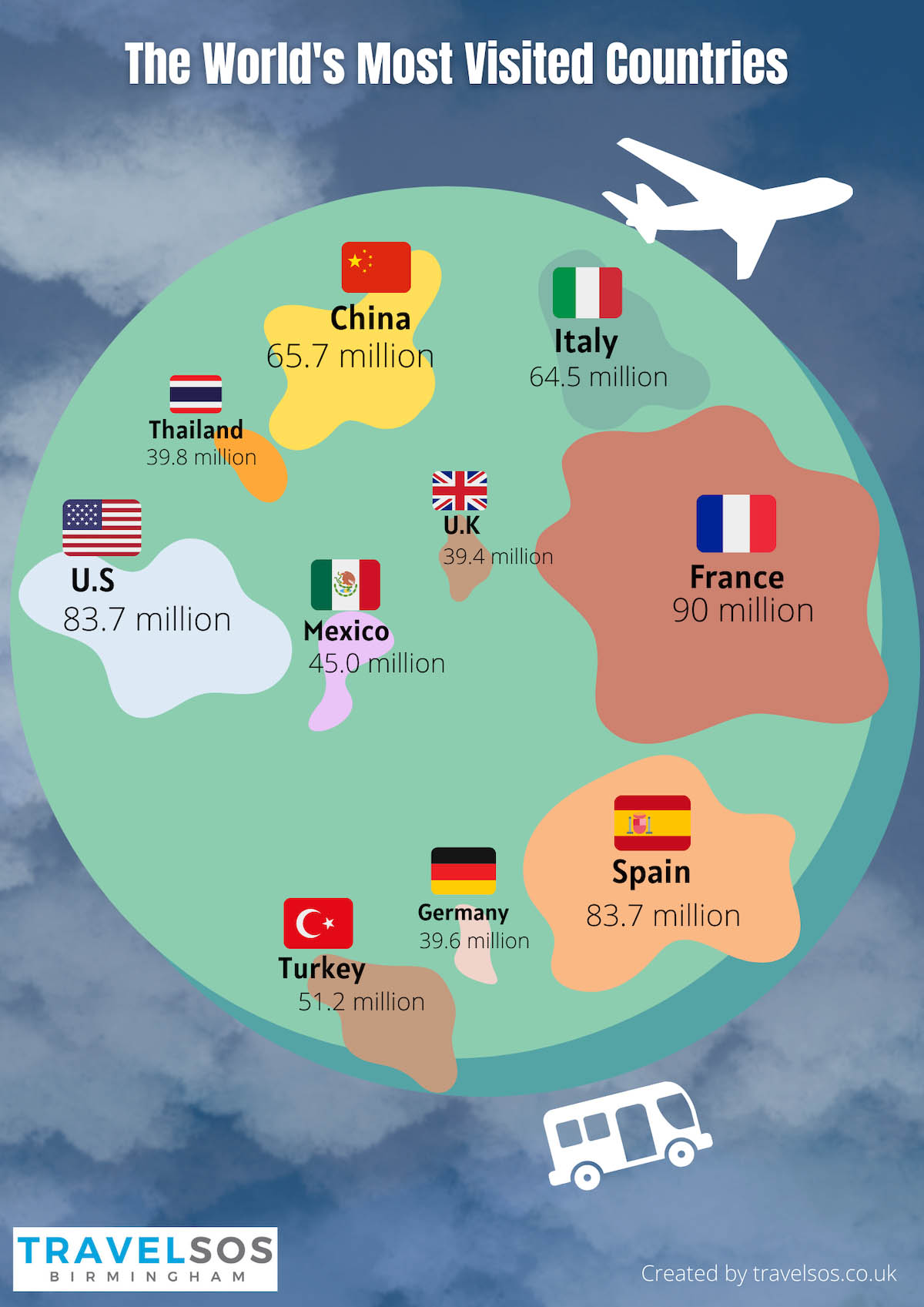
The expansion of commercial aviation has made global travel more accessible, contributing to a record 1.3 billion tourists in 2023. France topped the list with 100 million visitors, followed by Spain (85 million) and the United States (67 million). Europe remains the most popular destination, with seven of the top 10 countries located in the region. The data, compiled from the UN World Tourism Organization, highlights the global tourism trends post-COVID.
The rapid expansion of commercial aviation has revolutionised global travel, making once-distant destinations easily accessible to millions.
In 2023, global tourism surged to an unprecedented level, with 1.3 billion inbound tourists recorded worldwide. This remarkable figure reflects a growing interest in experiencing diverse cultures, landscapes, and landmarks across the globe.
According to data compiled by the World Tourism Organization (UN Tourism) and China’s National Immigration Administration, Europe emerged as the top region for global travellers.
Seven out of the top ten most-visited countries are European, underscoring the continent’s enduring appeal.

France maintained its status as the world’s leading tourist destination, attracting a staggering 100 million visitors in 2023.
This number is expected to hold steady or even increase in 2024, bolstered by the Paris Olympics in July and August. Spain followed closely behind, with 85 million tourists visiting the country last year. The United States secured third place with 67 million international arrivals.
China, once a top global destination, saw a significant drop in tourism due to strict COVID-19 restrictions. The country welcomed 35.5 million visitors in 2023, down from 65.7 million in 2019.
Notably, no countries from Africa, South America, or Oceania made it onto the top 10 list for 2023. Europe’s dominance in tourism remains clear, as international visitors flock to its historical, cultural, and scenic attractions.






Ofala festival: Obi of Onitsha marks 25 Years on throne

Crowds Gather for Rare Sunrise at Egypt’s Abu Simbel Temple

16 Famous Cultural Festivals That Define India


 Culture4 years ago
The Four Igbo Market Days and Their Significance In Omenala ÌGBÒ
- Business4 years ago
Ooni of Ife Discusses Business and Peace Initiative in Kenya
- Events4 years ago
Glamour, glitz as B’obagunwa Omo’ba Obinrin Akile Ijebu celebrates New Year party (Photos)
- Culture4 years ago
Outrage as Ezendigbo of Ibadanland confers chieftaincy title on Olubadan
- Events4 years ago
Onitoomu of Ito-Omu installs two new chiefs (Video, Photos)
- Events2 years ago
Egbe Bobasete: The New Fashion Sensation Elevates 2024 Ojude Oba Festival (Video, Photos)
 Events3 years ago
NANTAP Convention 2023: Reshaping Nigerian Theatre Arts for economic growth
- Paranormal4 years ago
Black Cat Superstition: Good and Bad Luck Beliefs


