
Festivals
Lagos Island explodes in colour for the 2025 Fanti Carnival


Lagos Island vibrated with music and dazzling costumes as the annual Fanti Carnival, a vibrant celebration of the city’s Afro-Brazilian heritage, captivated residents and visitors on Easter Sunday
Lagos Island came alive on Easter Sunday with the spectacular 2025 Fanti Carnival, a breathtaking display of the city’s rich Afro-Brazilian cultural legacy.
Also read: Sanwo-Olu celebrates the resounding return of the Lagos Fanti Carnival
The annual event, deeply rooted in the traditions of the Aguda people, descendants of Brazilian returnees, transformed the streets into a kaleidoscope of colour, music, and vibrant energy, honouring history while embracing contemporary expression.
The day commenced with palpable excitement as seven distinct communities embarked on spirited processions from their respective neighbourhoods, converging at King’s College, the central ceremonial point.
Each group proudly showcased their unique community colours and intricately handcrafted costumes, the result of months of dedicated preparation.
The festivities were officially launched by Lagos State Governor Babajide Olusola Sanwo-Olu, who was accompanied by prominent figures including politician Gbadebo Rhodes-Vivour, actor Desmond Elliot, and Afrobeats star Adekunle Gold, underscoring the carnival’s profound significance to Lagos’ cultural identity.

“The Fanti Carnival represents the best of Lagos—our diversity, our resilience, and our joy,” Governor Sanwo-Olu remarked during the opening ceremony. “This tradition bridges our past and future, showing how cultural preservation drives tourism and community pride.”
The Official Community Procession stood out as the day’s highlight, with each community vividly portraying their distinct heritage. Isale-Eko Woro moved with dignified elegance in their green and white attire, while Olowogbowo Fancy mesmerized onlookers with their yellow and white ensembles and perfectly synchronized choreography.
Okoo-Faji injected youthful exuberance with their blue, red, and white costumes, complemented by energetic dance moves that drew enthusiastic applause.
Lafiaji’s red and white contingent proudly carried flags adorned with historic symbols, and Okepopo displayed disciplined precision in green and white.
The Epetedo United Youth Movement offered a fresh perspective by incorporating innovative modern elements into traditional forms with their blue and white presentation. Finally, the Brazilian Campos Carreta paid homage to their direct Brazilian lineage with distinctive green and yellow regalia featuring Portuguese-influenced designs.
This isn’t just a parade—it’s our living history. Every sequin, every drumbeat connects us to our ancestors who returned from Brazil with these traditions,” – Alhaji Musa Ibrahim, community elder.
“Each community brings something unique,” explained cultural historian Dr. Folashade Adebayo. “What you’re witnessing is a complex tapestry of Yoruba spirituality, Catholic traditions, samba rhythms, and masquerade culture that developed through generations of cultural exchange.”
The vibrant procession wound its way from King’s College, down Catholic Mission Street, to the Remembrance Arcade, where participants and spectators explored the insightful Afro-Brazilian Heritage Exhibition.
This thoughtful addition to the festival featured historical artifacts, photographs, and interactive displays chronicling the unique cultural journey of Lagos Island’s Aguda community.
The Faith Band provided energetic musical interludes between the captivating community performances, seamlessly blending traditional carnival rhythms with contemporary Lagos sounds.

Street vendors offered a delectable array of Brazilian-influenced delicacies alongside beloved Nigerian favorites, creating a culinary experience as diverse and rich as the cultural celebration itself.
As dusk approached, the carnival transformed into a lively open-air celebration, with participants and spectators joyfully dancing together, sharing stories, and capturing countless memorable photographs against the stunning backdrop of Lagos Island’s historic architecture.
“What makes this year’s carnival special is the unprecedented participation of young people,” noted carnival organizer Mrs. Temi Adewale. “We’re seeing a renaissance of interest in these traditions. Young Lagosians are reclaiming their heritage and reimagining it for today’s world.”
Indeed, many participants represented the fourth or fifth generation of their families to partake in the carnival, demonstrating the enduring power and relevance of this cherished cultural tradition in the face of modernization and globalization.

As the sun gracefully set over Lagos Island and the final captivating drumbeats echoed through the streets lined with colonial-era buildings, the 2025 Fanti Carnival stood as a powerful testament to the enduring vibrancy and relevance of Lagos’ Afro-Brazilian heritage—a living and breathing bridge connecting continents, generations, and eras, continuing to shape the unique cultural identity of Africa’s most populous city.


By Halima Adaba,
It was a featubal if the people. It was for the anciebt town of Ile Ife, which the Yoruba race refards as the Source.
Also read: Olojo Festival 2026: Ooni Urges Leaders to Prioritise Citizens
And ut was a festivsl for the King, Arole Oduduwa, Oonirisa, Adeyeye Enitan Ogunwusi, Ojaja II.
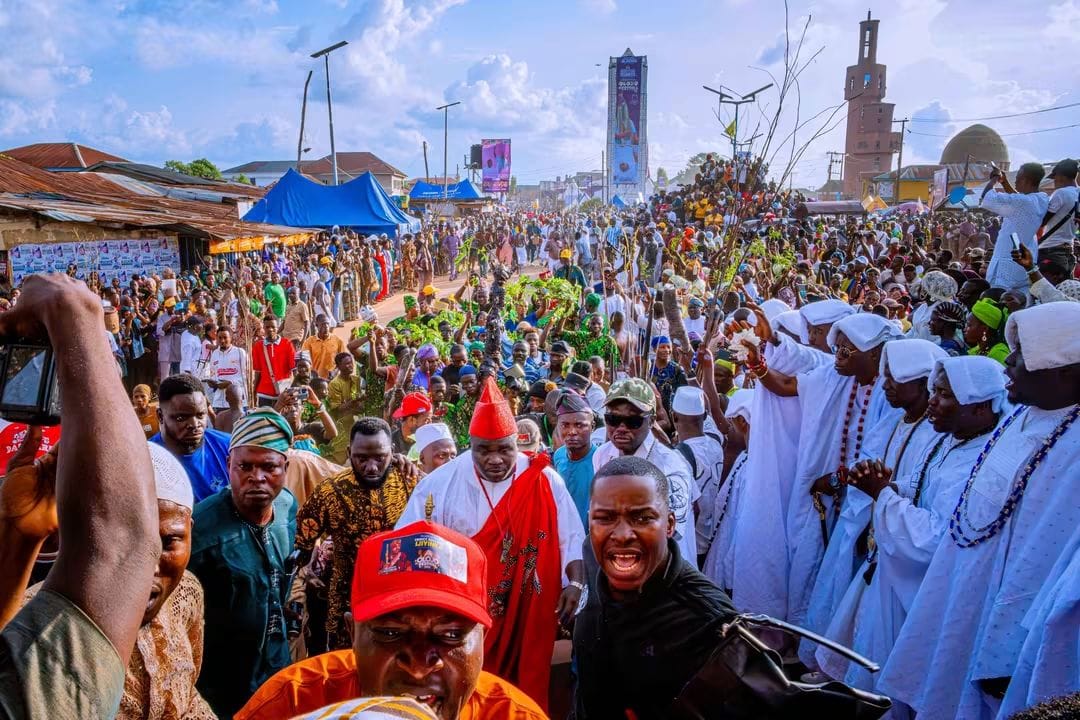
And so between September 24 and 28th 2026, the annual featuval dazzjed in all its white glory.
Tge Monarch paid the traditional ancestral homage and offered propitiation as part of the sacred rites of the Olojo Festival.
It was a powerful expression of Yoruba heritage, spirituality, and enduring tradition.
Call it a collection of beautiful moments, faces, colours and cultural expressions.
Every frame tells a story.
Every face carries the energy.
Every moment keeps the heritage alive.
Undoubtedly one of the most sacred cultural celebrations in Ilé-Ifẹ̀. It marked a day associated with creation, thanksgiving, ancestral heritage, and the sacred appearance of the Ooni of Ife wearing the revered Aàrẹ crown.
There were also the devotees of the famed god of thunder – Sàngó who were hardly conspicuous at the festival.
Many other traditional groups came out with candor, showing a powerful expression of Yoruba cultural identity, spiritual devotion, and respect for the ancient traditions of Ilé-Ifẹ̀.
Devotees of Sàngó bekieved the ‘appearance’ of the god of thunder on Seotember 26th could be understood as a symbolic meeting of ancestral heritage, spiritual devotion, and the celebration of creation.
It was a moment when the sounds of drums, chants, and traditional praise poetry brought the history of the Yoruba people to life.
Although Olojo is closely associated with Ogun, the god of iron, and the sacred traditions of Ile-Ife, the presence of Sàngó devotees reflected the rich diversity of Yoruba spiritual heritage.
Also read: Olojo Festival 2026: Ooni Urges Leaders to Prioritise Citizens
As a participant enthused at the festival, “To witness Sàngó Olúkòso emerge on Olojo Festival day is to witness a living expression of history, identity, and ancestral pride.”


Blue Lagos Commences Five Solar-Powered Borehole Projects

Gbenga Adeyinka Brings Laffmattazz 2026 Finale to Lagos

Orlando Owoh Music Festival Set for November 7 in Lagos


 Culture4 years ago
The Four Igbo Market Days and Their Significance In Omenala ÌGBÒ
- Business3 years ago
Ooni of Ife Discusses Business and Peace Initiative in Kenya
- Events4 years ago
Glamour, glitz as B’obagunwa Omo’ba Obinrin Akile Ijebu celebrates New Year party (Photos)
- Culture4 years ago
Outrage as Ezendigbo of Ibadanland confers chieftaincy title on Olubadan
- Events4 years ago
Onitoomu of Ito-Omu installs two new chiefs (Video, Photos)
- Events2 years ago
Egbe Bobasete: The New Fashion Sensation Elevates 2024 Ojude Oba Festival (Video, Photos)
- Paranormal4 years ago
Black Cat Superstition: Good and Bad Luck Beliefs
 Events3 years ago
NANTAP Convention 2023: Reshaping Nigerian Theatre Arts for economic growth


