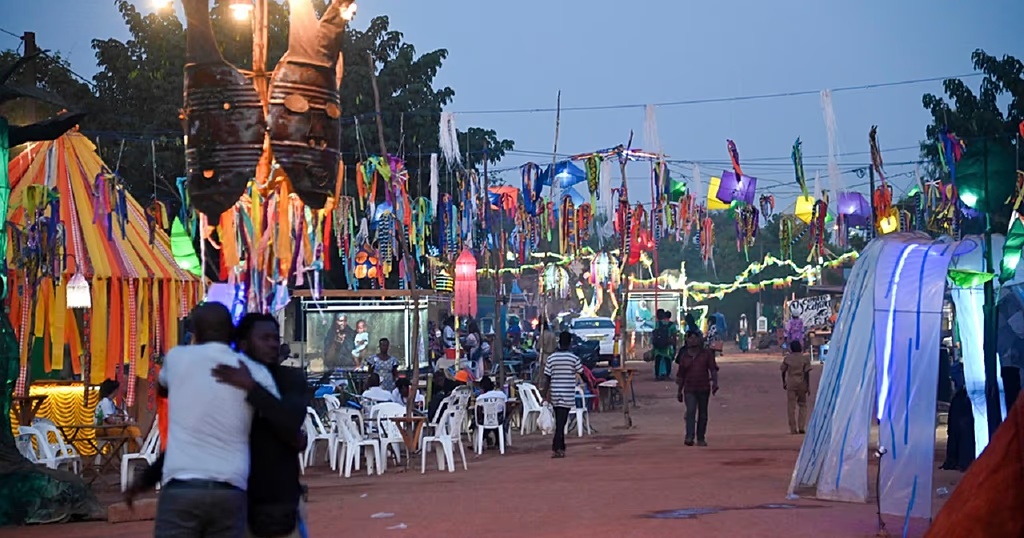
The Récréâtrales Festival is turning the Bougsemtenga neighbourhood of Ouagadougou, Burkina Faso, into a vibrant cultural hub, as residents open their courtyards and streets to theatre, dance and music performances during its 14th edition.
Running from October 24 to 31, 2026, the festival brings together local residents, artists and technicians from different countries, with members of the community playing an active role in organising and producing the event.
Since its creation, the festival has maintained a strong relationship with Bougsemtenga, where residents have helped shape its activities and provided spaces for performances.
One of this year’s major attractions is Les Mouches, the opening production developed by choreographer Djibril Ouattara in collaboration with women and young people from the neighbourhood.
The production, which has been in development since February, explores the idea that humanity is defined by the ability to respond, care for others and create room for beauty.
Speaking about the collaborative process, Ouattara said working with residents required him to appreciate their individual abilities and draw inspiration from their own forms of expression.
“You meet people who are not at all familiar with the kind of dance you know. They have their own dance. So you have to create with them,” he said.
He explained that the process involved setting aside established techniques and discovering what participants could contribute through their bodies, adding that everyone had the ability to dance when given the right direction.
Among the residents supporting the festival is Agathe Serré, a member of the Bougsemtenga Women’s Association and an amateur actress who has participated in the event since 2006.
Serré praised Ouattara’s energy and commitment, admitting that the demanding rehearsals initially raised concerns among some of the older participants.
She said the choreographer expected everyone to give their best, but the group successfully completed the production despite concerns about keeping up with the pace of rehearsals.
According to her, the experience was rewarding, and the participants would gladly take part again if given the opportunity.
The festival has also provided opportunities for young people to develop careers in the creative industry.
Claude Ilboudo, popularly known as “Gohou”, who grew up participating in the festival’s performances, has since become a professional actor.
He noted that the event creates employment and development opportunities for young people, including those working as volunteers and those involved in dance, theatre and technical production.
For one week, the festival’s 550-metre-long alleyway is transformed into an urban stage, brought to life by 68 technicians and artists from 12 countries.
Ouattara described the decision to stage performances within the neighbourhood as a powerful way of making artistic experiences accessible to a wider audience.
The festival’s programme runs from morning until the early hours of the day and includes readings, children’s performances, discussions, musical evenings and theatre productions.
Performances are staged in family courtyards and on open-air platforms across the streets, allowing residents and visitors of different ages to experience the cultural activities.
Through its community-driven approach, the Récréâtrales Festival continues to demonstrate how neighbourhood participation can make theatre more accessible while creating opportunities for local talent and strengthening cultural connections.







 Culture4 years ago


