Culture
Ofala festival: Obi of Onitsha marks 25 Years on throne
Published
3 weeks agoon

Ofala Festival 2026 celebrated Onitsha’s royal heritage as Obi Nnaemeka Achebe marked 25 years on the throne and addressed Nigeria’s economic challenges.
Ofala Festival Celebrates Onitsha Heritage as Obi Achebe Marks 25 Years on Throne.
Also read:Cross River Eyes Bigger N19bn Windfall From Calabar Carnival
The 2026 Ofala Festival in Onitsha, Anambra State, celebrated more than five centuries of royal tradition while marking the 25th Ofala festival during the reign of Obi Nnaemeka Alfred Achebe.
The annual celebration brought together traditional chiefs, political leaders, visitors and cultural enthusiasts at Ezechima Square, showcasing the heritage of the Onitsha people and the enduring significance of the monarchy.
This year’s festival was held under the theme, “Igba Mbo, Iga N’Iru”, translated as “Strive and Advance”.
A defining moment of the festival was the Obi’s public appearance following a period of seclusion known as “Inye Ukwu n’Nlo Eze”, during which the monarch is traditionally understood to undergo spiritual reflection and cleansing.
The sound of the Egwu Ota royal war drums signalled the end of the seclusion, as the council of red-cap chiefs, known as Ndichie, gathered in ceremonial attire to welcome the monarch.
Upon entering the square, Achebe performed three traditional dances, symbolising prosperity, stability and continuity for the community in the coming traditional year.
The Ofala Festival, which has a history spanning more than 500 years, serves as both a celebration of Onitsha’s cultural identity and a renewal of the relationship between the monarch and his people.
The festival featured traditional dances and ceremonial displays by Onitsha’s high chiefs, whose participation reflected their roles in the community’s traditional leadership structure.
Anambra State Commissioner for Transport, Edward Ibuzoh, said the chiefs represented their respective communities and attended the festival to pay homage to the monarch.
“In the olden days, these high chiefs were the warriors we had in our villages,” Ibuzoh said.
He added that their presence at the festival demonstrated their strength, commitment and readiness to serve the Obi and their communities.
Senator Tony Nwoye, who represents Anambra North, described Achebe’s 25-year reign as an opportunity to recognise his contributions to unity and development in Onitsha.
Nwoye said the monarch had worked to bring Igbo people together across the world and had contributed to infrastructure development in the community.
The 2026 festival also attracted international visitors, including American scholar and author Professor Richard Henderson, who travelled from Tucson, Arizona, to attend the event.
Henderson, author of *The King in Every Man*, returned to experience the festival about six decades after his first research visit to Onitsha in the 1960s.
He said the festival had become more elaborate and vibrant since his earlier visit.
“I am astonished at how elaborate it has become—richer and more vital than it was,” Henderson said.
He described Onitsha’s culture as remarkable, adding that the festival had become even more exciting and impressive over the years.
His attendance highlighted the festival’s continuing appeal to researchers and visitors interested in the history and traditions of the Onitsha people.
Beyond its cultural significance, the festival provided a platform for Achebe to address national concerns, including economic hardship and insecurity.
In his address, the monarch urged President Bola Tinubu’s administration to take urgent steps to ease the difficulties facing ordinary Nigerians.
“Let me briefly mention the hardship and insecurity that have worsened steadily in the country,” Achebe said.
He called for measures to reduce the hardship associated with the country’s macroeconomic policies and improve the welfare of citizens.
The monarch also urged residents of the South-East to participate actively in the 2027 general elections, warning against voter apathy.
He argued that citizens who abstained from elections risked weakening their ability to influence political representation and challenge perceived marginalisation.
“We cannot stay away from elections and turn around to complain of marginalisation. In democracy, all votes count. Therefore, we must come out and vote for our candidates,” he said.
Also read:Cross River Eyes Bigger N19bn Windfall From Calabar Carnival
The 2026 Ofala Festival once again brought together cultural celebration, traditional leadership and public engagement, reaffirming its place as a major expression of Onitsha’s royal heritage and communal identity.
Related
You may like

Soludo Unveils Achebe Statue to Honour Literary Legacy

Indigenous Pastors Lead Spiritual Clash Against Uzoiyi Festival

US Mayor Traces Igbo Roots to Anambra after 71 Years Abroad

Federal Ministry of Art Culture Tourism Signs Transformative Deal

Anambra Government clarifies stance on traditional worship, emphasizes crime prevention

Governor Soludo champions farming to address food security at Anambra’s new yam festival
Culture
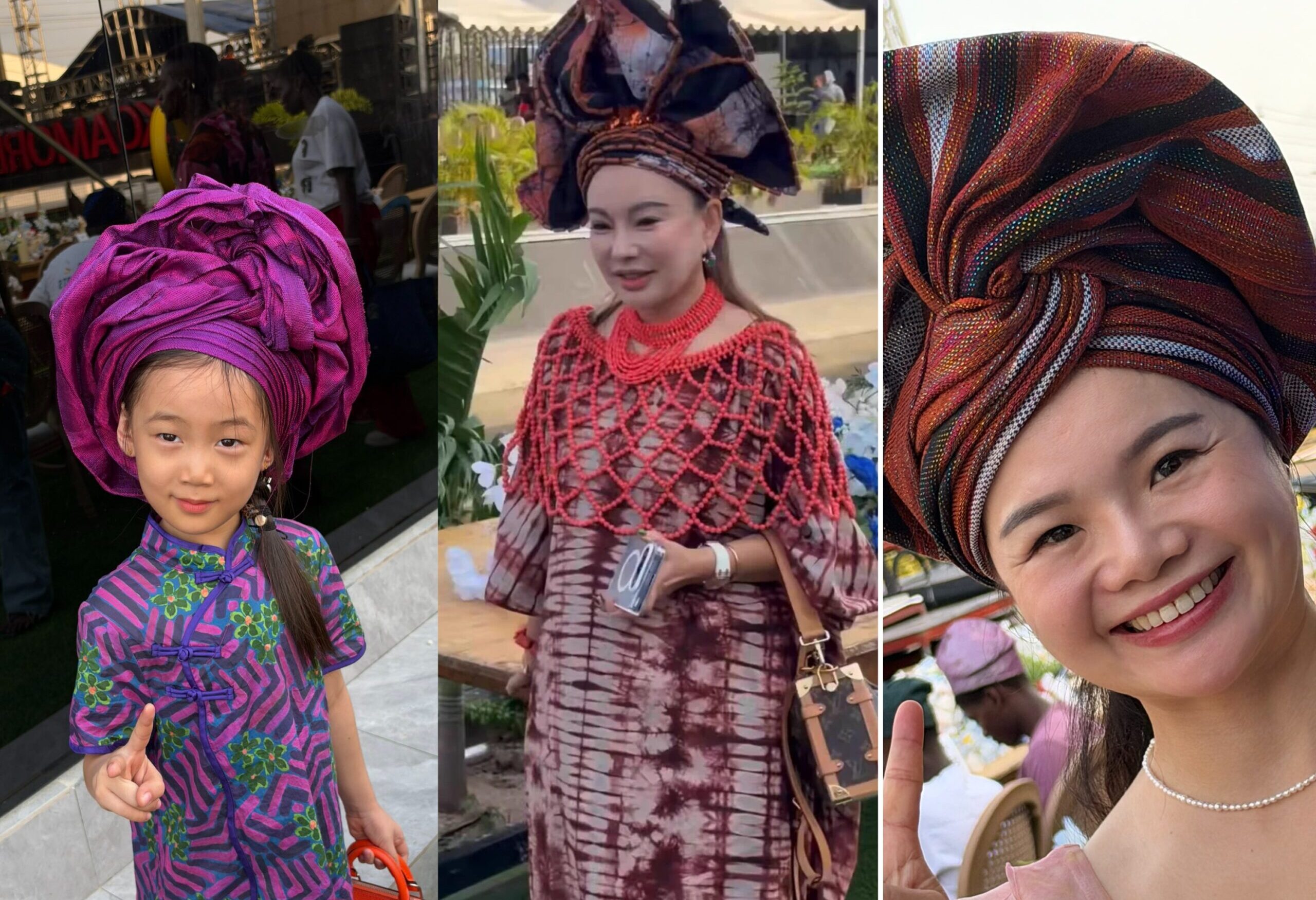
Chinese Community Adds Global Colour to Lagos Gele Festival
Published
2 days agoon
November 9, 2026
Lagos Gele Festival welcomes members of the Chinese community in a colourful celebration of Yoruba fashion, culture and international friendship
Related
Culture
Dexter Loko Wins Prestigious 2026 Chinua Achebe Prize
Published
1 week agoon
November 2, 2026
Dexter Loko Wins Chinua Achebe Prize for his 170,000-word fantasy novel, The Bako of Zereshé, at the 2026 ANA convention in Abuja
Related
Culture
Crowds Gather for Rare Sunrise at Egypt’s Abu Simbel Temple
Published
3 weeks agoon
October 23, 2026
Hundreds of tourists gathered at Egypt’s Abu Simbel temple to witness the twice-yearly sunrise ceremony illuminating Pharaoh Ramses II’s statue
Hundreds of tourists gathered at Egypt’s Abu Simbel temple on Thursday to witness a spectacular sunrise phenomenon in which sunlight illuminated the face of the statue of Pharaoh Ramses II, an event that occurs only twice a year.
Also read: 16 Famous Cultural Festivals That Define India
The ancient astronomical ceremony drew visitors from different parts of the world to the archaeological site in southern Egypt on October 22, one of two dates associated with the phenomenon.
The second occurrence takes place on February 22, when the rising sun illuminates the temple’s interior.
Egyptian tour guide Yasser Fouad described the occasion as extraordinary, saying some visitors had stayed overnight to secure the opportunity to witness the event.
“Today is an extraordinary day, everyone is keen, there are people who stayed over the night, foreigners who actually spent the night in Abu Simbel to see this phenomenon,” Fouad said.
The Great Temple of Ramses II at Abu Simbel dates back to the 13th century BC and is among Egypt’s most prominent archaeological attractions.
Built during the reign of Ramses II, one of ancient Egypt’s most powerful pharaohs, the temple is renowned for its monumental statues and sophisticated architectural design.
The twice-yearly sunrise phenomenon is a major attraction, drawing visitors eager to witness the interaction between sunlight and the temple’s ancient structure.
The dates have traditionally been associated with significant moments in Ramses II’s life.
October 22 is commonly linked to his birthday, while February 22 is associated with his accession to the throne.
However, the precise historical reasons behind the dates remain debated.
Some archaeologists have proposed alternative explanations, including that they may have marked the pharaoh’s coronation and birthday.
Abu Simbel underwent a major international rescue operation in the 1960s, when archaeologists and engineers relocated the temples to protect them from flooding caused by the construction of the Aswan High Dam.
The monumental structures were cut into large blocks and reassembled at a higher location, preserving the site for future generations.
The relocation was one of the most significant archaeological preservation projects of the 20th century.
Despite the move, the temple continues to attract visitors for its ancient Egyptian art, monumental architecture and remarkable alignment with the rising sun.
Also read: 16 Famous Cultural Festivals That Define India
The annual gatherings highlight the enduring appeal of Egypt’s archaeological heritage and the continuing fascination with the astronomical knowledge and engineering achievements of its ancient civilisation.
Related

Chinese Community Adds Global Colour to Lagos Gele Festival

Why Nigeria needs the All-Nigeria Rotary Peace Summit

Pasuma, Malaika Headline Star-Studded Owode Ifa Festival
Trending
Culture4 years agoThe Four Igbo Market Days and Their Significance In Omenala ÌGBÒ
Business4 years agoOoni of Ife Discusses Business and Peace Initiative in Kenya
Events4 years agoGlamour, glitz as B’obagunwa Omo’ba Obinrin Akile Ijebu celebrates New Year party (Photos)
Culture4 years agoOutrage as Ezendigbo of Ibadanland confers chieftaincy title on Olubadan
Events4 years agoOnitoomu of Ito-Omu installs two new chiefs (Video, Photos)
Events2 years agoEgbe Bobasete: The New Fashion Sensation Elevates 2024 Ojude Oba Festival (Video, Photos)
Events3 years agoNANTAP Convention 2023: Reshaping Nigerian Theatre Arts for economic growth
Paranormal4 years agoBlack Cat Superstition: Good and Bad Luck Beliefs