Connect with us

Culture

ÌṢẸ̀ṢE And The Paradox Of Secrecy

Published

on

Few days ago, I had to reenact an Agẹmọ festival scene and of course had to take permission and lectures from the custodians of the beautiful masquerade in Ìjẹ̀bú land.

At first when I explained to them that it is a film where Agẹmọ would have to be directed, where we will tell the masquerade to stop for us to change lenses, camera angles and shots, they fumed that we would not be able to reenact an Agẹmọ display because Agẹmọ has a specific time it must come out and they can’t just bring it out at our own convinience and directions.

After a lot of convincing that we need to preserve and project these culture to the world through visual storytelling, they told us that we can do it, but Agẹmọ wouldn’t have time to be listening to instructions from me as I wouldn’t be able cut its display intermittently as I want, I agreed and made up my mind that I was going to shoot the scene on multi-cameras, so that I can cover all the angles once. But I requested that I would need to do a rehearsal with the heralder of the masquerade who is going to pass my instruction to it, to know about timing, spatial awareness and other things.

It is a taboo to be on a higher plane than the masquerade, so I already told the drone pilot that he has an off day, I told the DP that we are going to be taking low angle shots, no cranes or jibs. We chose a locale with no storey buildings around. We rehearsed the Agẹmọ drummers, actors and the Agẹmọ heralder and then filming started, it was on AD’s call of ACTION that I saw my lead actor in that scene (Agẹmọ) for the first time.

Unsurprisingly, Agẹmọ didn’t get my blockings right, it was performing on and off the camera frames, but we were still able to capture a lot of beautiful moments and then patch with reaction shots of actors. It was the most challenging scene I have ever handled as a visual storyteller.

Few years ago, I had wanted to do something similar with Ẹ̀lúkú Festival but was warned never to try it because Ẹ̀lúkú deity is too sacred to be reenacted. In the interest of myself and my family I gave up and changed the concept.

If adherents of the indigenous religion think secrecy has been helping to preserve Ìṣẹ̀ṣe, I would say it has been counterproductive. There was a time every disease had a leaf that could cure it, but the men who knew the leaves kept keeping the secrets around the process until no one knows again. The world is speedily globalizing, Ìṣẹ̀ṣe must transmit and document its essential elements to the generation yet unborn by opening up itself more and more.

Happy Isese Day to all Ìṣẹ̀ṣe practitioners worldwide.

Continue Reading
Click to comment

Leave a Reply

Culture

Ofala festival: Obi of Onitsha marks 25 Years on throne

Published

on

 Ofala Festival 2026 celebrated Onitsha’s royal heritage as Obi Nnaemeka Achebe marked 25 years on the throne and addressed Nigeria’s economic challenges.

(more…)

Continue Reading

Culture

Crowds Gather for Rare Sunrise at Egypt’s Abu Simbel Temple

Published

on

Abu Simbel

Hundreds of tourists gathered at Egypt’s Abu Simbel temple to witness the twice-yearly sunrise ceremony illuminating Pharaoh Ramses II’s statue

Hundreds of tourists gathered at Egypt’s Abu Simbel temple on Thursday to witness a spectacular sunrise phenomenon in which sunlight illuminated the face of the statue of Pharaoh Ramses II, an event that occurs only twice a year.

Also read: 16 Famous Cultural Festivals That Define India

The ancient astronomical ceremony drew visitors from different parts of the world to the archaeological site in southern Egypt on October 22, one of two dates associated with the phenomenon.

The second occurrence takes place on February 22, when the rising sun illuminates the temple’s interior.

Egyptian tour guide Yasser Fouad described the occasion as extraordinary, saying some visitors had stayed overnight to secure the opportunity to witness the event.

“Today is an extraordinary day, everyone is keen, there are people who stayed over the night, foreigners who actually spent the night in Abu Simbel to see this phenomenon,” Fouad said.

The Great Temple of Ramses II at Abu Simbel dates back to the 13th century BC and is among Egypt’s most prominent archaeological attractions.

Built during the reign of Ramses II, one of ancient Egypt’s most powerful pharaohs, the temple is renowned for its monumental statues and sophisticated architectural design.

The twice-yearly sunrise phenomenon is a major attraction, drawing visitors eager to witness the interaction between sunlight and the temple’s ancient structure.

The dates have traditionally been associated with significant moments in Ramses II’s life.

October 22 is commonly linked to his birthday, while February 22 is associated with his accession to the throne.

However, the precise historical reasons behind the dates remain debated.

Some archaeologists have proposed alternative explanations, including that they may have marked the pharaoh’s coronation and birthday.

Abu Simbel underwent a major international rescue operation in the 1960s, when archaeologists and engineers relocated the temples to protect them from flooding caused by the construction of the Aswan High Dam.

The monumental structures were cut into large blocks and reassembled at a higher location, preserving the site for future generations.

The relocation was one of the most significant archaeological preservation projects of the 20th century.

Despite the move, the temple continues to attract visitors for its ancient Egyptian art, monumental architecture and remarkable alignment with the rising sun.

Also read: 16 Famous Cultural Festivals That Define India

The annual gatherings highlight the enduring appeal of Egypt’s archaeological heritage and the continuing fascination with the astronomical knowledge and engineering achievements of its ancient civilisation.

Continue Reading

Culture

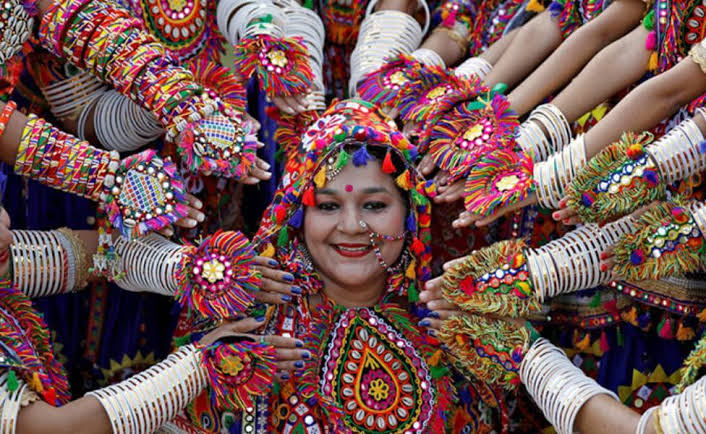
16 Famous Cultural Festivals That Define India

Published

on

India

Discover 16 famous cultural festivals in India, from Diwali and Holi to Rath Yatra and the Pushkar Camel Fair, celebrating the country’s rich heritage (more…)

Continue Reading

Trending