
Events
Decentralized Nigeria 2025 Conference Drives Momentum for African Web3 Growth

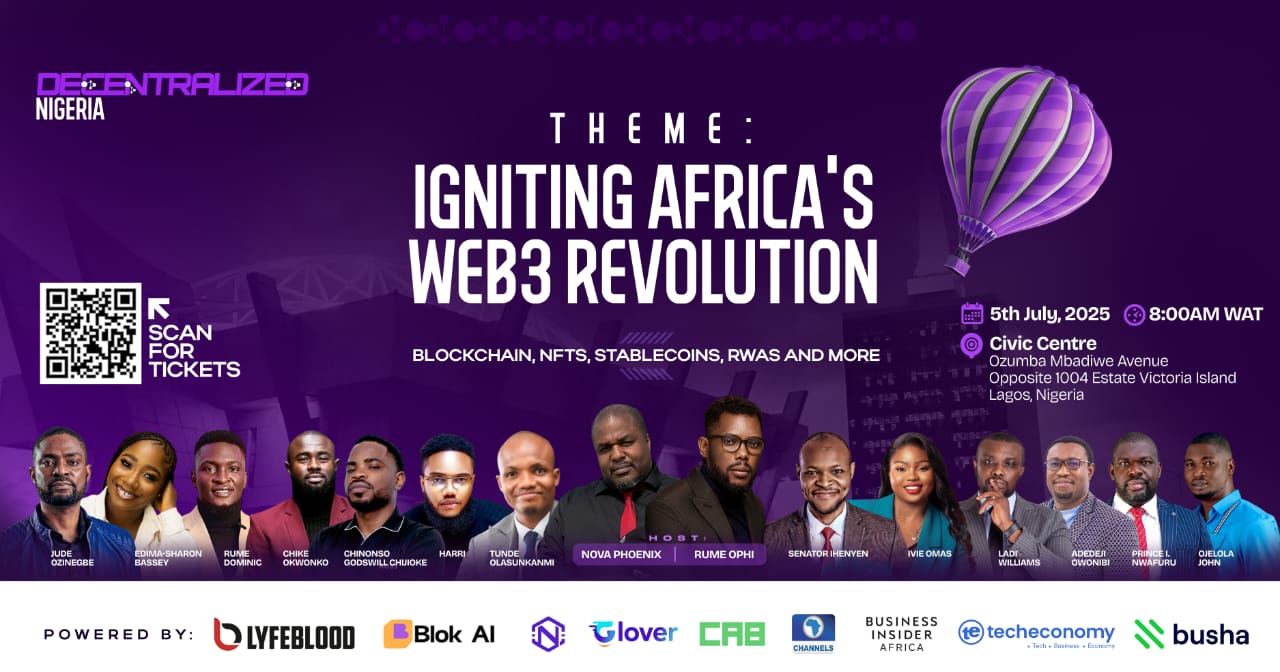
Decentralized Nigeria 2025 conference brings global experts to Lagos as Busha, cNGN, and others back Africa’s Web3 growth with real-world solutions
Decentralized Nigeria 2025 conference is bringing global attention to Lagos this weekend as blockchain innovators, investors, and African tech leaders gather for what organisers call the continent’s most significant Web3 event of the year.
Also read: With Right Frameworks, Nigeria can be Web3 leader in Africa, beyond – Nova Phoenix, Co-Convener, decentralized Nigeria
Taking place at the Civic Centre in Victoria Island on Saturday, July 5th, the conference aims to accelerate Africa’s leadership in the Web3 space.
International and local experts are converging under the theme “Igniting Africa’s Web3 Revolution” to discuss real-world blockchain applications that meet Africa’s unique needs.
Industry powerhouses including Busha, cNGN, and Blok AI have thrown their support behind the event.
Nova Phoenix, co-convener of the event and MD/CEO of Lyfeblood, flew in from the United States to lead the initiative.
“My passion for Africa, the motherland, is one of the core inspirations for putting this together,” he said.
“We’re here to help grow the ecosystem and empower Nigerians with the knowledge, networks, and opportunities needed to lead Africa’s digital revolution.”
Rume Ophi, a well-known blockchain advocate and co-convener, highlighted the event’s strategic significance.
“This is a conference anyone serious about the future should not miss,” Ophi said.
“We’re not just talking about technology. We’re discussing how blockchain and Web3 can solve African problems and generate real economic value.”
The Decentralized Nigeria 2025 conference includes four major panel sessions focused on practical innovation.
Discussions will centre on community-driven marketing, sustainable funding, blockchain education, and regulatory clarity.
Unlike conferences driven by hype or speculation, this event focuses on tangible solutions for long-term impact.
Sponsors are also aligned with this vision. Busha, one of Nigeria’s leading crypto platforms, is a key sponsor.
“Nigeria is leading Africa’s Web3 charge, with the talent, need, and innovation to back it,” said Olaoluwa Samuel-Biyi, Director at Busha.
“Continued progress depends on education, infrastructure, and regulation. That’s why we’re proud to support this conference.”
Chinonso Chijioke of cNGN echoed this commitment. “We’re supporting Decentralized Nigeria because we believe this is a major project of impact for the Web3 scene in Africa.”
The conference has attracted notable partners including Channels Television, Tech Economy, CAB, and Business Insider.
Their involvement ensures that the conversations and ideas generated this weekend will resonate far beyond the venue.
Speakers include prominent names from across the ecosystem. Hanu Fejiro, founder of Patricia Technologies, brings deep industry insight, while Chinedu Obidiegwu of Luno Nigeria represents one of Africa’s largest crypto exchanges.
Senator Ihenyen, Muhammad Abdullahi Yusuf of 100 Million Foundation, and Shamsuddeen Ibrahim, founder of The Orange Block, will also speak.
Jerry Gwamna, a respected advisor in blockchain security and DeFi, rounds out the impressive lineup.
The organisers are positioning Decentralized Nigeria 2025 not as a one-time event but as a catalyst for ongoing development.
The relationships formed, ideas shared, and strategies created are intended to drive progress well into the future.
“This is just the beginning,” said one speaker. “What starts in Lagos this weekend could reshape the trajectory of African innovation for years to come.”
With seats limited and industry attention growing, the event is expected to raise the bar for Web3 conferences across the continent.
It provides a rare opportunity for developers, investors, and policymakers to align their goals in support of a digital-first Africa.
Also read: Decentralized Nigeria Conference to ignite Africa’s Web3 revolution in Lagos
As Africa takes a more central role in global blockchain adoption, Decentralized Nigeria 2025 conference is set to define how that transformation unfolds—with Lagos leading the way.






Poor Funding, Restrictions Stifle Northern Film Industry

Ofala festival: Obi of Onitsha marks 25 Years on throne

Crowds Gather for Rare Sunrise at Egypt’s Abu Simbel Temple


 Culture4 years ago
The Four Igbo Market Days and Their Significance In Omenala ÌGBÒ
- Business4 years ago
Ooni of Ife Discusses Business and Peace Initiative in Kenya
- Events4 years ago
Glamour, glitz as B’obagunwa Omo’ba Obinrin Akile Ijebu celebrates New Year party (Photos)
- Culture4 years ago
Outrage as Ezendigbo of Ibadanland confers chieftaincy title on Olubadan
- Events4 years ago
Onitoomu of Ito-Omu installs two new chiefs (Video, Photos)
- Events2 years ago
Egbe Bobasete: The New Fashion Sensation Elevates 2024 Ojude Oba Festival (Video, Photos)
 Events3 years ago
NANTAP Convention 2023: Reshaping Nigerian Theatre Arts for economic growth
- Paranormal4 years ago
Black Cat Superstition: Good and Bad Luck Beliefs


