Fela Kuti’s children celebrate his 2026 Rock Hall induction as Yeni Kuti says Nigerians failed to heed his father’s warnings about the country
Nearly three decades after his death, Nigerian Afrobeat pioneer Fela Anikulapo-Kuti has received another major international honour, with his induction into the 2026 Rock & Roll Hall of Fame prompting celebrations among his children and family members.
Fela received the institution’s Early Influence Award at the induction ceremony held at the Peacock Theater in Los Angeles, United States, on Saturday, November 14, 2026.
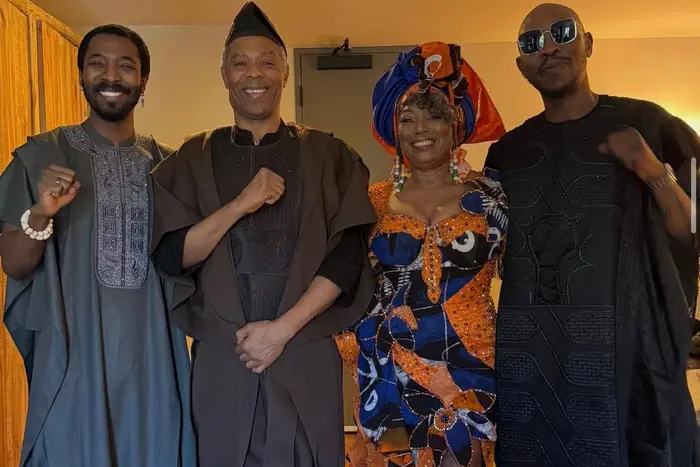
His children, including Yeni, Seun, Femi and Shalewa Kuti, as well as his grandson Made Kuti, attended the ceremony to represent the late musician.
The recognition makes Fela the first African-born solo artiste to be inducted into the Rock & Roll Hall of Fame, marking another significant milestone in the global recognition of African music.
The Hall of Fame recognised Fela for his pioneering contribution to Afrobeat, a genre he developed by blending West African musical traditions with elements of jazz, funk and soul.
Beyond his musical innovation, the institution highlighted his use of music to challenge injustice, criticise political authority and inspire social change.
Fela, who died in 1997, built a reputation as one of Africa’s most outspoken musicians, using songs to address corruption, abuse of power, inequality and the struggles of ordinary Nigerians.
Speaking about the honour and her father’s legacy, his eldest daughter, Yeni Kuti, reflected on how he might have reacted to Nigeria’s present circumstances.
She said she believed Fela would not have been surprised by the country’s situation because he had repeatedly warned Nigerians about the consequences of ignoring the problems he addressed in his music.
Yeni recalled one of his songs in which he expressed frustration that people often took years to understand the messages behind his music.
“I don’t think he’ll be shocked about what’s happening in Nigeria today, because I think that’s one of the things that pushed him to an early grave. He was disappointed; he’d been singing,” she said.
She quoted her father as saying that people took about 10 years to understand the message of each song and urged them to understand his next message quickly to avoid further suffering.
According to Yeni, Nigerians are now recognising the relevance of Fela’s warnings, but many failed to take them seriously while he was alive.
“Now that he’s dead, people are like, ah, Fela said it, oh, Fela is a prophet. But, we just didn’t listen,” she said.
She added that Nigeria might have avoided some of its present difficulties if more people had paid attention to the issues Fela consistently raised.
Despite her belief that her father would not have been surprised by the country’s challenges, Yeni said he would likely have been happy about the international recognition of his music.
The Rock Hall induction comes months after Fela received the Recording Academy’s Grammy Lifetime Achievement Award in February 2026, another posthumous recognition of his contribution to global music.
The latest honour further reinforces the enduring influence of Fela’s work, which continues to reach new audiences and inspire musicians across generations.
His induction also places Afrobeat’s origins and its politically conscious tradition before a wider international audience, recognising a Nigerian musician whose artistic legacy extended far beyond entertainment.








 Culture4 years ago


