
Events
Blue Lagos, OPLCE, LASHMA, LASWA Expand Community Outreach in Lagos Coastal Communities

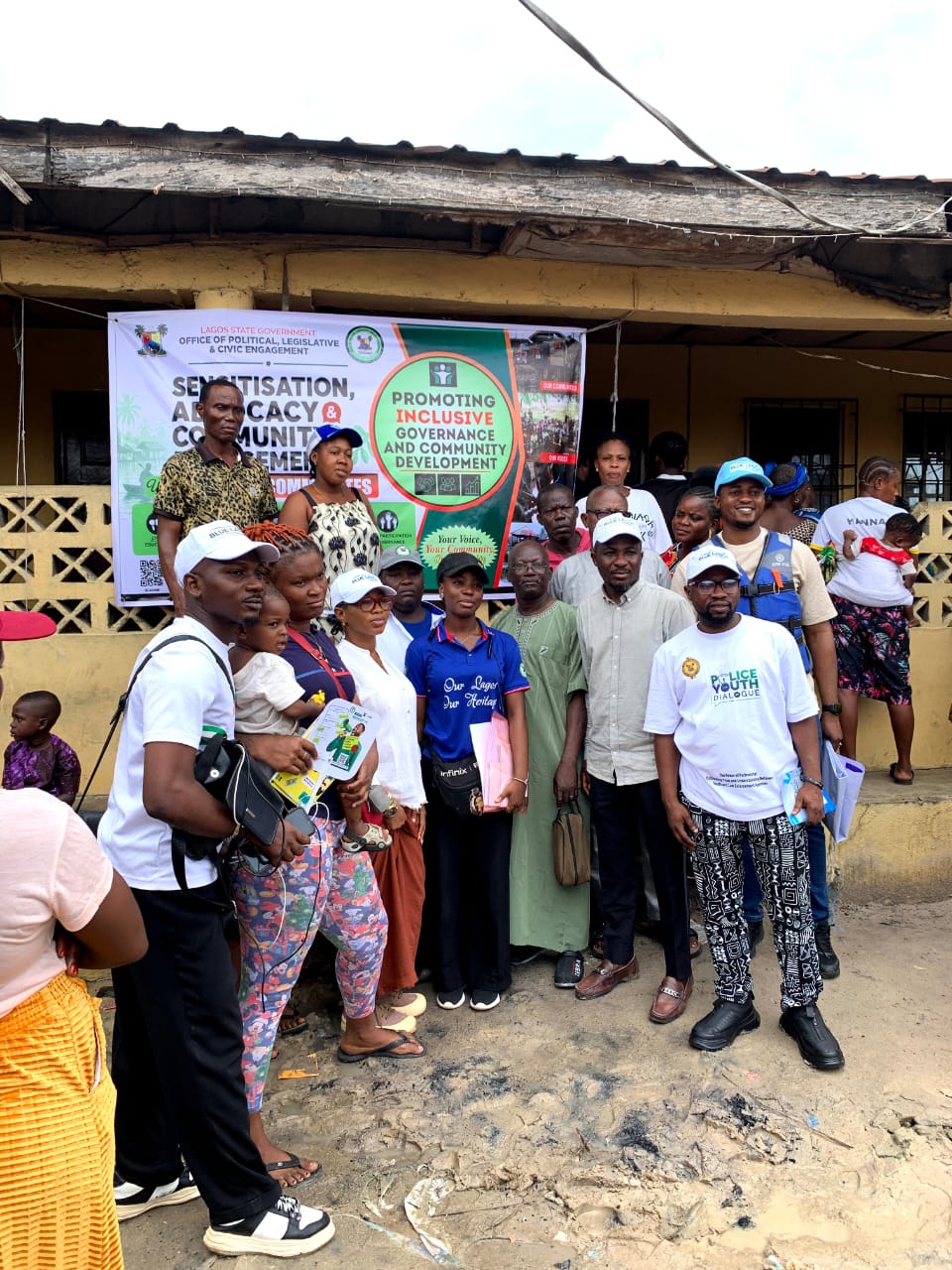
Blue Lagos Initiative expands outreach in Lagos riverine communities with healthcare, civic engagement, environmental education and safety awareness
The Blue Lagos Initiative, in partnership with the Lagos State Office of Political, Legislative and Civic Engagement (OPLCE), the Lagos State Health Management Agency (LASHMA) and the Lagos State Waterways Authority (LASWA), has deepened community development efforts by conducting a multi-sectoral outreach across the riverine communities of Sagbonkodji, Ilado-Odo and Tarkwa Bay.
Also read: Blue Lagos Urges Development Action in Epe Riverine Communities
The engagement, held on July 8, 2026, brought together government officials, community leaders, women, youth groups and residents to promote environmental sustainability, civic participation, healthcare access and waterways safety while delivering practical support to vulnerable households.
As part of the outreach, pupils received exercise books, pregnant women were provided with insecticide-treated mosquito nets and residents were given waste nylon bags to encourage responsible waste disposal.
Representatives of the participating organisations said the initiative reflects Lagos State’s commitment to ensuring that coastal and riverine communities benefit from government programmes and essential public services despite their geographical challenges.
The Blue Lagos Initiative encouraged residents to play a more active role in protecting their environment by embracing proper waste management practices and supporting collective efforts to reduce pollution and minimise flooding.
Officials from the Office of Political, Legislative and Civic Engagement also introduced residents to the Citizen Gate Platform, a digital tool designed to strengthen communication between government and citizens.
Community members were sensitised on the platform’s benefits and registered during the exercise, enabling them to access government information, submit feedback and report community concerns more efficiently.
Healthcare formed another key component of the engagement.
Officials from LASHMA educated residents on the Ilera Eko and EKO-SHA health insurance schemes while introducing aspects of the agency’s Telemedicine Initiative, which aims to improve access to quality healthcare in remote riverine and coastal communities.
The agency explained how virtual medical consultations could help bridge healthcare gaps in underserved areas where access to health facilities is often limited.
Representatives of LASWA conducted practical safety awareness sessions, reminding residents of the importance of wearing life jackets, observing waterways regulations and adopting safe travel practices while commuting across Lagos waterways.


The exercise also created an opportunity for dialogue between government agencies and community members, with local leaders highlighting development priorities and expressing appreciation for the outreach.
Several traditional and community leaders described the programme as a transformative initiative that brought vital information and public services directly to residents who often face challenges accessing government interventions.
Speaking at the close of the programme, the Convener of the Blue Lagos Initiative, Adesanya Saheed Olayinka, reaffirmed the organisation’s commitment to promoting inclusive development across Lagos’ coastal settlements.
“Sustainable development can only be achieved when communities are actively involved in shaping solutions to their challenges.
Through partnerships and continuous engagement, we are ensuring that no riverine community is left behind in Lagos’ development journey,” Olayinka said.
The latest outreach builds on Lagos State’s broader efforts to improve environmental stewardship, expand healthcare coverage, strengthen civic participation and promote safer waterways through collaboration between public institutions and community stakeholders.
Also read: Blue Lagos Rolls Out Grassroots Engagement in Waterway Communities
As the state continues to pursue sustainable urban development under its environmental agenda, initiatives targeting riverine communities are increasingly viewed as essential to ensuring that development reaches every part of Lagos, regardless of location.







Ofala festival: Obi of Onitsha marks 25 Years on throne

Crowds Gather for Rare Sunrise at Egypt’s Abu Simbel Temple

16 Famous Cultural Festivals That Define India


 Culture4 years ago
The Four Igbo Market Days and Their Significance In Omenala ÌGBÒ
- Business4 years ago
Ooni of Ife Discusses Business and Peace Initiative in Kenya
- Events4 years ago
Glamour, glitz as B’obagunwa Omo’ba Obinrin Akile Ijebu celebrates New Year party (Photos)
- Culture4 years ago
Outrage as Ezendigbo of Ibadanland confers chieftaincy title on Olubadan
- Events4 years ago
Onitoomu of Ito-Omu installs two new chiefs (Video, Photos)
- Events2 years ago
Egbe Bobasete: The New Fashion Sensation Elevates 2024 Ojude Oba Festival (Video, Photos)
 Events3 years ago
NANTAP Convention 2023: Reshaping Nigerian Theatre Arts for economic growth
- Paranormal4 years ago
Black Cat Superstition: Good and Bad Luck Beliefs


