Connect with us

Culture

Lagos, Ogun Declare August 20 Holiday for Isese Day

Published

on

Isese Day

The Isese Day holiday will be observed in Lagos and Ogun on August 20, 2026, with both states highlighting Yoruba culture and traditional heritage

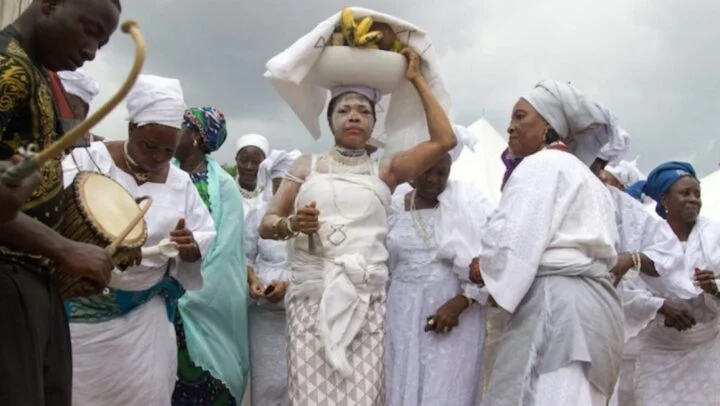
Lagos and Ogun State governments have declared Thursday, August 20, 2026, a work-free day for the annual Isese Day holiday, allowing residents to participate in celebrations of Yoruba traditional religion and cultural heritage.

Also read: BFF Festival 2026 draws 9,000 to celebrate friendship

In Lagos, the state government said more than three million residents are expected to take part in activities bringing together traditional worshippers, cultural custodians and visitors across the state.

Lagos State Special Adviser to the Governor on Tourism, Arts and Culture, Idris Aregbe, said the decision was intended to give residents and visitors the opportunity to participate fully in the celebrations.

“Ìṣẹ̀ṣe is not a relic. It is a living expression of our traditions and a celebration of Yoruba spirituality as an important part of Nigeria’s cultural and religious landscape,” Aregbe said.

He noted that Yoruba cultural practices have extended beyond Nigeria, with communities in parts of Africa, the Caribbean and the Americas continuing to observe traditional customs.

Aregbe described Lagos as an important centre for the celebration, saying the city’s observance reflects the international reach of Yoruba heritage.

“When the drums sound in Lagos on Thursday, they answer drums in Havana, in Salvador, in Port of Spain. Fifty-five million people and counting,” he said.

The Lagos government has observed Isese Day as a work-free day since 2023, following a request by the Lagos State Council of Obas and Chiefs. The policy has been maintained under Governor Babajide Sanwo-Olu as part of the state’s stated commitment to indigenous heritage and religious inclusiveness.

This year’s programme is expected to feature traditional prayers, rituals, processions, drumming and cultural displays dedicated to the Orisa.

The activities are being coordinated by the Association of African Traditional Religion Nigeria and Overseas, AATREN.

Aregbe urged participants to observe the celebration peacefully and respect Nigerians of other faiths.

“Three million voices rising in honour of tradition is not noise. It is history, faith and cultural pride in harmony,” he said.

In neighbouring Ogun State, the government also declared August 20 a work-free day, describing the decision as part of efforts to preserve Yoruba culture, traditional institutions and indigenous values.

Ogun has observed Isese Day as a public holiday since 2023, following a resolution of the state House of Assembly and approval by Governor Dapo Abiodun.

The state government said the annual observance allows adherents of traditional religion to perform religious rites, honour their ancestors and celebrate values associated with Yoruba spiritual and cultural practices.

Beyond its religious significance, the government said the celebration provides an opportunity for a wider appreciation of Yoruba heritage and can strengthen community ties.

Both state governments called on residents to celebrate peacefully and responsibly while respecting the beliefs and practices of people from other religious backgrounds.

Also read: Wizkid to Kick Off Detty December 2026 in Lagos

The joint observance in Lagos and Ogun comes as interest in indigenous Nigerian traditions continues to feature prominently in cultural and tourism conversations, with Isese Day providing a visible platform for traditional worshippers and cultural custodians to celebrate their heritage.

Culture

Dexter Loko Wins Prestigious 2026 Chinua Achebe Prize

Published

on

 Dexter Loko Wins Chinua Achebe Prize for his 170,000-word fantasy novel, The Bako of Zereshé, at the 2026 ANA convention in Abuja

(more…)

Continue Reading

Culture

Ofala festival: Obi of Onitsha marks 25 Years on throne

Published

on

 Ofala Festival 2026 celebrated Onitsha’s royal heritage as Obi Nnaemeka Achebe marked 25 years on the throne and addressed Nigeria’s economic challenges.

(more…)

Continue Reading

Culture

Crowds Gather for Rare Sunrise at Egypt’s Abu Simbel Temple

Published

on

Abu Simbel

Hundreds of tourists gathered at Egypt’s Abu Simbel temple to witness the twice-yearly sunrise ceremony illuminating Pharaoh Ramses II’s statue

Hundreds of tourists gathered at Egypt’s Abu Simbel temple on Thursday to witness a spectacular sunrise phenomenon in which sunlight illuminated the face of the statue of Pharaoh Ramses II, an event that occurs only twice a year.

Also read: 16 Famous Cultural Festivals That Define India

The ancient astronomical ceremony drew visitors from different parts of the world to the archaeological site in southern Egypt on October 22, one of two dates associated with the phenomenon.

The second occurrence takes place on February 22, when the rising sun illuminates the temple’s interior.

Egyptian tour guide Yasser Fouad described the occasion as extraordinary, saying some visitors had stayed overnight to secure the opportunity to witness the event.

“Today is an extraordinary day, everyone is keen, there are people who stayed over the night, foreigners who actually spent the night in Abu Simbel to see this phenomenon,” Fouad said.

The Great Temple of Ramses II at Abu Simbel dates back to the 13th century BC and is among Egypt’s most prominent archaeological attractions.

Built during the reign of Ramses II, one of ancient Egypt’s most powerful pharaohs, the temple is renowned for its monumental statues and sophisticated architectural design.

The twice-yearly sunrise phenomenon is a major attraction, drawing visitors eager to witness the interaction between sunlight and the temple’s ancient structure.

The dates have traditionally been associated with significant moments in Ramses II’s life.

October 22 is commonly linked to his birthday, while February 22 is associated with his accession to the throne.

However, the precise historical reasons behind the dates remain debated.

Some archaeologists have proposed alternative explanations, including that they may have marked the pharaoh’s coronation and birthday.

Abu Simbel underwent a major international rescue operation in the 1960s, when archaeologists and engineers relocated the temples to protect them from flooding caused by the construction of the Aswan High Dam.

The monumental structures were cut into large blocks and reassembled at a higher location, preserving the site for future generations.

The relocation was one of the most significant archaeological preservation projects of the 20th century.

Despite the move, the temple continues to attract visitors for its ancient Egyptian art, monumental architecture and remarkable alignment with the rising sun.

Also read: 16 Famous Cultural Festivals That Define India

The annual gatherings highlight the enduring appeal of Egypt’s archaeological heritage and the continuing fascination with the astronomical knowledge and engineering achievements of its ancient civilisation.

Continue Reading

Trending