Connect with us

Culture

Yoruba Language Preservation Project Launches Brain Trust

Published

on

Yoruba Language Preservation Project

Yoruba Language Preservation Project launches Brain Trust to revitalise Yoruba among youths through innovation and cultural engagement

Yoruba Language Preservation Project The Yoruba Language Preservation Project, also known as Èdè Wa Ní – Ẹ Gbé L’árugẹ, has announced the inauguration of its “Brain Trust”, set to hold virtually on Saturday, October 11.

Also read: Ooni of Ife Slams Oluwo of Iwo over Yoruba Origin

The Project Director, Mr Olushola Macaulay, disclosed this in a statement issued in Abuja on Thursday.

He said the gathering would unite distinguished cultural leaders, scholars, linguists, educators, and advocates dedicated to safeguarding and revitalising the Yoruba language, particularly among young people.

According to Macaulay, the Brain Trust will serve as the intellectual and strategic backbone of the cultural initiative, drawing together eminent personalities from Yoruba-speaking regions and the diaspora.

“The formation of the Brain Trust represents a critical milestone in our journey to preserve the rich linguistic and cultural heritage of the Yoruba people for future generations,” he said.

Macaulay added that the project seeks to reverse the declining use of Yoruba among youths by making language learning an engaging, immersive, and culturally relevant experience.

He explained that the initiative aims to nurture a new generation of fluent Yoruba speakers through creative and interactive formats inspired by reality shows.

Young participants from Lagos, Ogun, Oyo, Osun, Ondo, Ekiti, Kogi, Kwara, and Edo States will engage in activities that promote both language acquisition and cultural connection.

The project, powered by the Light-Up Africa Development Initiative (LADI), also includes prominent figures such as Dr Oluseyi Soremekun, Dr Paul Emokhare, Pastor Bola Jordan, Prof Sharon Omotosho, Mrs Damilola Oni, and Mr Taiwo Ibikunle among its members.

Other contributors include Mr Tunde Philips, Mr Idris Akintola, Prof Akin Akande, Dr Babatunde Tiamiyu, Dr Tiwalade Fapohunda, Mrs Funke Durodola, and Mr Damola Oladipo.

Speaking on the project’s cultural significance, the General Manager of UNILORIN 89.3 FM, Mr Idris Ajintola Ibrahim, said that language remains the primary vessel of culture, and its decline risks eroding knowledge systems and identity.

“This initiative represents a bold and necessary intervention at a critical time in our nation-building,” Ibrahim stated.

Also read: Yoruba Ranks Among 40 Most Spoken Languages Worldwide

Macaulay concluded that the collective expertise of the Brain Trust would ensure the project’s authenticity, academic strength, and cultural sensitivity, adding that “traditional wisdom and modern innovation must work hand in hand to keep the Yoruba language alive.”

Continue Reading
Click to comment

Leave a Reply

Culture

Ofala festival: Obi of Onitsha marks 25 Years on throne

Published

on

 Ofala Festival 2026 celebrated Onitsha’s royal heritage as Obi Nnaemeka Achebe marked 25 years on the throne and addressed Nigeria’s economic challenges.

(more…)

Continue Reading

Culture

Crowds Gather for Rare Sunrise at Egypt’s Abu Simbel Temple

Published

on

Abu Simbel

Hundreds of tourists gathered at Egypt’s Abu Simbel temple to witness the twice-yearly sunrise ceremony illuminating Pharaoh Ramses II’s statue

Hundreds of tourists gathered at Egypt’s Abu Simbel temple on Thursday to witness a spectacular sunrise phenomenon in which sunlight illuminated the face of the statue of Pharaoh Ramses II, an event that occurs only twice a year.

Also read: 16 Famous Cultural Festivals That Define India

The ancient astronomical ceremony drew visitors from different parts of the world to the archaeological site in southern Egypt on October 22, one of two dates associated with the phenomenon.

The second occurrence takes place on February 22, when the rising sun illuminates the temple’s interior.

Egyptian tour guide Yasser Fouad described the occasion as extraordinary, saying some visitors had stayed overnight to secure the opportunity to witness the event.

“Today is an extraordinary day, everyone is keen, there are people who stayed over the night, foreigners who actually spent the night in Abu Simbel to see this phenomenon,” Fouad said.

The Great Temple of Ramses II at Abu Simbel dates back to the 13th century BC and is among Egypt’s most prominent archaeological attractions.

Built during the reign of Ramses II, one of ancient Egypt’s most powerful pharaohs, the temple is renowned for its monumental statues and sophisticated architectural design.

The twice-yearly sunrise phenomenon is a major attraction, drawing visitors eager to witness the interaction between sunlight and the temple’s ancient structure.

The dates have traditionally been associated with significant moments in Ramses II’s life.

October 22 is commonly linked to his birthday, while February 22 is associated with his accession to the throne.

However, the precise historical reasons behind the dates remain debated.

Some archaeologists have proposed alternative explanations, including that they may have marked the pharaoh’s coronation and birthday.

Abu Simbel underwent a major international rescue operation in the 1960s, when archaeologists and engineers relocated the temples to protect them from flooding caused by the construction of the Aswan High Dam.

The monumental structures were cut into large blocks and reassembled at a higher location, preserving the site for future generations.

The relocation was one of the most significant archaeological preservation projects of the 20th century.

Despite the move, the temple continues to attract visitors for its ancient Egyptian art, monumental architecture and remarkable alignment with the rising sun.

Also read: 16 Famous Cultural Festivals That Define India

The annual gatherings highlight the enduring appeal of Egypt’s archaeological heritage and the continuing fascination with the astronomical knowledge and engineering achievements of its ancient civilisation.

Continue Reading

Culture

16 Famous Cultural Festivals That Define India

Published

on

India

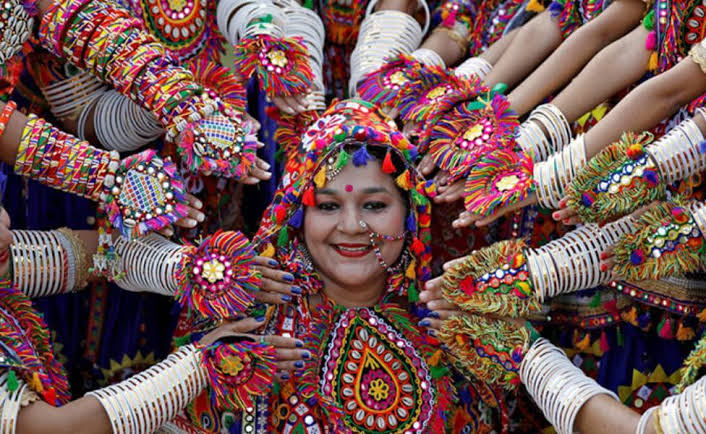
Discover 16 famous cultural festivals in India, from Diwali and Holi to Rath Yatra and the Pushkar Camel Fair, celebrating the country’s rich heritage (more…)

Continue Reading

Trending