Connect with us

Culture

Obasanjo and Garvey Unite to Honor History, as Badagry is Chosen as the Home for the World’s Africa Slave Trade Museum

Published

on

In a historic collaboration, former President Olusegun Obasanjo and Dr. Julius Garvey, leader of the Diasporan delegation to Motherland Africa, have come together to designate Badagry in Lagos State as the site for the World’s Africa Slave Trade Museum.

The monumental decision marks a significant step towards preserving and commemorating the poignant history of the African slave trade.

According to punchng.com, this followed a meeting held at the Olusegun Obasanjo Presidential Library, Abeokuta, Ogun State, during a courtesy visit to the former President and renowned African statesman.

In a statement by Obasanjo’s Special Assistant on Media, Kehinde Akinyemi, on Friday, the duo noted that the enormous contributions of the ancient town in Badagry to the history of the slave trade could not be overemphasized, hence the resolution to have it as the location of the world museum centre.

Ghana, Addis-Ababa, Nigeria, Ethiopia and Senegal came as choices, but Nigeria was agreed upon due to her capacity and leading strength in the continent.

The visiting team also discussed how to improve trade between Africa and the Caribbean and other contemporary issues.

Speaking on the visit, Garvey remarked that it was “a wonderful experience for me seeing President Obasanjo personally. He has the interest of the Africans at heart, Africans here in the continent and in Diaspora, and I am happy to see that. We discussed the situation in Africa, and I am pleased to say that the understanding we both reached on the Museum location is pleasing.”

Garvey said the delegation also discussed about the continent and the Caribbean as part of the six regions, “and I am happy about the direction the conservation took.”

He added that he saw Obasanjo as somebody “on top of the day’s issues. He has done so much for Africans and from the pan-African sense. He has a sharp mind and is willing to contribute to the development of Africa. He really looked like my father from his old pictures and that he’s really taking good care of his health,” the Vascular Surgeon said.

He disclosed that having served as a vascular surgeon and professor of medicine for many years, “I am now focused on advancing my father’s legacy. I am interested in cultivating collaboration with Nigerians to bring home transformation through health, education, business, agriculture, aviation, tourism, technology, manufacturing and more. I hope to see Nigeria become Africa’s transformation engine and the Nigerian Diaspora as the continent’s best Global Ambassadors in this lifetime.”

Julius Garvey is the son of the legendary Marcus Garvey, the great human rights promoter.

He said, “My father Marcus Mosiah Garvey was never able to set his feet in Africa, even though he preached to Africans in the Diaspora about returning to the Motherland physically or mentally. As his son, returning and becoming a Chief in Nigeria is monumental.

Obasanjo hinted that as the Prime Minister (Balogun) of his Owu clan, he would recommend a chieftaincy title for him.

The delegation included the Chairman of Space Network and notable Prince in Ijebu Land, Otunba Ayodeji Osibogun, the Olu Orile Ilawo, HRM (Prof) Alexander Olusegun MacGregor, who is also the founder and president of Toronto Institute of Pharmaceutical Technology and Moses A. Mawa, President & CEO of Silvertrust Media, Afroglobal Television and Transformation Institute.

Mawa is also the Executive Producer of a documentary film being produced on Marcus Mosiah Garvey and Julius Garvey’s historic trip to Nigeria, which is expected to be reflected in the film.

Continue Reading
Click to comment

Leave a Reply

Culture

Ofala festival: Obi of Onitsha marks 25 Years on throne

Published

on

 Ofala Festival 2026 celebrated Onitsha’s royal heritage as Obi Nnaemeka Achebe marked 25 years on the throne and addressed Nigeria’s economic challenges.

(more…)

Continue Reading

Culture

Crowds Gather for Rare Sunrise at Egypt’s Abu Simbel Temple

Published

on

Abu Simbel

Hundreds of tourists gathered at Egypt’s Abu Simbel temple to witness the twice-yearly sunrise ceremony illuminating Pharaoh Ramses II’s statue

Hundreds of tourists gathered at Egypt’s Abu Simbel temple on Thursday to witness a spectacular sunrise phenomenon in which sunlight illuminated the face of the statue of Pharaoh Ramses II, an event that occurs only twice a year.

Also read: 16 Famous Cultural Festivals That Define India

The ancient astronomical ceremony drew visitors from different parts of the world to the archaeological site in southern Egypt on October 22, one of two dates associated with the phenomenon.

The second occurrence takes place on February 22, when the rising sun illuminates the temple’s interior.

Egyptian tour guide Yasser Fouad described the occasion as extraordinary, saying some visitors had stayed overnight to secure the opportunity to witness the event.

“Today is an extraordinary day, everyone is keen, there are people who stayed over the night, foreigners who actually spent the night in Abu Simbel to see this phenomenon,” Fouad said.

The Great Temple of Ramses II at Abu Simbel dates back to the 13th century BC and is among Egypt’s most prominent archaeological attractions.

Built during the reign of Ramses II, one of ancient Egypt’s most powerful pharaohs, the temple is renowned for its monumental statues and sophisticated architectural design.

The twice-yearly sunrise phenomenon is a major attraction, drawing visitors eager to witness the interaction between sunlight and the temple’s ancient structure.

The dates have traditionally been associated with significant moments in Ramses II’s life.

October 22 is commonly linked to his birthday, while February 22 is associated with his accession to the throne.

However, the precise historical reasons behind the dates remain debated.

Some archaeologists have proposed alternative explanations, including that they may have marked the pharaoh’s coronation and birthday.

Abu Simbel underwent a major international rescue operation in the 1960s, when archaeologists and engineers relocated the temples to protect them from flooding caused by the construction of the Aswan High Dam.

The monumental structures were cut into large blocks and reassembled at a higher location, preserving the site for future generations.

The relocation was one of the most significant archaeological preservation projects of the 20th century.

Despite the move, the temple continues to attract visitors for its ancient Egyptian art, monumental architecture and remarkable alignment with the rising sun.

Also read: 16 Famous Cultural Festivals That Define India

The annual gatherings highlight the enduring appeal of Egypt’s archaeological heritage and the continuing fascination with the astronomical knowledge and engineering achievements of its ancient civilisation.

Continue Reading

Culture

16 Famous Cultural Festivals That Define India

Published

on

India

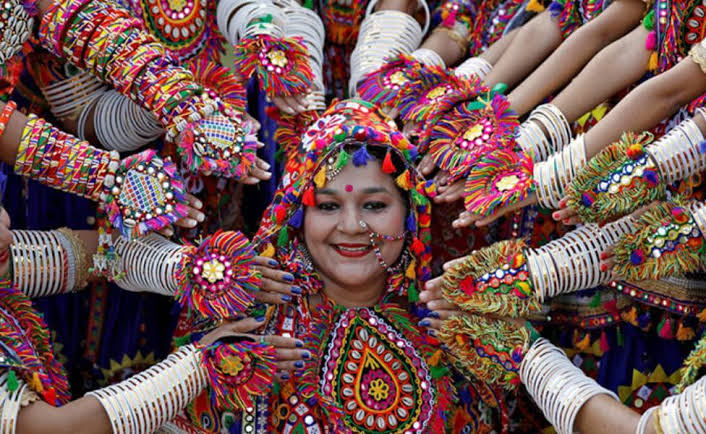
Discover 16 famous cultural festivals in India, from Diwali and Holi to Rath Yatra and the Pushkar Camel Fair, celebrating the country’s rich heritage (more…)

Continue Reading

Trending