Nigeria Trinidad aviation agreement enables direct flights and boosts trade, tourism, and connectivity between Africa and the Caribbean
Nigeria Trinidad aviation agreement has marked a major milestone in global connectivity with the recent signing of a Bilateral Air Services Agreement (BASA) between Nigeria and Trinidad and Tobago.
The historic deal enables designated airlines from both countries to operate direct passenger and cargo flights under mutually agreed terms.
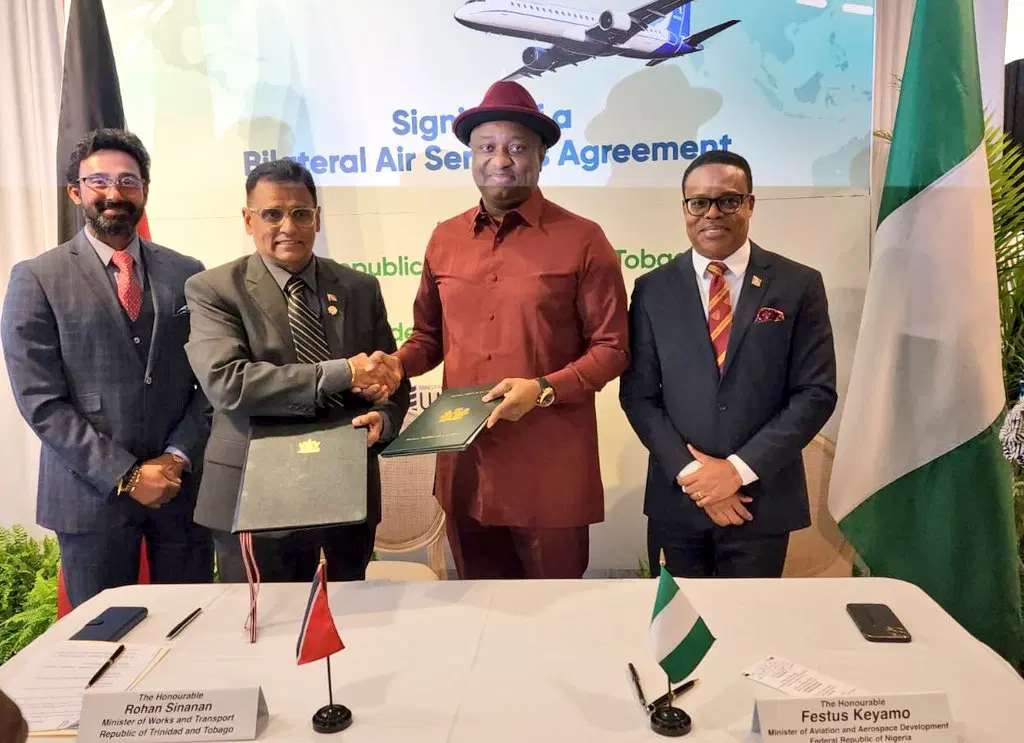
Finalised on Monday in Trinidad and Tobago, the signing ceremony saw the presence of Nigeria’s Minister of Aviation and Aerospace Development, Festus Keyamo, and Trinidad and Tobago’s Minister of Works and Transport, Rohan Sinanan.
The pact, long in development, traces its roots back to the administration of former President Olusegun Obasanjo.
Tunde Moshood, Special Adviser on Media and Communications to Minister Keyamo, explained that the agreement is the culmination of years of diplomatic negotiations. Keyamo himself credited his team’s proactive diplomacy for reviving and sealing the deal.
“Today’s achievement not only honours a bilateral vision set in motion during President Obasanjo’s tenure but also underscores Nigeria’s dedication to expanding its global aviation influence,” said Keyamo during the official signing event.
“This pact will drive trade, tourism, cultural exchange, and stronger connectivity between Nigeria and the Caribbean.”
The Nigeria Trinidad aviation agreement represents more than just a transport arrangement. It symbolises a renewed commitment to international cooperation, particularly between Africa and the Caribbean—a region with strong historical, cultural, and economic links to Nigeria.
Sinanan expressed optimism about the opportunities this deal will create. He described it as a chance to improve collaboration between African and Caribbean carriers, potentially opening new routes that will enhance mobility, commerce, and people-to-people engagement.
“This is not just about flights. It is about building bridges, connecting our regions in a way that encourages prosperity, understanding, and lasting partnership,” Sinanan stated.
Industry observers view the Nigeria Trinidad aviation agreement as a strategic move that could reposition Nigeria as a hub for transatlantic travel. Direct air links with the Caribbean will open new pathways for business travel, tourism, and logistics between West Africa and the Americas.
“This agreement is not only symbolic but immensely practical,” noted an aviation expert who wished to remain anonymous. “It gives airlines new flexibility and provides a legal framework to launch services that didn’t previously exist.”
The agreement also holds promise for cultural diplomacy. With growing interest in African heritage among Caribbean nations, the possibility of increased direct travel will make it easier for individuals to reconnect with their roots and explore shared histories.
Keyamo hinted at broader ambitions, saying the deal aligns with Nigeria’s aviation roadmap, which includes signing new BASAs with more countries, investing in airport upgrades, and modernising regulatory frameworks. He said the ultimate aim is to strengthen Nigeria’s place in the global aviation space.
The Nigerian government has also prioritised creating an enabling environment for airline operators through public-private partnerships, revised aviation policies, and improved airport infrastructure.
This approach, Keyamo explained, is crucial to ensuring that agreements like the one with Trinidad and Tobago translate into tangible benefits for citizens and businesses.
Going forward, both nations will need to complete further regulatory processes to operationalise flight routes. This includes designating carriers, agreeing on frequencies, and establishing safety protocols in line with international standards.
The Nigeria Trinidad aviation agreement sets a hopeful tone for future collaborations between African and Caribbean nations. It showcases what is possible when diplomacy, shared interests, and strategic vision come together.
As Keyamo concluded, “This is only the beginning. We are committed to building more of these partnerships, not just for the sake of flights but for what they represent—a connected world where Nigeria plays a leading role.”









 Culture4 years ago


