Connect with us

Culture

Olubadan Oba Olakulehin Dead Two Days After 90th Birthday

Published

on

Olubadan Oba Olakulehin Dead

Olubadan Oba Olakulehin dead at 90, just two days after marking his birthday and one year on the throne of Ibadanland. Nigeria mourns a respected monarch

The Olubadan of Ibadanland, Oba Owolabi Olakulehin, has died at the age of 90, just two days after celebrating his milestone birthday and the first anniversary of his coronation.

Also read: President Tinubu Celebrates Olubadan at 90 Lauds Leadership Legacy

The revered monarch passed away in the early hours of Monday, July 7, 2025, a year after ascending the throne as the 43rd Olubadan of Ibadanland.

His passing comes as a shock to many, particularly after recent celebrations marked both his 90th birthday and one year on the throne.

Born on July 5, 1935, Oba Olakulehin became Olubadan in July 2024, following the death of his predecessor, Oba (Dr.) Moshood Lekan Balogun, Alli Okunmade II, who passed away at 81.

Prior to becoming Olubadan, Oba Olakulehin held the title of Balogun Olubadan, positioning him next in line to the throne under the Ibadan traditional succession system.

His installation was formally recognised by the Oyo State Governor, Seyi Makinde, who presented him with the staff of office on July 12, 2024.

Tributes have been pouring in from across Nigeria.

President Bola Tinubu, who only days ago celebrated the monarch’s 90th birthday and first coronation anniversary, is among those expressing deep sorrow.

Oba Olakulehin’s reign may have been short, but it was rich with wisdom, peace, and an unwavering commitment to the people of Ibadan.

In a statement released through his Special Adviser on Information and Strategy, Bayo Onanuga, the President described Oba Olakulehin as a symbol of “wisdom, peace, and enduring leadership.”

“Your Imperial Majesty, Oba Olakulehin, as you mark nine decades of a life well lived in service, sacrifice, and stewardship, and on your first anniversary on the throne of your forefathers, we honour not only your longevity but also your immense contributions to community development and national unity,” President Tinubu said in his birthday tribute.

The monarch’s reign, though brief, was lauded for upholding Yoruba culture and traditions and promoting unity within Ibadan and beyond. He was described as a custodian of culture, a respected elder statesman, and a man of deep values who served with dignity and dedication.

His passing has left a deep void in the traditional institution of Ibadanland. Many residents and leaders have described his death as a monumental loss to Yoruba heritage and the cultural identity of Oyo State.

Also read: Eko Fiesta 2025: Lagos gears up for major entertainment, economic boost

Arrangements for his burial and the selection process for his successor are expected to be announced by the Olubadan-in-Council in the coming days.

Continue Reading
Click to comment

Leave a Reply

Culture

Ofala festival: Obi of Onitsha marks 25 Years on throne

Published

on

 Ofala Festival 2026 celebrated Onitsha’s royal heritage as Obi Nnaemeka Achebe marked 25 years on the throne and addressed Nigeria’s economic challenges.

(more…)

Continue Reading

Culture

Crowds Gather for Rare Sunrise at Egypt’s Abu Simbel Temple

Published

on

Abu Simbel

Hundreds of tourists gathered at Egypt’s Abu Simbel temple to witness the twice-yearly sunrise ceremony illuminating Pharaoh Ramses II’s statue

Hundreds of tourists gathered at Egypt’s Abu Simbel temple on Thursday to witness a spectacular sunrise phenomenon in which sunlight illuminated the face of the statue of Pharaoh Ramses II, an event that occurs only twice a year.

Also read: 16 Famous Cultural Festivals That Define India

The ancient astronomical ceremony drew visitors from different parts of the world to the archaeological site in southern Egypt on October 22, one of two dates associated with the phenomenon.

The second occurrence takes place on February 22, when the rising sun illuminates the temple’s interior.

Egyptian tour guide Yasser Fouad described the occasion as extraordinary, saying some visitors had stayed overnight to secure the opportunity to witness the event.

“Today is an extraordinary day, everyone is keen, there are people who stayed over the night, foreigners who actually spent the night in Abu Simbel to see this phenomenon,” Fouad said.

The Great Temple of Ramses II at Abu Simbel dates back to the 13th century BC and is among Egypt’s most prominent archaeological attractions.

Built during the reign of Ramses II, one of ancient Egypt’s most powerful pharaohs, the temple is renowned for its monumental statues and sophisticated architectural design.

The twice-yearly sunrise phenomenon is a major attraction, drawing visitors eager to witness the interaction between sunlight and the temple’s ancient structure.

The dates have traditionally been associated with significant moments in Ramses II’s life.

October 22 is commonly linked to his birthday, while February 22 is associated with his accession to the throne.

However, the precise historical reasons behind the dates remain debated.

Some archaeologists have proposed alternative explanations, including that they may have marked the pharaoh’s coronation and birthday.

Abu Simbel underwent a major international rescue operation in the 1960s, when archaeologists and engineers relocated the temples to protect them from flooding caused by the construction of the Aswan High Dam.

The monumental structures were cut into large blocks and reassembled at a higher location, preserving the site for future generations.

The relocation was one of the most significant archaeological preservation projects of the 20th century.

Despite the move, the temple continues to attract visitors for its ancient Egyptian art, monumental architecture and remarkable alignment with the rising sun.

Also read: 16 Famous Cultural Festivals That Define India

The annual gatherings highlight the enduring appeal of Egypt’s archaeological heritage and the continuing fascination with the astronomical knowledge and engineering achievements of its ancient civilisation.

Continue Reading

Culture

16 Famous Cultural Festivals That Define India

Published

on

India

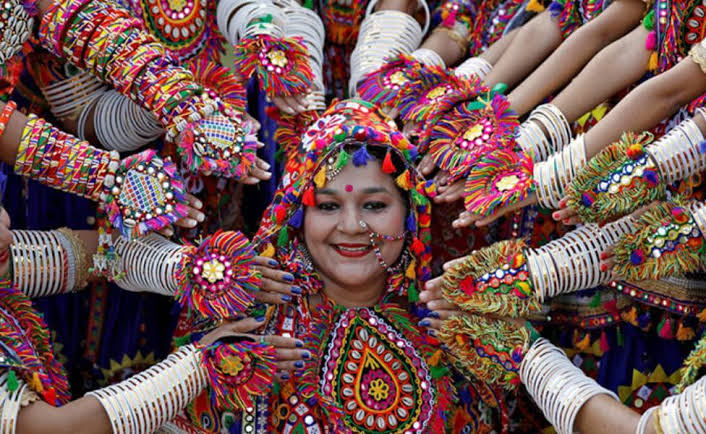
Discover 16 famous cultural festivals in India, from Diwali and Holi to Rath Yatra and the Pushkar Camel Fair, celebrating the country’s rich heritage (more…)

Continue Reading

Trending