Connect with us

Culture

80,000 Participants to attend Cultural Oneness Festival in Ghana

Published

on

80,000 Participants to attend Cultural Oneness Festival in Ghana

The Country’s Director of Cultural Oneness Festival, Ambassador Kazeem Balogun has confirmed that the event scheduled to hold in Ghana in September, is expected to attract 80,000 participants across the continent and around the world.

At a media briefing recently, Amb Balogun added that the event is offering a platform for cultural exchange, business networking, and the promotion of African arts which will also feature Nigeria-Ghana tourism roundtable, providing an opportunity for stakeholders from both countries to share insights and foster closer ties.

The upcoming 2024 edition of the Cultural Oneness Festival, scheduled to take place from 13th- 16th November, 2024 in Tamale, Northern Ghana, will feature a diverse range of activities aimed at celebrating African culture and promoting unity across the continent.

Amb. Balogun outlined the key activities planned for the four-day event, centered around the theme: “Leveraging on Our Strength for Shared Growth and Prosperity as One People”, includes Cultural Exhibition, Cultural Roots Tours, Cultural Fusion Durbar/Street Carnival, Business Forum, Fashion Show, and Musical Concert.

Contributing to the briefing through zoom were co-founders of The Taste Of Afrika, the organizers of the Cultural Oneness Festival, Tengol Kplemani from Ghana and Chief Martin Chris Glin from United States both emphasized the need for African unity and the role the festival plays in fostering this unity.

Kplemani emphazised the rationale behind the establishment of the tourism festival which is to promote and foster unity and diversity through cultural exchange and continental visibility for economic empowerment.

“The festival will serve as a platform for various traditional rulers, kingdoms and leaders from across the continent to come together, share their rich cultural heritage, and collaborate on ways to advance their communities,” he said.

Chief Glin, who has personally retraced his roots back to Africa, reiterated importance of Africa’s integration and encouraged African diasporans to reconnect with their heritage “This event will also improve our relationship with Ghana even more. It will help us to understand ourselves better,” he noted.

Also speaking was the Cultural Oneness Festival Assistant Country’s Director, Amb. Peace Onuiri, emphasized the importance of Nigeria embracing such initiatives to boost its own tourism and cultural sectors.

She said, “When Nigerians partner and participate in this, we will gain a lot. We’ll learn how to do things properly and reap the benefits,” She explained,

She also noted that the festival would serve as a platform for fostering unity and integration within West Africa.

The call to action extends beyond government participation. Amb. Peace, highlighted the need for cultural shift among Nigerians, urging greater appreciation for local traditions and attire. “Our mentality has to change that we are Africans,” she noted, encouraging the adoption of African attire and cultural practices in daily life.

The organiser, The Taste Of Afrika, an international organization dedicated to promoting African culture, has made the festival to become a platform for African countries to showcase their heritage, engage in cultural exchange, and discuss ways to leverage cultural assets for socio-economic development.

Continue Reading
Click to comment

Leave a Reply

Culture

Ofala festival: Obi of Onitsha marks 25 Years on throne

Published

on

 Ofala Festival 2026 celebrated Onitsha’s royal heritage as Obi Nnaemeka Achebe marked 25 years on the throne and addressed Nigeria’s economic challenges.

(more…)

Continue Reading

Culture

Crowds Gather for Rare Sunrise at Egypt’s Abu Simbel Temple

Published

on

Abu Simbel

Hundreds of tourists gathered at Egypt’s Abu Simbel temple to witness the twice-yearly sunrise ceremony illuminating Pharaoh Ramses II’s statue

Hundreds of tourists gathered at Egypt’s Abu Simbel temple on Thursday to witness a spectacular sunrise phenomenon in which sunlight illuminated the face of the statue of Pharaoh Ramses II, an event that occurs only twice a year.

Also read: 16 Famous Cultural Festivals That Define India

The ancient astronomical ceremony drew visitors from different parts of the world to the archaeological site in southern Egypt on October 22, one of two dates associated with the phenomenon.

The second occurrence takes place on February 22, when the rising sun illuminates the temple’s interior.

Egyptian tour guide Yasser Fouad described the occasion as extraordinary, saying some visitors had stayed overnight to secure the opportunity to witness the event.

“Today is an extraordinary day, everyone is keen, there are people who stayed over the night, foreigners who actually spent the night in Abu Simbel to see this phenomenon,” Fouad said.

The Great Temple of Ramses II at Abu Simbel dates back to the 13th century BC and is among Egypt’s most prominent archaeological attractions.

Built during the reign of Ramses II, one of ancient Egypt’s most powerful pharaohs, the temple is renowned for its monumental statues and sophisticated architectural design.

The twice-yearly sunrise phenomenon is a major attraction, drawing visitors eager to witness the interaction between sunlight and the temple’s ancient structure.

The dates have traditionally been associated with significant moments in Ramses II’s life.

October 22 is commonly linked to his birthday, while February 22 is associated with his accession to the throne.

However, the precise historical reasons behind the dates remain debated.

Some archaeologists have proposed alternative explanations, including that they may have marked the pharaoh’s coronation and birthday.

Abu Simbel underwent a major international rescue operation in the 1960s, when archaeologists and engineers relocated the temples to protect them from flooding caused by the construction of the Aswan High Dam.

The monumental structures were cut into large blocks and reassembled at a higher location, preserving the site for future generations.

The relocation was one of the most significant archaeological preservation projects of the 20th century.

Despite the move, the temple continues to attract visitors for its ancient Egyptian art, monumental architecture and remarkable alignment with the rising sun.

Also read: 16 Famous Cultural Festivals That Define India

The annual gatherings highlight the enduring appeal of Egypt’s archaeological heritage and the continuing fascination with the astronomical knowledge and engineering achievements of its ancient civilisation.

Continue Reading

Culture

16 Famous Cultural Festivals That Define India

Published

on

India

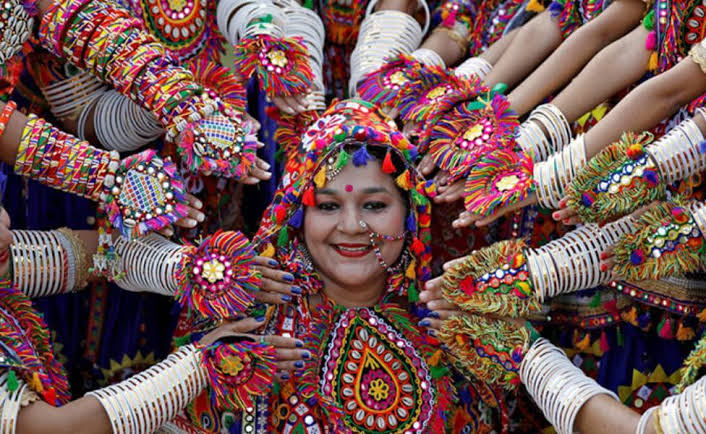
Discover 16 famous cultural festivals in India, from Diwali and Holi to Rath Yatra and the Pushkar Camel Fair, celebrating the country’s rich heritage (more…)

Continue Reading

Trending