Connect with us

Culture

Gbenu Charges Badagry West To Preserve Cultural Heritage

Published

on

Gbenu Charges Badagry West To Preserve Cultural Heritage

The Executive Chairman of Badagry West LCDA, Hon. Gbenu Joseph Henug­be, has charged the traditional institu­tion and leadership of various groups in the council area to work in unison towards the preservation of the cultural heritage of the people.

Hon. Gbenu spoke during the celebra­tions of the 2024 Isese Day at the event which was held at the Palace of His Royal Majesty, Oba Oyekan Adekanmi Ilufemiloye Ajose, Posii III, the Alapa of Apa Egun Awori Kingdom.

Represented by Solomon Zosu, the Se­nior Special Assistant On Information, Tourism and Special Works, Badagry West Local Council Development Area (LCDA), Hon. Gbenu added, “Our rich cultural heritage is a valuable asset for sustainable development and tourism.

Salaries and compensation for Nigerian workers can now be paid in US Dollars, you acquire premium domains for as low as $1500 and PROFIT $22,000 ( ₦34 million) Click here.

“Let us continue to cherish and pass down our traditions to future genera­tions. As we celebrate Isese Day, let us look forward to a brighter future for Badagry West and Nigeria.”

The Chairman commended HRM Alapa, HRM Aholu of Kweme and other chieftains for their efforts in preserv­ing our traditions and thanked the Governor, Babajide Sanwo-Olu for his support.

Zosu in his comments reinforced the significance of the Isese Day celebra­tion, saying, “Isese Day showcases what makes us unique; let us celebrate our distinct identity. It reminds us of our shared heritage; let us celebrate our di­versity and come together as one.”

The celebration showcased the unique culture and traditions of the people, featuring captivating moments of traditional music, dance, art, and food.

The rich cultural heritage of Badagry West was on full display, with enthusi­astic participation from various tradi­tional groups, including Oro, Zangbeto, Gelede, and other cultural troupes.

The 2024 Isese Day featured a cap­tivating display of mystical powers, prayers for the King, rendition of spir­itually spiced prayers for political lead­ers and peace to continue to reign in Badagry, Lagos, and Nigeria.

Continue Reading
Click to comment

Leave a Reply

Culture

Ofala festival: Obi of Onitsha marks 25 Years on throne

Published

on

 Ofala Festival 2026 celebrated Onitsha’s royal heritage as Obi Nnaemeka Achebe marked 25 years on the throne and addressed Nigeria’s economic challenges.

(more…)

Continue Reading

Culture

Crowds Gather for Rare Sunrise at Egypt’s Abu Simbel Temple

Published

on

Abu Simbel

Hundreds of tourists gathered at Egypt’s Abu Simbel temple to witness the twice-yearly sunrise ceremony illuminating Pharaoh Ramses II’s statue

Hundreds of tourists gathered at Egypt’s Abu Simbel temple on Thursday to witness a spectacular sunrise phenomenon in which sunlight illuminated the face of the statue of Pharaoh Ramses II, an event that occurs only twice a year.

Also read: 16 Famous Cultural Festivals That Define India

The ancient astronomical ceremony drew visitors from different parts of the world to the archaeological site in southern Egypt on October 22, one of two dates associated with the phenomenon.

The second occurrence takes place on February 22, when the rising sun illuminates the temple’s interior.

Egyptian tour guide Yasser Fouad described the occasion as extraordinary, saying some visitors had stayed overnight to secure the opportunity to witness the event.

“Today is an extraordinary day, everyone is keen, there are people who stayed over the night, foreigners who actually spent the night in Abu Simbel to see this phenomenon,” Fouad said.

The Great Temple of Ramses II at Abu Simbel dates back to the 13th century BC and is among Egypt’s most prominent archaeological attractions.

Built during the reign of Ramses II, one of ancient Egypt’s most powerful pharaohs, the temple is renowned for its monumental statues and sophisticated architectural design.

The twice-yearly sunrise phenomenon is a major attraction, drawing visitors eager to witness the interaction between sunlight and the temple’s ancient structure.

The dates have traditionally been associated with significant moments in Ramses II’s life.

October 22 is commonly linked to his birthday, while February 22 is associated with his accession to the throne.

However, the precise historical reasons behind the dates remain debated.

Some archaeologists have proposed alternative explanations, including that they may have marked the pharaoh’s coronation and birthday.

Abu Simbel underwent a major international rescue operation in the 1960s, when archaeologists and engineers relocated the temples to protect them from flooding caused by the construction of the Aswan High Dam.

The monumental structures were cut into large blocks and reassembled at a higher location, preserving the site for future generations.

The relocation was one of the most significant archaeological preservation projects of the 20th century.

Despite the move, the temple continues to attract visitors for its ancient Egyptian art, monumental architecture and remarkable alignment with the rising sun.

Also read: 16 Famous Cultural Festivals That Define India

The annual gatherings highlight the enduring appeal of Egypt’s archaeological heritage and the continuing fascination with the astronomical knowledge and engineering achievements of its ancient civilisation.

Continue Reading

Culture

16 Famous Cultural Festivals That Define India

Published

on

India

Discover 16 famous cultural festivals in India, from Diwali and Holi to Rath Yatra and the Pushkar Camel Fair, celebrating the country’s rich heritage (more…)

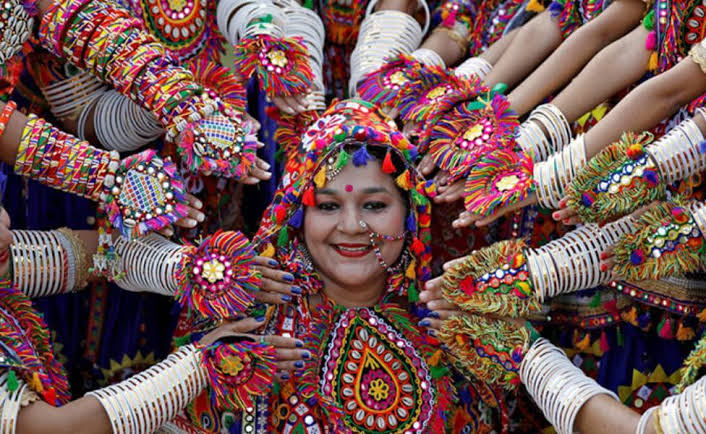
Continue Reading

Trending