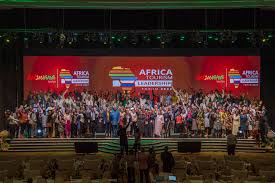
The African Tourism Leadership Forum (ATLF) 2024 is set to be an unprecedented convergence of tourism leaders, policymakers, and industry innovators from across the globe.
Hosted in the vibrant city of Gaborone, Botswana, this year’s forum promises to redefine the future of African tourism, with a spotlight on the highly anticipated masterclass and business-to-business (B2B) events.
The ATLF 2024 masterclass is designed to equip participants with cutting-edge insights, strategies, and skills required to navigate the evolving landscape of the tourism industry.
The masterclass will feature distinguished speakers who are shaping the future of global tourism, including; Mark Okraku-Mantey, deputy minister, Ministry of Tourism, Arts and Culture, Republic of Ghana, who will share his visionary approach to driving cultural and tourism growth in Ghana, as well as Senthil Gopinath, CEO, International Congress and Convention Association (ICCA), Netherlands, a global authority on conventions and events.
Gopinath will bring his vast expertise on how Africa can position itself as a leading destination for international meetings and events.
Others speakers are: Emily Mburu-Ndoria, director, trade in services, investment, intellectual property rights, and digital trade, AFCFTA Secretariat, who will explore the role of trade in services and digital transformation in boosting tourism across the continent, while Lasse Ristolainen, Development Principal, Kasada Capital Management, will offer insight with her extensive experience in hotel development and investment, as well as exploring innovative approaches to tourism infrastructure in Africa.
On his part, Olayinka Bandele, chief of Inclusive Industrialization Section, United Nations Economic Commission for Africa Sub-regional Office for Southern Africa, will discuss sustainable tourism as a driver for inclusive industrialization in Africa.
Shatha Al Kaud, founder of Emportality Sustainability Consultancy, Saudi Arabia and the UAE, a leading voice in sustainability, will offer strategies on embedding sustainable practices in tourism development.
The B2B event at ATLF 2024 will be a dynamic platform where tourism professionals can forge new partnerships, explore investment opportunities, and engage in high-level networking. The event is engineered to create an environment where business deals are not just discussed but realized, ensuring long-term growth and collaboration within the African tourism sector.
Prominent leaders and industry figures will participate in the event, including: Keitumetse Setlang, CEO, Botswana Tourism Organisation, a champion for Botswana’s tourism industry, who will highlight the country’s strategies for attracting global travelers.
Nombulelo Guliwe, chief executive officer, South African Tourism, will delve into the innovative approaches South Africa is taking to maintain its position as a leading tourism destination in Africa, while June Chepkemei, chief executive officer, Kenya Tourism Board (KTB), will share Kenya’s success stories in tourism and discuss future-plans to further elevate the nation’s tourism offerings.
Hamza Farooqui, chief executive officer, Millat Investments, South Africa, a leading entrepreneur, will discuss investment opportunities in Africa’s tourism sector and the importance of building resilient tourism economies.
Kamil Al-Awadhi, regional vice president, Africa and the Middle East, IATA, will provide insights on the future of air travel in Africa and how the continent can enhance its connectivity to boost tourism.
The ATLF 2024 will serve as a catalyst for innovation and growth in the African tourism industry. By bringing together an elite group of speakers and attendees, the forum will not only showcase the potential of African tourism but also provide actionable solutions to the challenges facing the sector.
The ATLF 2024 is organised by African Tourism Partners (ATP), a UN Tourism-affiliated award-winning Pan-African tourism development and strategic destination marketing advisory firm.









 Culture4 years ago


