Connect with us

Culture

Why we supported ‘The King Must Dance Naked’, by Olapeju Ibekwe

Published

on

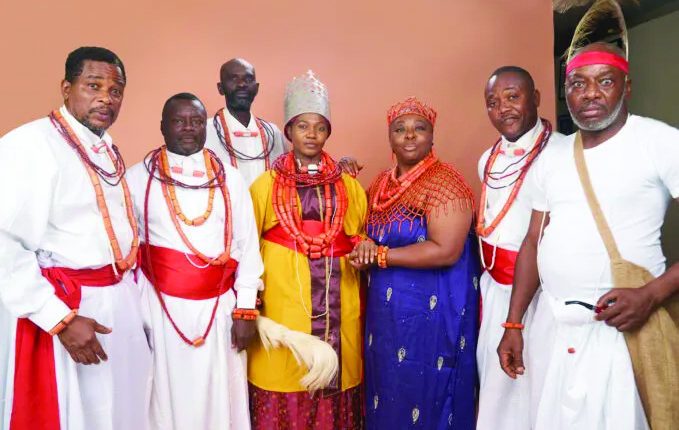
IT’S an honour to stand before you today, immersed in the artistry of “The King Must Dance Naked,” a timeless masterpiece revived by the dedicated efforts of the Lufodo Productions team, produced by the talented Soji Jacobs.

This play is not merely a stage performance but an integral part of our cherished memories, shaping our childhood experiences. Witnessing the revival of this iconic piece by the dedicated Lufodo team invokes a sense of nostalgia, promising a glimpse into the glorious past while embracing the innovative spirit of the present.

Nigeria’s creative economy is a vibrant tapestry woven with remarkable talent and unexplored potential. Formalising this sector is imperative to harness its prowess fully. Transitioning from its current fragmented state to a structured and interconnected industry with formal systems is pivotal. At Sterling One Foundation, we are dedicated to supporting this evolution through various initiatives.

Our commitment to the creative industry is exemplified through supporting and nurturing the Nigerian creative industry. Our initiatives, such as the recent panel session at the Africa Social Impact Summit, focused on reshaping the narrative of the creative economy. This platform was instrumental in devising innovative strategies to bolster funding and elevate the creative industry, leveraging the power of media and entertainment.

Youth development stands as a cornerstone of our efforts. Initiatives like Y-Novate and WESDEP empower young minds by imparting tech skills, fostering innovation, and enhancing employability.

The National Bureau of Statistics data underscores the substantial employment generated by Nigeria’s creative sectors, spanning media, entertainment, beauty, tourism, and more. With over 4.2 million individuals employed, the potential for further job creation and GDP contribution is immense. This is precisely why we lend our support to initiatives like the Lufodo theatre production, “The King Must Dance Naked.”

A thriving creative economy could very well surpass our oil industry, especially considering Nigeria’s wealth of talented youths.

Nigeria’s creative prowess has garnered global acclaim, particularly in music, films, and art, amplifying our rich culture and driving tourism. The importance of data collection, robust frameworks, and accessible finance cannot be overstated as pivotal catalysts for industry growth.

Today, I implore us all to foster collaboration among stakeholders across the creative and entertainment spectrum. Together, we can amplify the sector’s impact and propel Nigeria’s creative economy to unrivaled heights.

On behalf of the Board of Sterling One Foundation and the Managing Director/CEO of Sterling Bank, I extend our sincerest gratitude for your presence tonight. Your attendance at this event is deeply appreciated and speaks volumes about your support for the arts and our collective endeavors. Thank you.

Let us now immerse ourselves in the magic of “The King Must Dance Naked” and continue our journey towards an enriched and prosperous creative landscape.

Culture

Dexter Loko Wins Prestigious 2026 Chinua Achebe Prize

Published

on

 Dexter Loko Wins Chinua Achebe Prize for his 170,000-word fantasy novel, The Bako of Zereshé, at the 2026 ANA convention in Abuja

(more…)

Continue Reading

Culture

Ofala festival: Obi of Onitsha marks 25 Years on throne

Published

on

 Ofala Festival 2026 celebrated Onitsha’s royal heritage as Obi Nnaemeka Achebe marked 25 years on the throne and addressed Nigeria’s economic challenges.

(more…)

Continue Reading

Culture

Crowds Gather for Rare Sunrise at Egypt’s Abu Simbel Temple

Published

on

Abu Simbel

Hundreds of tourists gathered at Egypt’s Abu Simbel temple to witness the twice-yearly sunrise ceremony illuminating Pharaoh Ramses II’s statue

Hundreds of tourists gathered at Egypt’s Abu Simbel temple on Thursday to witness a spectacular sunrise phenomenon in which sunlight illuminated the face of the statue of Pharaoh Ramses II, an event that occurs only twice a year.

Also read: 16 Famous Cultural Festivals That Define India

The ancient astronomical ceremony drew visitors from different parts of the world to the archaeological site in southern Egypt on October 22, one of two dates associated with the phenomenon.

The second occurrence takes place on February 22, when the rising sun illuminates the temple’s interior.

Egyptian tour guide Yasser Fouad described the occasion as extraordinary, saying some visitors had stayed overnight to secure the opportunity to witness the event.

“Today is an extraordinary day, everyone is keen, there are people who stayed over the night, foreigners who actually spent the night in Abu Simbel to see this phenomenon,” Fouad said.

The Great Temple of Ramses II at Abu Simbel dates back to the 13th century BC and is among Egypt’s most prominent archaeological attractions.

Built during the reign of Ramses II, one of ancient Egypt’s most powerful pharaohs, the temple is renowned for its monumental statues and sophisticated architectural design.

The twice-yearly sunrise phenomenon is a major attraction, drawing visitors eager to witness the interaction between sunlight and the temple’s ancient structure.

The dates have traditionally been associated with significant moments in Ramses II’s life.

October 22 is commonly linked to his birthday, while February 22 is associated with his accession to the throne.

However, the precise historical reasons behind the dates remain debated.

Some archaeologists have proposed alternative explanations, including that they may have marked the pharaoh’s coronation and birthday.

Abu Simbel underwent a major international rescue operation in the 1960s, when archaeologists and engineers relocated the temples to protect them from flooding caused by the construction of the Aswan High Dam.

The monumental structures were cut into large blocks and reassembled at a higher location, preserving the site for future generations.

The relocation was one of the most significant archaeological preservation projects of the 20th century.

Despite the move, the temple continues to attract visitors for its ancient Egyptian art, monumental architecture and remarkable alignment with the rising sun.

Also read: 16 Famous Cultural Festivals That Define India

The annual gatherings highlight the enduring appeal of Egypt’s archaeological heritage and the continuing fascination with the astronomical knowledge and engineering achievements of its ancient civilisation.

Continue Reading

Trending