
Opinion
Ondo monarch calls for tourism investment to boost Nigerian economy


By Victor Ojelabi,
The Rotary Foundation has recognised the polio eradication efforts of Rotary International District 9112 under Immediate Past District Governor Lanre Adedoyin, following the District’s transfer of District Designated Funds to the PolioPlus Fund during the 2025 to 2026 Rotary year, a contribution acknowledged recently, as part of the global funding effort to protect children from the disease.
Also read: Rotary Club of Lagos Strengthens Traders With Fresh ₦6m Business Grant
The recognition brings a fitting international dimension to a Rotary year in which Adedoyin, a lawyer and member of the Rotary Club of Surulere South, repeatedly placed polio eradication among District 9112’s major humanitarian priorities across Lagos and Ogun states.
In a message addressed to District 9112, The Rotary Foundation thanked the District for committing its District Designated Funds to the campaign, saying the collective support from Rotary districts helped the organisation reach its fundraising target and secure matching funds that translate into US$150 million for polio eradication.
“Your support helped Rotary reach our goal and secure the matching funds that translate into US$150 million toward eradicating polio,” the Foundation said.
The money has consequences far beyond the balance sheet.
According to the Foundation, polio funding supports frontline workers taking vaccines into remote communities, environmental surveillance capable of detecting the virus in wastewater and programmes designed to interrupt transmission in affected areas.
The Foundation said the continuing effort was particularly important in Afghanistan and Pakistan, the only two countries where wild poliovirus remains endemic.
That assessment is consistent with Rotary International’s latest account of the global campaign.
Rotary says its partnership with the Gates Foundation generates up to US$150 million annually for polio eradication, with Rotary raising US$50 million and the Foundation providing a two-to-one match.
The money supports vaccine procurement, social mobilisation, outbreak response, surveillance and other operational requirements.
Rotary’s involvement stretches back decades. Its first polio vaccination project began in the Philippines in 1979, and the organisation became a founding partner of the Global Polio Eradication Initiative in 1988. Since then, global polio cases have fallen by 99.9 per cent.
For Nigeria, the story carries particular resonance.
The country recorded its last case of wild poliovirus in Borno State in August 2016.
Four years later, the World Health Organisation African Region was formally certified free of wild poliovirus, leaving Afghanistan and Pakistan as the remaining countries with endemic transmission.
That historic achievement, however, did not mean the end of the polio challenge in Nigeria.
Circulating vaccine-derived poliovirus can still emerge in communities with low immunisation coverage, making vaccination and surveillance essential even in countries that have eliminated wild poliovirus.
It was against that backdrop that the IPDG’s polio drive developed during the 2025 to 2026 Rotary year.
Adedoyin, who became the second District Governor of District 9112 following the division of the former District 9110, had signalled early in his tenure that healthcare would remain a central part of the District’s service programme.
His installation in Lagos in July 2025 marked the beginning of a year that subsequently combined fundraising with grassroots advocacy and support for health workers.
By September 2025, the District had held a PolioPlus seminar at which Adedoyin warned against complacency simply because wild poliovirus had disappeared from Nigeria. District records show that the campaign remained prominent in its programme in the months that followed.
In October, Districts 9111 and 9112 took the End Polio Now message beyond conventional conference halls with a joint train journey from Lagos to Abeokuta.
Led by Adedoyin and then District 9111 Governor Henry Akinyele, alongside Nigeria National PolioPlus Committee Chairman Joshua Hassan and other Rotary leaders, the initiative turned the train journey into a public awareness campaign for polio eradication.
District 9112 also took the message to communities in Ogun State, including a roughly 10-kilometre Keep Polio @ Zero awareness walk in Sagamu aimed particularly at encouraging parents and guardians to ensure that children receive their vaccinations.
In Lagos, the campaign moved from advocacy to practical support.
District 9112 donated 100 pairs of rain boots and 200 raincoats to the Lagos State Primary Health Care Board in October 2025 to assist health personnel working on polio eradication during the rainy season. The intervention was valued at about ₦1.6 million.
Adedoyin made the District’s position clear at the presentation.
“Our commitment to ending polio is absolute,” Adedoyin said. “We will continue working with the Lagos State Government and our partners until polio is completely wiped out.”
Another significant moment came towards the end of his tenure.
In June 2026, District 9112 announced that it had raised US$13,000 through the World’s Greatest Meal initiative for The Rotary Foundation’s PolioPlus Fund.
The contribution was described by World’s Greatest Meal Committee Chairman Tokunbo Opanubi as one of the highest recorded by the District through the initiative.
The US$13,000 contribution is separate from the District Designated Funds now acknowledged by The Rotary Foundation.
Together, however, the initiatives illustrate the different channels through which District 9112 supported the global eradication campaign during Adedoyin’s tenure.
District Designated Funds form part of The Rotary Foundation’s funding system and allow Rotary districts to direct portions of avail

IPDG Lanre Adedoyin with wife at a Rotary event recently
able Foundation resources towards eligible programmes.
PolioPlus is one of the avenues through which districts can deploy such resources in support of Rotary’s eradication objective.
The Foundation’s latest acknowledgement therefore adds another layer to District 9112’s polio record for the 2025 to 2026 year.
It also demonstrates the multiplier effect behind Rotary’s funding model.
A contribution originating from clubs and districts can ultimately support a much larger global pool used for vaccines, surveillance, community mobilisation and the difficult task of reaching children in areas affected by conflict, insecurity or geographical isolation.
The stakes remain considerable.
Polio is a potentially fatal infectious disease that primarily affects young children and can invade the nervous system, causing irreversible paralysis.
Although its global footprint has been reduced dramatically, Rotary cautions that eradication requires sustained vaccination and surveillance until transmission has been stopped everywhere.
The Foundation’s message to District 9112 captured that unfinished mission.
It thanked the District for supporting the PolioPlus Fund and helping move the world closer to the point where “no child is threatened by this disease ever again”.
For Adedoyin, who handed over the governorship of District 9112 at the end of the 2025 to 2026 Rotary year, the recognition offers a powerful postscript to a year in which the District’s contribution was measured not only in fundraising figures, but also in public advocacy, community mobilisation and support for those working closest to vulnerable children.
Also read: Rotary Club of Lagos Strengthens Traders With Fresh ₦6m Business Grant
And for District 9112, the acknowledgement connects a local Rotary story from Lagos and Ogun states to a much larger global ambition: ensuring that the final cases of polio become part of history rather than the beginning of another outbreak.
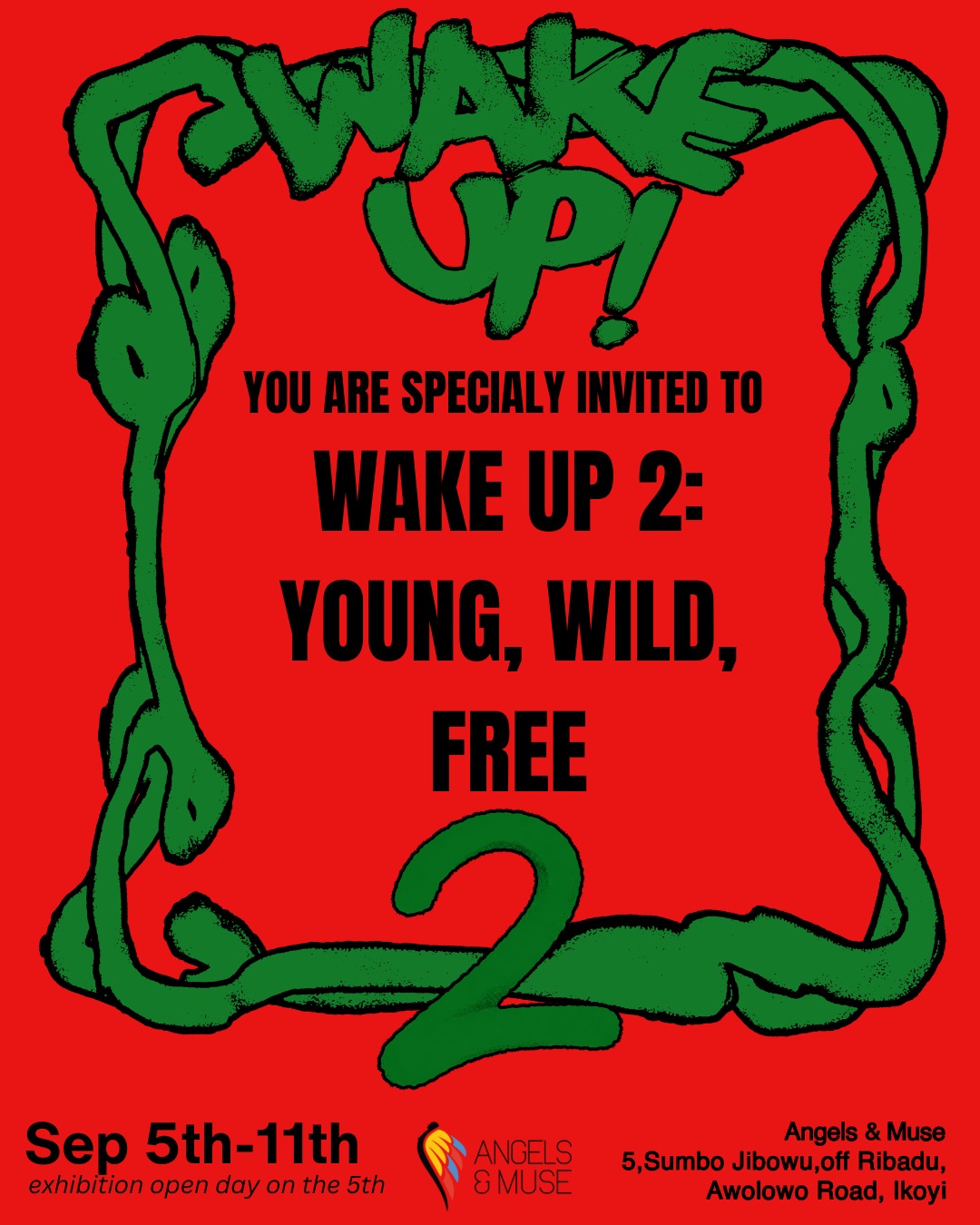
The contemporary art and photography exhibition “Wake Up!” is back again for a second edition.
Curated by Awele Onwordi, Wake Up! 2 exhibition pays homage to the Nigerian youth and burgeoning street culture which many of its contributing artists reference in their works.
Also read: Five rising stars battle for 2026 Headies Next Rated
Titled “Young, Wild, Free”, the exhibition celebrates the creativity, resilience, freedom and cultural influence found in Nigerian youth.
Taking aim at societal issues and economic concerns, the exhibit reflects the youth and their refusal to compromise or bow despite all the challenges stacked against them while charting youth culture through art, music, fashion, skateboarding, photography and community.
The exhibition will be held, once again, at the Angel and Muse Gallery at 25 Sumbo Jibowu street off Ribadu Road off Awolowo Road in Ikoyi.
It will open on Saturday 5 September 2026 and will run until 11 September 2026
This second edition which focuses on celebrating, nurturing and exploring artistic practices rooted in youth and street culture will feature works from DENCITY and SUPERGLIDER HOUSE.
Exhibiting artists include Ajilore Kehinde – their work is deeply influenced by Nigerian street culture and works of other artists like Slawn, Peters Ejiro, etc, Chuka Onwordi – graphic designer who embodies themes of death, melancholy and beauty in his works, ZIDYEP – Abuja based creative whose works move between digital and physical spaces through art, graphic design and air brushing , Franklyn Okoye – graphic designer and artist whose works explore themes of identity and hyper-reality, Awele Onwordi – founder & curator of WAKE UP and multidisciplinary artist whose practice spans character art, creative logo design, album covers and more , Oluchi Kogolo – digital illustrator whose work explores street culture, personality and storytelling through a raw and playful visual style and Kozetuo Apeji – multidisciplinary artists who work explores experimental approaches to problem solving through both digital and traditional art forms.

Commenting on the exhibition in her curatorial statement, Awele noted that “despite economic instability, limited opportunities and socio-political challenges, Nigerian youth continue to shape culture through music, fashion, art, skateboarding, raves, photography and community.”
Also read: Five rising stars battle for 2026 Headies Next Rated
Continuing and harping on the raison d’etre of the exhibition she said, “Young, Wild and Free exists to celebrate Nigerian youth while also creating a platform that supports and amplifies them.”

Gbenga Adeyinka Brings Laffmattazz 2026 Finale to Lagos

Orlando Owoh Music Festival Set for November 7 in Lagos

The Headies Announces New Date for 18th Awards Edition


 Culture4 years ago
The Four Igbo Market Days and Their Significance In Omenala ÌGBÒ
- Business3 years ago
Ooni of Ife Discusses Business and Peace Initiative in Kenya
- Events4 years ago
Glamour, glitz as B’obagunwa Omo’ba Obinrin Akile Ijebu celebrates New Year party (Photos)
- Culture4 years ago
Outrage as Ezendigbo of Ibadanland confers chieftaincy title on Olubadan
- Events4 years ago
Onitoomu of Ito-Omu installs two new chiefs (Video, Photos)
- Events2 years ago
Egbe Bobasete: The New Fashion Sensation Elevates 2024 Ojude Oba Festival (Video, Photos)
- Paranormal4 years ago
Black Cat Superstition: Good and Bad Luck Beliefs
 Events3 years ago
NANTAP Convention 2023: Reshaping Nigerian Theatre Arts for economic growth


