Connect with us

Culture

Oba of Benin Council Bill Opposition Sparks Edo Outrage

Published

on

Oba of Benin council bill opposition

Oba of Benin council bill opposition intensifies as Ogbakha-Edo demands withdrawal of proposed law favoring Ooni, Sultan as permanent council co-chairs

Oba of Benin council bill opposition is gaining momentum as a prominent Edo group, Ogbakha-Edo, on Friday called for the immediate withdrawal of a proposed bill that would make the Ooni of Ife and Sultan of Sokoto permanent co-chairmen of the Nigerian Council of Traditional Rulers.

Also read: Oba of Benin palace bans burial rites as Igue festival begins

In a strongly worded statement signed by Prof. Sam Guobadia (Chairman) and Dr. Andrew Osaretin Izekor (Secretary), the group rejected what it described as a blatant attempt to diminish the authority and stature of the Oba of Benin, one of Nigeria’s most revered monarchs.

“We reject in totality any attempt to undermine or diminish the authority of the Oba of Benin,” the statement read. “This proposal is not only historically unjustifiable, it is provocative, divisive, and culturally offensive.”

Ogbakha-Edo argued that the leadership of the traditional rulers’ council should be non-permanent and rotational among all first-class traditional rulers in Nigeria to ensure fairness and cultural equity.

They denounced the bill as a product of political expediency and past protocols of convenience, insisting it would amount to institutionalizing hierarchical supremacy where none should exist.

“The Benin people, with centuries of sovereignty and cultural pride, will not accept a constitutionally enshrined system that places the Oba of Benin beneath any other monarch,” the group declared.

They emphasized that the proposed arrangement was an affront to historical justice and an insult to the revered status of the Benin throne.

Also read: Benin City hosts global filmmakers for 2nd nollyhood workshop on sickle cell short film

The group warned that further moves to pass the bill could ignite deeper ethnic and cultural tensions, urging the National Assembly to scrap the bill immediately in the interest of national unity and respect for Nigeria’s diverse monarchies.

Continue Reading
Click to comment

Leave a Reply

Culture

Ofala festival: Obi of Onitsha marks 25 Years on throne

Published

on

 Ofala Festival 2026 celebrated Onitsha’s royal heritage as Obi Nnaemeka Achebe marked 25 years on the throne and addressed Nigeria’s economic challenges.

(more…)

Continue Reading

Culture

Crowds Gather for Rare Sunrise at Egypt’s Abu Simbel Temple

Published

on

Abu Simbel

Hundreds of tourists gathered at Egypt’s Abu Simbel temple to witness the twice-yearly sunrise ceremony illuminating Pharaoh Ramses II’s statue

Hundreds of tourists gathered at Egypt’s Abu Simbel temple on Thursday to witness a spectacular sunrise phenomenon in which sunlight illuminated the face of the statue of Pharaoh Ramses II, an event that occurs only twice a year.

Also read: 16 Famous Cultural Festivals That Define India

The ancient astronomical ceremony drew visitors from different parts of the world to the archaeological site in southern Egypt on October 22, one of two dates associated with the phenomenon.

The second occurrence takes place on February 22, when the rising sun illuminates the temple’s interior.

Egyptian tour guide Yasser Fouad described the occasion as extraordinary, saying some visitors had stayed overnight to secure the opportunity to witness the event.

“Today is an extraordinary day, everyone is keen, there are people who stayed over the night, foreigners who actually spent the night in Abu Simbel to see this phenomenon,” Fouad said.

The Great Temple of Ramses II at Abu Simbel dates back to the 13th century BC and is among Egypt’s most prominent archaeological attractions.

Built during the reign of Ramses II, one of ancient Egypt’s most powerful pharaohs, the temple is renowned for its monumental statues and sophisticated architectural design.

The twice-yearly sunrise phenomenon is a major attraction, drawing visitors eager to witness the interaction between sunlight and the temple’s ancient structure.

The dates have traditionally been associated with significant moments in Ramses II’s life.

October 22 is commonly linked to his birthday, while February 22 is associated with his accession to the throne.

However, the precise historical reasons behind the dates remain debated.

Some archaeologists have proposed alternative explanations, including that they may have marked the pharaoh’s coronation and birthday.

Abu Simbel underwent a major international rescue operation in the 1960s, when archaeologists and engineers relocated the temples to protect them from flooding caused by the construction of the Aswan High Dam.

The monumental structures were cut into large blocks and reassembled at a higher location, preserving the site for future generations.

The relocation was one of the most significant archaeological preservation projects of the 20th century.

Despite the move, the temple continues to attract visitors for its ancient Egyptian art, monumental architecture and remarkable alignment with the rising sun.

Also read: 16 Famous Cultural Festivals That Define India

The annual gatherings highlight the enduring appeal of Egypt’s archaeological heritage and the continuing fascination with the astronomical knowledge and engineering achievements of its ancient civilisation.

Continue Reading

Culture

16 Famous Cultural Festivals That Define India

Published

on

India

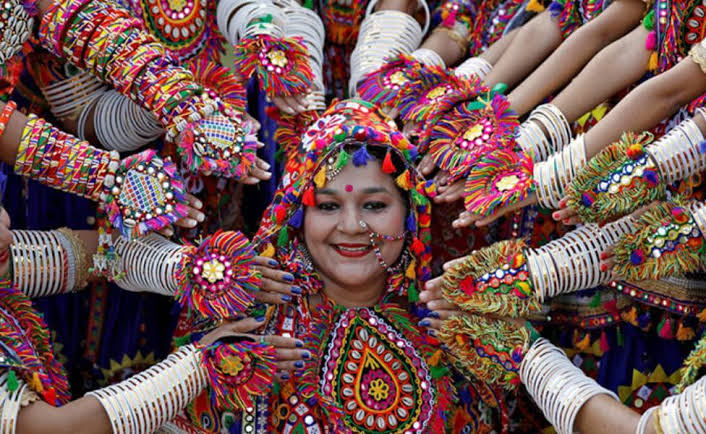
Discover 16 famous cultural festivals in India, from Diwali and Holi to Rath Yatra and the Pushkar Camel Fair, celebrating the country’s rich heritage (more…)

Continue Reading

Trending