Connect with us

Culture

Nigeria Seeks To Enlist New Yam Festival In UNESCO Cultural Heritage

Published

on

Nigeria Seeks To Enlist New Yam Festival In UNESCO Cultural Heritage

Nigeria is seeking to enlist the Igbo’s ‘Iri Ji Ohu’ (New Yam Festival) as an UNESCO Intangible Cultural Heritage.

This was disclosed by the Minister of Arts, Culture and Creative Economy, Hannatu Musawa, during a courtesy visit to her office by a delegation of traditional rulers from the South-East.

Noting that the Iri Ji Ohu festival is as important and prestigious as the Argungu Fishing Festival and the Orisa Festival, Musawa said despite the lack of funding, the ministry “will work towards involving UNESCO experts in the festival and submit it for possible enlistment.”

This is in addition to promoting the festival globally to attract the support of Nigerians of Igbo descent in the diaspora.

Commending the minister’s commitment, spokesperson for the South-East traditional leaders’ delegate, His Royal Highness (HRH), Eze Sylvester Onuegbu of Imo State, urged support in taking the festival to global standards and greater heights this year.

“The festival has suffered a serious setback due to the paucity of funds to enrich its cultural content, and package it to national and international standards. We believe that with the right support, this festival can become a flagship event for Nigerian culture and tourism, and enlisted by UNESCO,” said HRH Onuegbu.

Akonitv reports that, to be listed as an UNESCO Intangible Cultural Heritage, the element of the festival must fall within the definition of the UNESCO Convention as a cultural element that reflects the identity of the community it belongs; the nomination file must state clearly how the element may be the basis for intercultural dialogue between peoples’ testifying to the creativity of its community and that of communities comparable to it, and the nomination file must outline safeguarding measures to be taken to protect the element. The latter refers to activities undertaken to identify, catalogue and document the element, in addition to providing research relevant to it, legislations aimed at its preservation, protection, enhancement and promotion via informal and formal education.

There is also the need for the documentation of the community’s involvement leading up to the element’s nomination. How involved is the affected community, individuals or groups, with evidence of their free and informed consent attached in the nomination file. Finally, the element itself must be listed as an intangible cultural heritage in its country or state of origin.

Continue Reading
Click to comment

Leave a Reply

Culture

Ofala festival: Obi of Onitsha marks 25 Years on throne

Published

on

 Ofala Festival 2026 celebrated Onitsha’s royal heritage as Obi Nnaemeka Achebe marked 25 years on the throne and addressed Nigeria’s economic challenges.

(more…)

Continue Reading

Culture

Crowds Gather for Rare Sunrise at Egypt’s Abu Simbel Temple

Published

on

Abu Simbel

Hundreds of tourists gathered at Egypt’s Abu Simbel temple to witness the twice-yearly sunrise ceremony illuminating Pharaoh Ramses II’s statue

Hundreds of tourists gathered at Egypt’s Abu Simbel temple on Thursday to witness a spectacular sunrise phenomenon in which sunlight illuminated the face of the statue of Pharaoh Ramses II, an event that occurs only twice a year.

Also read: 16 Famous Cultural Festivals That Define India

The ancient astronomical ceremony drew visitors from different parts of the world to the archaeological site in southern Egypt on October 22, one of two dates associated with the phenomenon.

The second occurrence takes place on February 22, when the rising sun illuminates the temple’s interior.

Egyptian tour guide Yasser Fouad described the occasion as extraordinary, saying some visitors had stayed overnight to secure the opportunity to witness the event.

“Today is an extraordinary day, everyone is keen, there are people who stayed over the night, foreigners who actually spent the night in Abu Simbel to see this phenomenon,” Fouad said.

The Great Temple of Ramses II at Abu Simbel dates back to the 13th century BC and is among Egypt’s most prominent archaeological attractions.

Built during the reign of Ramses II, one of ancient Egypt’s most powerful pharaohs, the temple is renowned for its monumental statues and sophisticated architectural design.

The twice-yearly sunrise phenomenon is a major attraction, drawing visitors eager to witness the interaction between sunlight and the temple’s ancient structure.

The dates have traditionally been associated with significant moments in Ramses II’s life.

October 22 is commonly linked to his birthday, while February 22 is associated with his accession to the throne.

However, the precise historical reasons behind the dates remain debated.

Some archaeologists have proposed alternative explanations, including that they may have marked the pharaoh’s coronation and birthday.

Abu Simbel underwent a major international rescue operation in the 1960s, when archaeologists and engineers relocated the temples to protect them from flooding caused by the construction of the Aswan High Dam.

The monumental structures were cut into large blocks and reassembled at a higher location, preserving the site for future generations.

The relocation was one of the most significant archaeological preservation projects of the 20th century.

Despite the move, the temple continues to attract visitors for its ancient Egyptian art, monumental architecture and remarkable alignment with the rising sun.

Also read: 16 Famous Cultural Festivals That Define India

The annual gatherings highlight the enduring appeal of Egypt’s archaeological heritage and the continuing fascination with the astronomical knowledge and engineering achievements of its ancient civilisation.

Continue Reading

Culture

16 Famous Cultural Festivals That Define India

Published

on

India

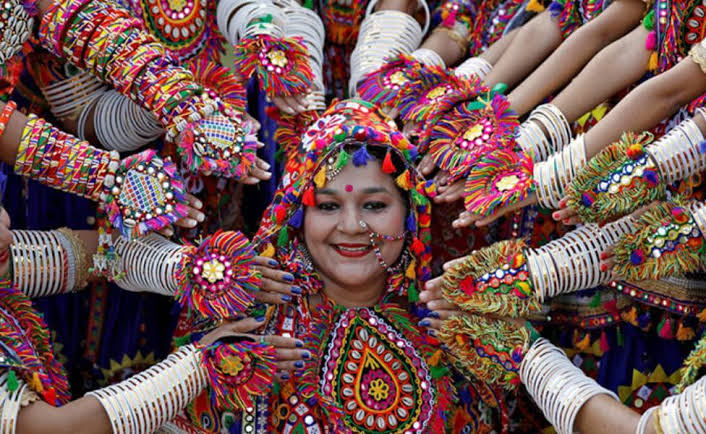
Discover 16 famous cultural festivals in India, from Diwali and Holi to Rath Yatra and the Pushkar Camel Fair, celebrating the country’s rich heritage (more…)

Continue Reading

Trending