Nigeria Saint Lucia partnership launches cultural and tourism alliance to boost creative industries, heritage exchange, and global Black excellence collaboration
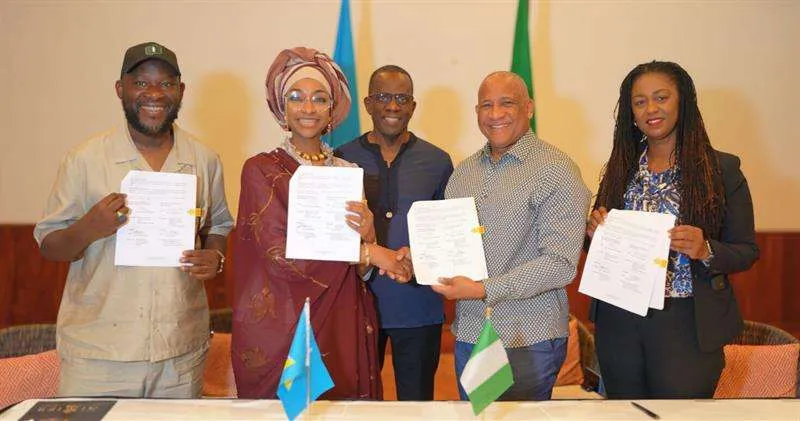
Nigeria Saint Lucia partnership has taken a bold step forward with the signing of a landmark Memorandum of Understanding designed to boost collaboration in tourism, the Orange Economy, and creative industry investment.
The agreement was formalised during the official visit of President Bola Ahmed Tinubu to Saint Lucia, highlighting a renewed commitment to transatlantic cultural synergy.
The partnership aims to harness the strengths of both nations—Nigeria’s internationally acclaimed creative sectors, including Nollywood, Afrobeats, and fashion, and Saint Lucia’s thriving tourism and community-based cultural infrastructure.
The agreement will facilitate bilateral participation in cultural festivals, fashion projects, youth exchange programmes, and museum development initiatives.
Nigeria’s Minister of Art, Culture, Tourism and the Creative Economy, Barrister Hannatu Musa Musawa, hailed the agreement as a defining moment. “This is the dawn of a new era in Africa-Caribbean relations,” she declared.
Nigeria has mastered the art of creative industry and culture—from Nollywood to music to storytelling. Saint Lucia, on the other hand, has perfected the tourism model.”
She stressed that the Nigeria Saint Lucia partnership will offer both countries the opportunity to share expertise, co-develop programmes, and empower their youth through practical collaboration.
“This partnership can generate immense value for both our countries, but more importantly, it can inspire the global Black community,” Musawa noted.
The Memorandum of Understanding outlines plans for the co-creation of creative economy programmes and the strengthening of value chains in fashion, textiles, and artisanal production.
It also highlights Saint Lucia’s world-renowned Jazz Festival as a major event where joint participation will be encouraged, further merging cultural and economic objectives.
Saint Lucia’s Minister for Tourism, Culture, and the Creative Industries, Dr Ernest Hilaire, echoed similar sentiments. He described the agreement as a formal reconnection of peoples historically divided but united by cultural heritage.
“This agreement is about formally re-establishing those ancestral links. From music and dance to fashion and sports, Nigeria has been an inspiration.”
He recalled how Nigerian artists have graced Saint Lucia’s Jazz Festival in recent years, with the new MoU offering a framework to deepen and institutionalise such collaborations.
“We have enjoyed Nigerian talent at our Jazz Festival in recent years, and this MoU gives us the opportunity to deepen that relationship,” Dr Hilaire added.
The Federal Ministry of Art, Culture, Tourism and the Creative Economy confirmed its commitment to championing such partnerships, viewing them as critical to enhancing people-to-people relations and building economic bridges across the Global South.
Officials from both nations stated that the Nigeria Saint Lucia partnership is designed not only to share cultural capital but also to create real economic impact through job creation, business development, and the export of creative services. The model could soon be replicated with other Caribbean nations and African states.
With global interest in Afro-Caribbean identity growing, the agreement is timely. Industry experts have hailed it as an innovative template for future bilateral cultural cooperation.
The focus on youth exchanges and heritage-based development aligns with international efforts to create inclusive, sustainable creative economies.
At its core, the partnership champions the idea of cultural dignity and economic empowerment. It demonstrates that shared history and mutual respect can lead to innovative solutions that uplift communities and create a stronger global presence for Black excellence.
The Nigeria Saint Lucia partnership is more than a diplomatic gesture—it is a statement of purpose and shared ambition.
As both countries begin to implement the agreed initiatives, the world will be watching to see how the Black Atlantic continues to shape culture, tourism, and identity through collaboration, unity, and vision.







 Culture4 years ago


