Connect with us

Culture

New Yam Festival in Nigeria Celebrates Rich Cultural Joy

Published

on

New Yam Festival

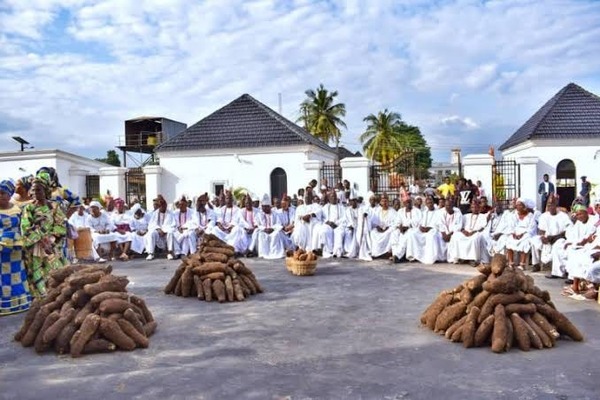
New Yam Festival Nigeria cultural celebration highlights Igbo heritage, harvest traditions, music, dance and communal thanksgiving across communities

The New Yam Festival in Nigeria stands as one of the most important cultural celebrations among the Igbo people, marking the beginning of the yam harvest season and symbolising gratitude, unity, and abundance across communities in the southeastern region.

Also read: Osun Hosts Asa Day Cultural Celebration in Joyful Showcase

The New Yam Festival Nigeria Cultural Celebration brings families, traditional rulers, and community members together in a vibrant display of heritage, thanksgiving, and shared identity, reflecting the deep cultural significance of yam as a staple crop.

Across states such as Anambra, Enugu, and Ebonyi, the festival is observed with colourful ceremonies, traditional music, and energetic dances that fill the atmosphere with joy and cultural pride. Drumming, chanting, and folklore performances play a central role in the festivities.

Communities use the celebration to thank God and the gods of the land for a successful harvest season, symbolising renewal and hope for continued prosperity.

The festival is widely regarded as a moment of spiritual reflection and communal bonding.

Food remains at the heart of the celebration, with yam-based dishes such as pounded yam and yam porridge taking centre stage. Families and visitors share meals in a spirit of unity, reinforcing social ties and cultural continuity.

The New Yam Festival Nigeria Cultural Celebration also serves as a powerful reminder of the Igbo people’s strong connection to agriculture, land, and ancestral traditions, passed down through generations.

Beyond the southeastern region, the festival attracts visitors from other parts of Nigeria and the diaspora, offering a rich cultural experience that showcases hospitality, tradition, and identity.

Traditional rulers often play a key role in the ceremonies, presiding over symbolic rites that mark the official beginning of the harvest season. These rituals add depth and authenticity to the celebration.

The festival is not only a cultural event but also a unifying moment that strengthens communal relationships and promotes peace and cooperation among participants.

Also read: Osun Hosts Asa Day Cultural Celebration in Joyful Showcase

Overall, the New Yam Festival remains a vibrant expression of Nigeria’s cultural diversity, celebrating heritage, gratitude, and the enduring significance of tradition in modern society.

Continue Reading
Click to comment

Leave a Reply

Culture

Ofala festival: Obi of Onitsha marks 25 Years on throne

Published

on

 Ofala Festival 2026 celebrated Onitsha’s royal heritage as Obi Nnaemeka Achebe marked 25 years on the throne and addressed Nigeria’s economic challenges.

(more…)

Continue Reading

Culture

Crowds Gather for Rare Sunrise at Egypt’s Abu Simbel Temple

Published

on

Abu Simbel

Hundreds of tourists gathered at Egypt’s Abu Simbel temple to witness the twice-yearly sunrise ceremony illuminating Pharaoh Ramses II’s statue

Hundreds of tourists gathered at Egypt’s Abu Simbel temple on Thursday to witness a spectacular sunrise phenomenon in which sunlight illuminated the face of the statue of Pharaoh Ramses II, an event that occurs only twice a year.

Also read: 16 Famous Cultural Festivals That Define India

The ancient astronomical ceremony drew visitors from different parts of the world to the archaeological site in southern Egypt on October 22, one of two dates associated with the phenomenon.

The second occurrence takes place on February 22, when the rising sun illuminates the temple’s interior.

Egyptian tour guide Yasser Fouad described the occasion as extraordinary, saying some visitors had stayed overnight to secure the opportunity to witness the event.

“Today is an extraordinary day, everyone is keen, there are people who stayed over the night, foreigners who actually spent the night in Abu Simbel to see this phenomenon,” Fouad said.

The Great Temple of Ramses II at Abu Simbel dates back to the 13th century BC and is among Egypt’s most prominent archaeological attractions.

Built during the reign of Ramses II, one of ancient Egypt’s most powerful pharaohs, the temple is renowned for its monumental statues and sophisticated architectural design.

The twice-yearly sunrise phenomenon is a major attraction, drawing visitors eager to witness the interaction between sunlight and the temple’s ancient structure.

The dates have traditionally been associated with significant moments in Ramses II’s life.

October 22 is commonly linked to his birthday, while February 22 is associated with his accession to the throne.

However, the precise historical reasons behind the dates remain debated.

Some archaeologists have proposed alternative explanations, including that they may have marked the pharaoh’s coronation and birthday.

Abu Simbel underwent a major international rescue operation in the 1960s, when archaeologists and engineers relocated the temples to protect them from flooding caused by the construction of the Aswan High Dam.

The monumental structures were cut into large blocks and reassembled at a higher location, preserving the site for future generations.

The relocation was one of the most significant archaeological preservation projects of the 20th century.

Despite the move, the temple continues to attract visitors for its ancient Egyptian art, monumental architecture and remarkable alignment with the rising sun.

Also read: 16 Famous Cultural Festivals That Define India

The annual gatherings highlight the enduring appeal of Egypt’s archaeological heritage and the continuing fascination with the astronomical knowledge and engineering achievements of its ancient civilisation.

Continue Reading

Culture

16 Famous Cultural Festivals That Define India

Published

on

India

Discover 16 famous cultural festivals in India, from Diwali and Holi to Rath Yatra and the Pushkar Camel Fair, celebrating the country’s rich heritage (more…)

Continue Reading

Trending