Connect with us

Culture

Leaders Urge Cultural Preservation in Nigeria to Protect Heritage

Published

on

Cultural preservation in Nigeria

Cultural preservation in Nigeria is vital, leaders say at Grandmothers’ Festival, urging all tiers of government to protect identity, unity, and shared traditions

Governments across Nigeria have been urged to create lasting structures that will ensure cultural preservation in Nigeria. The call came during the 2025 Grandmothers’ Festival held in Epe, Lagos, hosted by the Olokun Festival Foundation (OFF).

Also read: Gani Adams, OFF hail Oyebanji’s efforts on tourism, congratulate Ojo-Lanre

Traditional leaders, scholars, and royal dignitaries warned that if immediate steps are not taken, the country risks losing its diverse heritage to modern influence.

Iba Gani Adams, the Aare Ona Kakanfo of Yorubaland and founder of OFF, said the festival is a tribute to the spiritual and physical strength of grandmothers.

“This festival is a cherished occasion dedicated to honouring the invaluable contributions, physically and spiritually, of our grandmothers,” he stated.

He explained that the Grandmothers’ Festival, known in Yoruba as Odun awon Iya Agba, is modelled after global events like Halloween but rooted in African spirituality and culture.

According to him, the event reinforces community unity and showcases the potential of cultural festivals to boost tourism and restore pride in local traditions.

Dr Adebowale Adeyemi-Suenu of Olabisi Onabanjo University emphasised the importance of safeguarding traditions. “Cultural preservation is essential for maintaining Nigeria’s rich heritage and ensuring that future generations inherit a legacy of dignity,” he said.

He argued that when people respect their cultural beliefs and practices, they strengthen their identity and promote national unity.

Iba Adams also noted that while covens in developed nations receive state support, traditional institutions in Nigeria are often undermined. “Our forefathers appeased the coven for peace. Today, people insult them, and that hurts our communities,” he warned.

The event attracted several royal fathers and local leaders, underscoring the widespread concern about the erosion of tradition in Nigerian society.

Also read: Gani Adams warns against disunity among Yoruba monarchs, promotes Oke ‘Badan Festival

As Nigeria navigates modern challenges, voices at the festival agreed that cultural preservation in Nigeria must become a national priority.

Continue Reading
Click to comment

Leave a Reply

Culture

Ofala festival: Obi of Onitsha marks 25 Years on throne

Published

on

 Ofala Festival 2026 celebrated Onitsha’s royal heritage as Obi Nnaemeka Achebe marked 25 years on the throne and addressed Nigeria’s economic challenges.

(more…)

Continue Reading

Culture

Crowds Gather for Rare Sunrise at Egypt’s Abu Simbel Temple

Published

on

Abu Simbel

Hundreds of tourists gathered at Egypt’s Abu Simbel temple to witness the twice-yearly sunrise ceremony illuminating Pharaoh Ramses II’s statue

Hundreds of tourists gathered at Egypt’s Abu Simbel temple on Thursday to witness a spectacular sunrise phenomenon in which sunlight illuminated the face of the statue of Pharaoh Ramses II, an event that occurs only twice a year.

Also read: 16 Famous Cultural Festivals That Define India

The ancient astronomical ceremony drew visitors from different parts of the world to the archaeological site in southern Egypt on October 22, one of two dates associated with the phenomenon.

The second occurrence takes place on February 22, when the rising sun illuminates the temple’s interior.

Egyptian tour guide Yasser Fouad described the occasion as extraordinary, saying some visitors had stayed overnight to secure the opportunity to witness the event.

“Today is an extraordinary day, everyone is keen, there are people who stayed over the night, foreigners who actually spent the night in Abu Simbel to see this phenomenon,” Fouad said.

The Great Temple of Ramses II at Abu Simbel dates back to the 13th century BC and is among Egypt’s most prominent archaeological attractions.

Built during the reign of Ramses II, one of ancient Egypt’s most powerful pharaohs, the temple is renowned for its monumental statues and sophisticated architectural design.

The twice-yearly sunrise phenomenon is a major attraction, drawing visitors eager to witness the interaction between sunlight and the temple’s ancient structure.

The dates have traditionally been associated with significant moments in Ramses II’s life.

October 22 is commonly linked to his birthday, while February 22 is associated with his accession to the throne.

However, the precise historical reasons behind the dates remain debated.

Some archaeologists have proposed alternative explanations, including that they may have marked the pharaoh’s coronation and birthday.

Abu Simbel underwent a major international rescue operation in the 1960s, when archaeologists and engineers relocated the temples to protect them from flooding caused by the construction of the Aswan High Dam.

The monumental structures were cut into large blocks and reassembled at a higher location, preserving the site for future generations.

The relocation was one of the most significant archaeological preservation projects of the 20th century.

Despite the move, the temple continues to attract visitors for its ancient Egyptian art, monumental architecture and remarkable alignment with the rising sun.

Also read: 16 Famous Cultural Festivals That Define India

The annual gatherings highlight the enduring appeal of Egypt’s archaeological heritage and the continuing fascination with the astronomical knowledge and engineering achievements of its ancient civilisation.

Continue Reading

Culture

16 Famous Cultural Festivals That Define India

Published

on

India

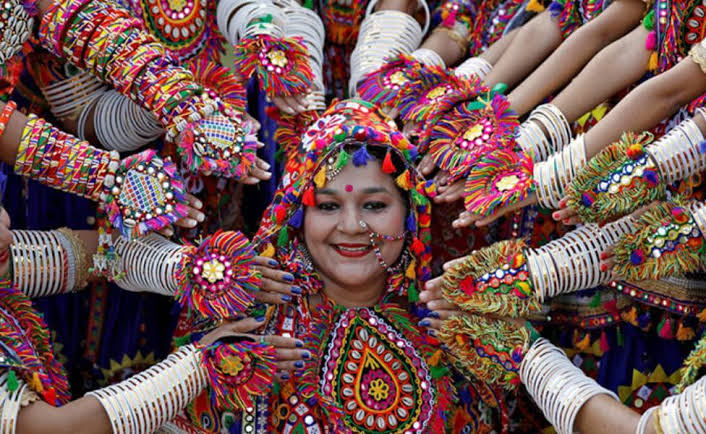
Discover 16 famous cultural festivals in India, from Diwali and Holi to Rath Yatra and the Pushkar Camel Fair, celebrating the country’s rich heritage (more…)

Continue Reading

Trending