Connect with us

Culture

Ijebu State Proposal: Monarchs inaugurate implementation committees

Published

on

Ijebu State implementation committee

The Awujale of Ijebuland and the Akarigbo of Remoland have set up committees to push for the constitutional approval of the proposed Ijebu State


The Awujale of Ijebuland, Oba Sikiru Adetona, and the Akarigbo of Remoland, Oba Adewale Ajayi, have taken a significant step towards the creation of Ijebu State by inaugurating separate implementation committees.

These committees will advocate for the constitutional approval of the proposed state, which seeks to carve out the old Ijebu Province from the present Ogun State.

Each committee will initially operate independently before harmonising into a single entity to finalise its report.

According to a source close to the Awujale, the committees were established following a communiqué from the Ijebu Stakeholders Meeting held on 19th December 2024. The meeting reinforced the collective desire of the Ijebu and Remo people to form a new state.


**Ijebu Implementation Committee**

The committee set up by the Awujale is chaired by Chief Chris Olufunmilola Okunowo (Bobasuwa II of Ijebuland), with notable members including:
– Otunba Alex Gbenga Onabanjo
– Senator Gbenga Kaka
– Otunba Deji Osibogun
– Otunba Biodun Onanuga
– Omoba Bambo Adesanya SAN
– Chief (Prof) Adetokunbo Fassy Yusuf
– Prof Segun Awonusi
– Akogun Kola Onadipe (Technical Adviser)
– Prof Jumoke Awoderu (Secretary)


The committee has been tasked with advocating for the new state within the Ogun East Senatorial District, which comprises nine local government areas: Sagamu, Ikenne, Remo North, Odogbolu, Ijebu Ode, Ijebu North East, Ijebu East, Ijebu North, and Ogun Waterside.

It will also educate residents on the benefits of state creation, engage in public advocacy, and secure endorsements from lawmakers and stakeholders at state and national levels.

The inaugural meeting of the committee was held in Ijebu Ode on 9th February 2025, with Awujale Oba Sikiru Adetona and Senator Gbenga Daniel in attendance. Chief Sunny Kuku-Ogbeni Oja was recognised as a key resource person for the project.


**Remo Implementation Committee**

Similarly, Oba Adewale Ajayi has inaugurated a parallel committee in Remoland, chaired by Aare Kola Oyefeso. Other members include:
– Otunba Tunji Lawal Solarin
– Senator Dipo Odujirin
– Chief Akin Soname
– Engr Dele Amoda
– Prince Abdul Abayomi
– Mr Fatai Folarin
– Mr Sesan Ogun
– Hon John Obafemi (Technical Adviser)
– Mr Wole Awe (Secretary)

This committee is tasked with evaluating the viability of the new state, determining its name and capital, and resolving other relevant matters.


**Next Steps and Capital Decision**

A joint meeting between the two committees is expected in the coming week to harmonise efforts and finalise outstanding issues.

While discussions continue, stakeholders seem to favour Ijebu Ode as the capital due to its central location among the nine local governments.

The entire Ogun State and Nigeria at large now await the final decision from the joint committee session, which could mark a historic milestone in the realisation of Ijebu State.

Continue Reading
Click to comment

Leave a Reply

Culture

Ofala festival: Obi of Onitsha marks 25 Years on throne

Published

on

 Ofala Festival 2026 celebrated Onitsha’s royal heritage as Obi Nnaemeka Achebe marked 25 years on the throne and addressed Nigeria’s economic challenges.

(more…)

Continue Reading

Culture

Crowds Gather for Rare Sunrise at Egypt’s Abu Simbel Temple

Published

on

Abu Simbel

Hundreds of tourists gathered at Egypt’s Abu Simbel temple to witness the twice-yearly sunrise ceremony illuminating Pharaoh Ramses II’s statue

Hundreds of tourists gathered at Egypt’s Abu Simbel temple on Thursday to witness a spectacular sunrise phenomenon in which sunlight illuminated the face of the statue of Pharaoh Ramses II, an event that occurs only twice a year.

Also read: 16 Famous Cultural Festivals That Define India

The ancient astronomical ceremony drew visitors from different parts of the world to the archaeological site in southern Egypt on October 22, one of two dates associated with the phenomenon.

The second occurrence takes place on February 22, when the rising sun illuminates the temple’s interior.

Egyptian tour guide Yasser Fouad described the occasion as extraordinary, saying some visitors had stayed overnight to secure the opportunity to witness the event.

“Today is an extraordinary day, everyone is keen, there are people who stayed over the night, foreigners who actually spent the night in Abu Simbel to see this phenomenon,” Fouad said.

The Great Temple of Ramses II at Abu Simbel dates back to the 13th century BC and is among Egypt’s most prominent archaeological attractions.

Built during the reign of Ramses II, one of ancient Egypt’s most powerful pharaohs, the temple is renowned for its monumental statues and sophisticated architectural design.

The twice-yearly sunrise phenomenon is a major attraction, drawing visitors eager to witness the interaction between sunlight and the temple’s ancient structure.

The dates have traditionally been associated with significant moments in Ramses II’s life.

October 22 is commonly linked to his birthday, while February 22 is associated with his accession to the throne.

However, the precise historical reasons behind the dates remain debated.

Some archaeologists have proposed alternative explanations, including that they may have marked the pharaoh’s coronation and birthday.

Abu Simbel underwent a major international rescue operation in the 1960s, when archaeologists and engineers relocated the temples to protect them from flooding caused by the construction of the Aswan High Dam.

The monumental structures were cut into large blocks and reassembled at a higher location, preserving the site for future generations.

The relocation was one of the most significant archaeological preservation projects of the 20th century.

Despite the move, the temple continues to attract visitors for its ancient Egyptian art, monumental architecture and remarkable alignment with the rising sun.

Also read: 16 Famous Cultural Festivals That Define India

The annual gatherings highlight the enduring appeal of Egypt’s archaeological heritage and the continuing fascination with the astronomical knowledge and engineering achievements of its ancient civilisation.

Continue Reading

Culture

16 Famous Cultural Festivals That Define India

Published

on

India

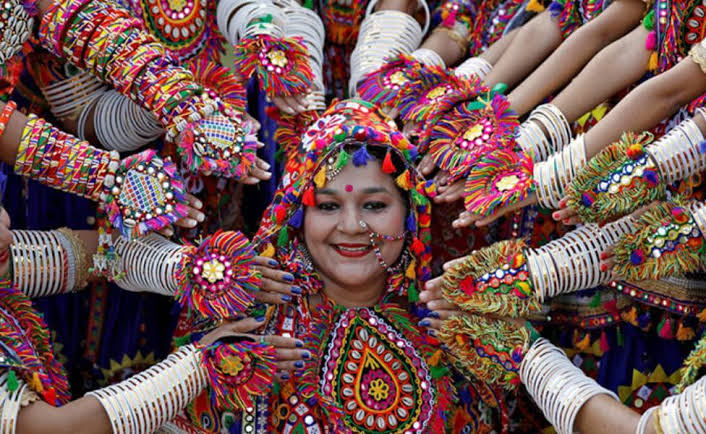
Discover 16 famous cultural festivals in India, from Diwali and Holi to Rath Yatra and the Pushkar Camel Fair, celebrating the country’s rich heritage (more…)

Continue Reading

Trending