Connect with us

Culture

Culture Minister briefs FEC on UNESCO’s inscription for Sango Festival, Midwifery Traditions

Published

on

The Minister of Arts Culture and the Creative Economy, Barrister Hannatu Musa Musawa, has announced the Ministry’s success in pushing for UNESCO’s inscription of the Sango festival Oyo and the multinational nominating of Midwifery: Knowledge Skills and Practices.

The Minister disclosed this during the Federal Executive Council (FEC) meeting, presided over by President Bola Ahmed Tinubu.

While briefing the Council on the strategic activities of the Ministry since its establishment in August 2023, Barrister Musawa said that the achievement was made possible through the Ministry’s tireless efforts and strategic collaborations at the national and international levels, in line with the 2003 UNESCO Convention for the Safeguarding of the Intangible Cultural Heritage.

“The UNESCO Representative List of the Intangible Cultural Heritage of Humanity plays a crucial role in safeguarding and promoting cultural diversity worldwide. It helps in raising awareness about the significance of Intangible Cultural Heritage, encourages dialogue between communities, fosters respect for cultural expressions and promotes sustainable development by preserving traditional knowledge and practices.

“The inclusion of these two Nigerian cultural elements on the Representative List of the Intangible Cultural Heritage of Humanity has transformed them into shared global heritage (products) with enhanced visibility.

“The 181 States: Parties to the 2003 UNESCO Convention for Safeguarding of the Intangible Cultural Heritage are predisposed to visiting Nigeria to enjoy these cultural expressions.

“The anticipated increase in tourism inflow into the country will result in global visibility, job creation and wealth generation, thereby contributing to sustainable national growth and development, economic well-being and pride in national cultural identity.”

According to her, the two key products from Nigeria were inscribed on the UNESCO representative list of the intangible cultural heritage of humanity during the 18th Session of the Inter-Governmental Committee for the Safeguarding of Intangible Cultural Heritage in Kasane Botswana from 4th to 9th December 2023.

The Sango Festival and Midwifery traditions have now been recognized as integral parts of human cultural heritage, joining five previous Nigerian inscriptions: Ifa Divination System (2008), Oral Heritage of Gelede (2008), Ijele Masquerade (2009), Argungu International Fishing and Cultural Festival (2016), and Kwagh-hir Theatrical Performance (2019).

This milestone not only promotes cultural diversity and community cohesion but also contributes to sustainable development, job creation, and wealth generation through increased tourism. It aligns with the renewed hope agenda of President Bola Ahmed Tinubu’s administration, which prioritizes the appreciation and preservation of Nigeria’s rich cultural heritage.

Continue Reading
Click to comment

Leave a Reply

Culture

Ofala festival: Obi of Onitsha marks 25 Years on throne

Published

on

 Ofala Festival 2026 celebrated Onitsha’s royal heritage as Obi Nnaemeka Achebe marked 25 years on the throne and addressed Nigeria’s economic challenges.

(more…)

Continue Reading

Culture

Crowds Gather for Rare Sunrise at Egypt’s Abu Simbel Temple

Published

on

Abu Simbel

Hundreds of tourists gathered at Egypt’s Abu Simbel temple to witness the twice-yearly sunrise ceremony illuminating Pharaoh Ramses II’s statue

Hundreds of tourists gathered at Egypt’s Abu Simbel temple on Thursday to witness a spectacular sunrise phenomenon in which sunlight illuminated the face of the statue of Pharaoh Ramses II, an event that occurs only twice a year.

Also read: 16 Famous Cultural Festivals That Define India

The ancient astronomical ceremony drew visitors from different parts of the world to the archaeological site in southern Egypt on October 22, one of two dates associated with the phenomenon.

The second occurrence takes place on February 22, when the rising sun illuminates the temple’s interior.

Egyptian tour guide Yasser Fouad described the occasion as extraordinary, saying some visitors had stayed overnight to secure the opportunity to witness the event.

“Today is an extraordinary day, everyone is keen, there are people who stayed over the night, foreigners who actually spent the night in Abu Simbel to see this phenomenon,” Fouad said.

The Great Temple of Ramses II at Abu Simbel dates back to the 13th century BC and is among Egypt’s most prominent archaeological attractions.

Built during the reign of Ramses II, one of ancient Egypt’s most powerful pharaohs, the temple is renowned for its monumental statues and sophisticated architectural design.

The twice-yearly sunrise phenomenon is a major attraction, drawing visitors eager to witness the interaction between sunlight and the temple’s ancient structure.

The dates have traditionally been associated with significant moments in Ramses II’s life.

October 22 is commonly linked to his birthday, while February 22 is associated with his accession to the throne.

However, the precise historical reasons behind the dates remain debated.

Some archaeologists have proposed alternative explanations, including that they may have marked the pharaoh’s coronation and birthday.

Abu Simbel underwent a major international rescue operation in the 1960s, when archaeologists and engineers relocated the temples to protect them from flooding caused by the construction of the Aswan High Dam.

The monumental structures were cut into large blocks and reassembled at a higher location, preserving the site for future generations.

The relocation was one of the most significant archaeological preservation projects of the 20th century.

Despite the move, the temple continues to attract visitors for its ancient Egyptian art, monumental architecture and remarkable alignment with the rising sun.

Also read: 16 Famous Cultural Festivals That Define India

The annual gatherings highlight the enduring appeal of Egypt’s archaeological heritage and the continuing fascination with the astronomical knowledge and engineering achievements of its ancient civilisation.

Continue Reading

Culture

16 Famous Cultural Festivals That Define India

Published

on

India

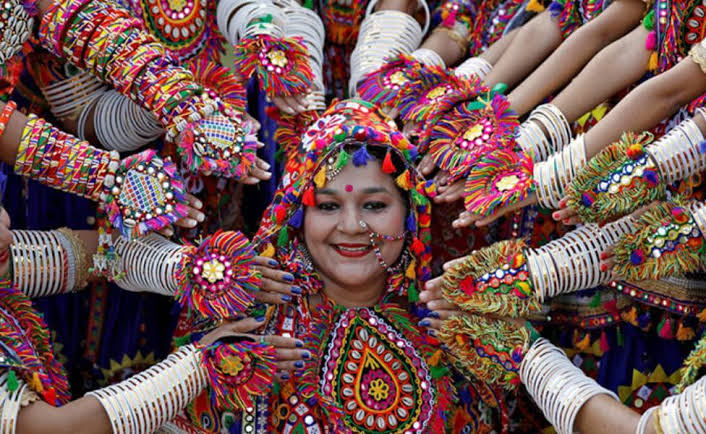
Discover 16 famous cultural festivals in India, from Diwali and Holi to Rath Yatra and the Pushkar Camel Fair, celebrating the country’s rich heritage (more…)

Continue Reading

Trending