Connect with us

Culture

Badagry slave route earns UNESCO world heritage status

Published

on

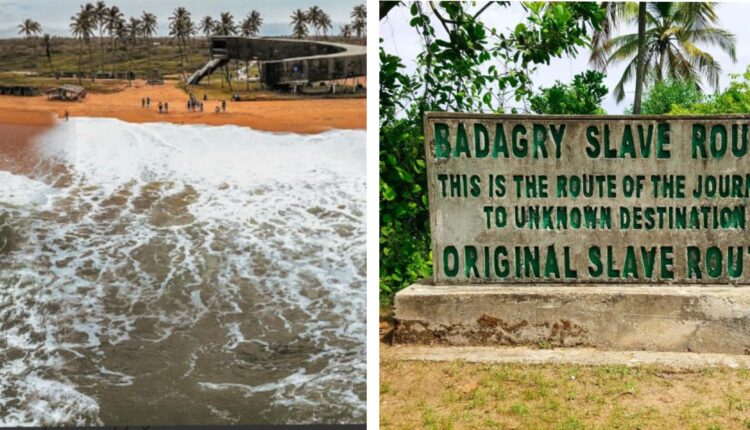
Badagry UNESCO World Heritage Site

Badagry’s Slave Route, including the Point of No Return, is now a UNESCO World Heritage Site, highlighting its vital role in global history.


The Lagos State Government celebrates the historic recognition of Badagry’s Slave Route, including the iconic Point of No Return, as one of UNESCO’s 22 newly listed World Heritage Sites.

This prestigious honour underscores Badagry’s profound historical importance and its legacy as a key hub in the transatlantic slave trade.


Also read: Gbenu Charges Badagry West To Preserve Cultural Heritage


For centuries, Badagry stood as a major centre of the slave trade. From the 8th to the 20th centuries, it served as a trading route connecting Africa to North African territories.

During the 17th to 19th centuries, its shores became the departure point for countless individuals forcibly transported across the Atlantic to the Americas.

The Point of No Return remains a haunting symbol of the sorrow and resilience of those who were uprooted and enslaved.

UNESCO’s designation highlights Badagry’s cultural and historical significance on a global scale, positioning Lagos State as a leader in heritage preservation and cultural tourism.

Governor Babajide Sanwo-Olu’s vision of making Lagos a top African tourism destination aligns seamlessly with this achievement.

Speaking on the milestone, Mrs. Toke Benson-Awoyinka, Lagos State’s Commissioner for Tourism, Arts, and Culture, remarked:

“Badagry’s inclusion on the UNESCO list is not only a validation of its historical significance but also a call to preserve its legacy. This site will serve as a platform for healing, education, and cultural tourism.”


The Lagos State Government is actively working with stakeholders to enhance infrastructure around the site.

Plans are underway to transform it into a place of remembrance, reflection, and transformative learning for visitors from around the world.

The recognition of Badagry as a UNESCO World Heritage Site not only validates its historical importance but also reinforces Lagos State’s commitment to preserving its cultural landmarks.

The site will be developed as a centre for sustainable tourism, offering impactful experiences while educating future generations on the realities of the transatlantic slave trade.

This global milestone opens new opportunities for Lagos to expand its tourism offerings while reaffirming the importance of acknowledging and learning from history.

The Badagry Slave Route now stands as a beacon for cultural preservation and a call for reflection on humanity’s shared past.

Culture

Dexter Loko Wins Prestigious 2026 Chinua Achebe Prize

Published

on

 Dexter Loko Wins Chinua Achebe Prize for his 170,000-word fantasy novel, The Bako of Zereshé, at the 2026 ANA convention in Abuja

(more…)

Continue Reading

Culture

Ofala festival: Obi of Onitsha marks 25 Years on throne

Published

on

 Ofala Festival 2026 celebrated Onitsha’s royal heritage as Obi Nnaemeka Achebe marked 25 years on the throne and addressed Nigeria’s economic challenges.

(more…)

Continue Reading

Culture

Crowds Gather for Rare Sunrise at Egypt’s Abu Simbel Temple

Published

on

Abu Simbel

Hundreds of tourists gathered at Egypt’s Abu Simbel temple to witness the twice-yearly sunrise ceremony illuminating Pharaoh Ramses II’s statue

Hundreds of tourists gathered at Egypt’s Abu Simbel temple on Thursday to witness a spectacular sunrise phenomenon in which sunlight illuminated the face of the statue of Pharaoh Ramses II, an event that occurs only twice a year.

Also read: 16 Famous Cultural Festivals That Define India

The ancient astronomical ceremony drew visitors from different parts of the world to the archaeological site in southern Egypt on October 22, one of two dates associated with the phenomenon.

The second occurrence takes place on February 22, when the rising sun illuminates the temple’s interior.

Egyptian tour guide Yasser Fouad described the occasion as extraordinary, saying some visitors had stayed overnight to secure the opportunity to witness the event.

“Today is an extraordinary day, everyone is keen, there are people who stayed over the night, foreigners who actually spent the night in Abu Simbel to see this phenomenon,” Fouad said.

The Great Temple of Ramses II at Abu Simbel dates back to the 13th century BC and is among Egypt’s most prominent archaeological attractions.

Built during the reign of Ramses II, one of ancient Egypt’s most powerful pharaohs, the temple is renowned for its monumental statues and sophisticated architectural design.

The twice-yearly sunrise phenomenon is a major attraction, drawing visitors eager to witness the interaction between sunlight and the temple’s ancient structure.

The dates have traditionally been associated with significant moments in Ramses II’s life.

October 22 is commonly linked to his birthday, while February 22 is associated with his accession to the throne.

However, the precise historical reasons behind the dates remain debated.

Some archaeologists have proposed alternative explanations, including that they may have marked the pharaoh’s coronation and birthday.

Abu Simbel underwent a major international rescue operation in the 1960s, when archaeologists and engineers relocated the temples to protect them from flooding caused by the construction of the Aswan High Dam.

The monumental structures were cut into large blocks and reassembled at a higher location, preserving the site for future generations.

The relocation was one of the most significant archaeological preservation projects of the 20th century.

Despite the move, the temple continues to attract visitors for its ancient Egyptian art, monumental architecture and remarkable alignment with the rising sun.

Also read: 16 Famous Cultural Festivals That Define India

The annual gatherings highlight the enduring appeal of Egypt’s archaeological heritage and the continuing fascination with the astronomical knowledge and engineering achievements of its ancient civilisation.

Continue Reading

Trending