Connect with us

Culture

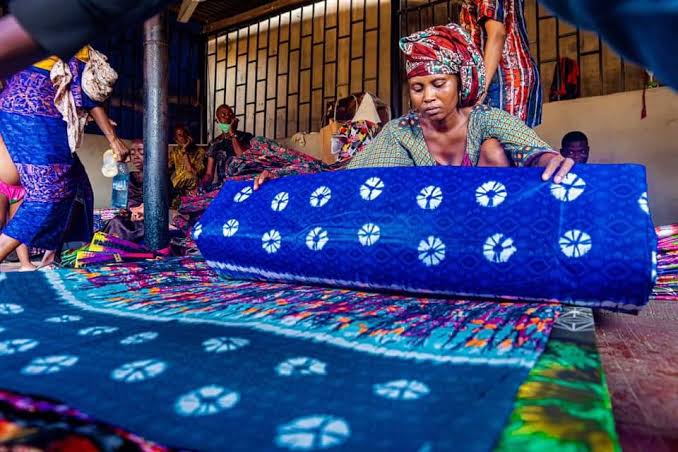
Oyo postpones Adire Carnival, Exhibition for quality enhancement

Published

on

Adire Carnival

Oyo State Government postpones Adire Carnival and Exhibition to meet global best practices and deliver a seamless, culturally immersive experience. New date to be announced soon

Adire Carnival and Exhibition in Oyo State has been officially postponed, the State Government announced on Wednesday, citing the need to enhance the quality and impact of the event.

Also read: Oyo state to host inaugural Adire Expo to boost economy, cultural tourism

The Commissioner for Culture and Tourism, Dr Wasiu Olatunbosun, confirmed the postponement in a statement issued in Ibadan.

He explained that the decision was taken to ensure the carnival adheres to global best practices and delivers a “rich, immersive experience” worthy of the State’s cultural prestige.

Originally scheduled for Friday, 20th June 2025, the carnival was being organised by the Ministry of Culture and Tourism in partnership with BIZRAIT and Adire Odua. A new date will be announced soon.

“The Seyi Makinde-led administration remains committed to promoting, preserving and developing culture and tourism across the State,” Olatunbosun said. “Tourism is a vital driver of economic growth, job creation and internally generated revenue.”

He noted that under the Omituntun 2.0 Roadmap for Sustainable Development, Oyo State has successfully hosted major cultural showcases such as the World Twins Festival, Egungun Festival, Iyake International Festival and the Aso-Ofi Festival. These events have drawn national and international attention and significantly boosted the local economy.

The commissioner highlighted the Aso-Ofi Festival’s success, noting its influence in shaping policy: “Civil and public servants are now encouraged to incorporate Aso-Ofi into their dress code, revitalising indigenous textile production and reinforcing Oyo State’s identity as the ‘Manchester’ of Indigenous Textile Production.”

The Adire Carnival and Exhibition is part of ongoing efforts to spotlight and strengthen indigenous craftsmanship. According to the government, postponing the event is a strategic move to uphold the standards that reflect the cultural stature of Oyo State.

Also read: Olota of Otta Awori Kingdom Leads Celebration of Nigerian Culture at Vienna’s Adire Festival (Photos)

“We appreciate the immense support and understanding of all partners, participants and the general public as we work toward hosting an even more impactful event,” Olatunbosun added.

Culture

Dexter Loko Wins Prestigious 2026 Chinua Achebe Prize

Published

on

 Dexter Loko Wins Chinua Achebe Prize for his 170,000-word fantasy novel, The Bako of Zereshé, at the 2026 ANA convention in Abuja

(more…)

Continue Reading

Culture

Ofala festival: Obi of Onitsha marks 25 Years on throne

Published

on

 Ofala Festival 2026 celebrated Onitsha’s royal heritage as Obi Nnaemeka Achebe marked 25 years on the throne and addressed Nigeria’s economic challenges.

(more…)

Continue Reading

Culture

Crowds Gather for Rare Sunrise at Egypt’s Abu Simbel Temple

Published

on

Abu Simbel

Hundreds of tourists gathered at Egypt’s Abu Simbel temple to witness the twice-yearly sunrise ceremony illuminating Pharaoh Ramses II’s statue

Hundreds of tourists gathered at Egypt’s Abu Simbel temple on Thursday to witness a spectacular sunrise phenomenon in which sunlight illuminated the face of the statue of Pharaoh Ramses II, an event that occurs only twice a year.

Also read: 16 Famous Cultural Festivals That Define India

The ancient astronomical ceremony drew visitors from different parts of the world to the archaeological site in southern Egypt on October 22, one of two dates associated with the phenomenon.

The second occurrence takes place on February 22, when the rising sun illuminates the temple’s interior.

Egyptian tour guide Yasser Fouad described the occasion as extraordinary, saying some visitors had stayed overnight to secure the opportunity to witness the event.

“Today is an extraordinary day, everyone is keen, there are people who stayed over the night, foreigners who actually spent the night in Abu Simbel to see this phenomenon,” Fouad said.

The Great Temple of Ramses II at Abu Simbel dates back to the 13th century BC and is among Egypt’s most prominent archaeological attractions.

Built during the reign of Ramses II, one of ancient Egypt’s most powerful pharaohs, the temple is renowned for its monumental statues and sophisticated architectural design.

The twice-yearly sunrise phenomenon is a major attraction, drawing visitors eager to witness the interaction between sunlight and the temple’s ancient structure.

The dates have traditionally been associated with significant moments in Ramses II’s life.

October 22 is commonly linked to his birthday, while February 22 is associated with his accession to the throne.

However, the precise historical reasons behind the dates remain debated.

Some archaeologists have proposed alternative explanations, including that they may have marked the pharaoh’s coronation and birthday.

Abu Simbel underwent a major international rescue operation in the 1960s, when archaeologists and engineers relocated the temples to protect them from flooding caused by the construction of the Aswan High Dam.

The monumental structures were cut into large blocks and reassembled at a higher location, preserving the site for future generations.

The relocation was one of the most significant archaeological preservation projects of the 20th century.

Despite the move, the temple continues to attract visitors for its ancient Egyptian art, monumental architecture and remarkable alignment with the rising sun.

Also read: 16 Famous Cultural Festivals That Define India

The annual gatherings highlight the enduring appeal of Egypt’s archaeological heritage and the continuing fascination with the astronomical knowledge and engineering achievements of its ancient civilisation.

Continue Reading

Trending