Connect with us

Culture

Yeye Osunfunmilayo Ajile Ilorin Clash Sparks Tension

Published

on

Yeye Osunfunmilayo Ajile Ilorin clash

Yeye Osunfunmilayo Ajile Ilorin clash sparks fresh tension as the priestess vows not to abandon her traditional roots despite clerics’ opposition

Ajile, who holds the title Aare Olomitutu Odo Gbogbo l’Agbo of Kwara State and Atayese Worldwide, declared that “traditional religion is the first religion in Ilorin” following a heated confrontation at her residence.

Also read: Ilorin Durbar Festival boosts tourism, cultural heritage, global recognition

The incident occurred on Monday, 22 September, when clerics from Oke Odo, Danialu, and Gaa Akanbi allegedly stormed her home, demanding that she vacate the community.

Footage circulating online shows the group insisting that she relocate, while Ajile firmly resisted, citing her constitutional right to freedom of worship.

“They told me to relocate to Osun State because of my faith. But I was born here in Ilorin, raised here, and built my house here. Nobody can chase me away,” she said. Ajile further alleged that the clerics threw stones and insults before dispersing.

The priestess, who has lived in the area for more than a decade, insisted her worship had brought safety to the community, claiming drowning incidents in the local river stopped after she established her shrine.

She has since reported the matter to the police and sought support from human rights groups.

Ajile’s defiance echoes a wider struggle in Ilorin, where tensions over traditional worship are not new. In July 2023, plans for the annual Isese Festival led by Yeye Ajisekemi Olatunji were thwarted after opposition from Islamic groups and caution from the Emir of Ilorin, Ibrahim Sulu-Gambari.

The clampdown drew condemnation from Nobel laureate Wole Soyinka, who described it as an attack on religious freedom.

While some traditional leaders argue that suppressing Isese amounts to disenfranchising Yoruba cultural identity, defenders of the Emir insist such measures preserve harmony in the emirate.

Also read: Durbar festival: key to cultural unity and economic growth in Ilorin

For Ajile, however, the message remains resolute. “I stood my ground because I have the constitutional right to practice any religion of my choice, as long as I don’t disturb others,” she said.

Continue Reading
Click to comment

Leave a Reply

Culture

Ofala festival: Obi of Onitsha marks 25 Years on throne

Published

on

 Ofala Festival 2026 celebrated Onitsha’s royal heritage as Obi Nnaemeka Achebe marked 25 years on the throne and addressed Nigeria’s economic challenges.

(more…)

Continue Reading

Culture

Crowds Gather for Rare Sunrise at Egypt’s Abu Simbel Temple

Published

on

Abu Simbel

Hundreds of tourists gathered at Egypt’s Abu Simbel temple to witness the twice-yearly sunrise ceremony illuminating Pharaoh Ramses II’s statue

Hundreds of tourists gathered at Egypt’s Abu Simbel temple on Thursday to witness a spectacular sunrise phenomenon in which sunlight illuminated the face of the statue of Pharaoh Ramses II, an event that occurs only twice a year.

Also read: 16 Famous Cultural Festivals That Define India

The ancient astronomical ceremony drew visitors from different parts of the world to the archaeological site in southern Egypt on October 22, one of two dates associated with the phenomenon.

The second occurrence takes place on February 22, when the rising sun illuminates the temple’s interior.

Egyptian tour guide Yasser Fouad described the occasion as extraordinary, saying some visitors had stayed overnight to secure the opportunity to witness the event.

“Today is an extraordinary day, everyone is keen, there are people who stayed over the night, foreigners who actually spent the night in Abu Simbel to see this phenomenon,” Fouad said.

The Great Temple of Ramses II at Abu Simbel dates back to the 13th century BC and is among Egypt’s most prominent archaeological attractions.

Built during the reign of Ramses II, one of ancient Egypt’s most powerful pharaohs, the temple is renowned for its monumental statues and sophisticated architectural design.

The twice-yearly sunrise phenomenon is a major attraction, drawing visitors eager to witness the interaction between sunlight and the temple’s ancient structure.

The dates have traditionally been associated with significant moments in Ramses II’s life.

October 22 is commonly linked to his birthday, while February 22 is associated with his accession to the throne.

However, the precise historical reasons behind the dates remain debated.

Some archaeologists have proposed alternative explanations, including that they may have marked the pharaoh’s coronation and birthday.

Abu Simbel underwent a major international rescue operation in the 1960s, when archaeologists and engineers relocated the temples to protect them from flooding caused by the construction of the Aswan High Dam.

The monumental structures were cut into large blocks and reassembled at a higher location, preserving the site for future generations.

The relocation was one of the most significant archaeological preservation projects of the 20th century.

Despite the move, the temple continues to attract visitors for its ancient Egyptian art, monumental architecture and remarkable alignment with the rising sun.

Also read: 16 Famous Cultural Festivals That Define India

The annual gatherings highlight the enduring appeal of Egypt’s archaeological heritage and the continuing fascination with the astronomical knowledge and engineering achievements of its ancient civilisation.

Continue Reading

Culture

16 Famous Cultural Festivals That Define India

Published

on

India

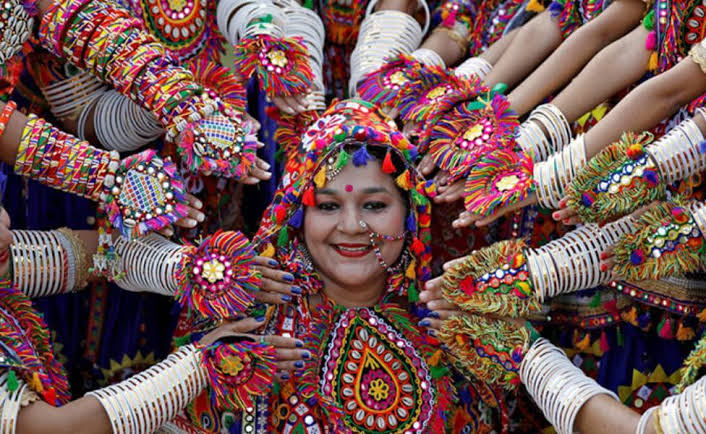
Discover 16 famous cultural festivals in India, from Diwali and Holi to Rath Yatra and the Pushkar Camel Fair, celebrating the country’s rich heritage (more…)

Continue Reading

Trending