Connect with us

Culture

Traditional ruler commends Minister’s effort to position Nigeria as world’s cultural capital

Published

on

The traditional ruler of the Otumara community in Lagos Mainland of Lagos State, High Chief Kehinde Kalejaiye, commended the Minister of Arts, Culture and Creative Economy, Hajia Hannatu Musawa, for aiming to position Nigeria as the world’s culture, creative and entertainment capital.

Kalejaiye also applauded the Minister on her road map, which, according to him, is targeted at creating jobs and skills training programs for millions of Nigerians and turning the country into global arts, culture and creativity hubs.

Earlier, during the unveiling of the Ministry’s economic plan at the maiden edition of Creative Economy Roundtable held at the Banquet Hall, State House, Abuja, the Minister stated that her objective is to contribute 10 per cent to the Nation’s GDP while also striving to expand sectorial GDP to a remarkable $100 billion by the year 2030.

Reacting to the proposed economic plan, Kalejaiye expressed high hopes in the capacity of the Minister to turn around the Arts, Culture and Creative Economy for the betterment of Nigerians, especially the talented unemployed youths.

He described the Minister’s economic plan as expedient to taking millions of youths out of the unemployment market.

Quoting from statistics by the National Bureau of Statistics, he disclosed that about 53.40 per cent of youths in Nigeria are unemployed.

He said, “We believe in the capacity of the new Minister of Arts, Culture and Creative Economy, Hannatu Musawa, to reposition the country’s creative economy. We have incredible talents who are eagerly waiting for the creation of an enabling environment for them to showcase their talents and flourish.

However, better days are ahead for the country’s youths as with this road map; the economy is sure to rebound while many of our youths will be productively engaged. I must commend President Bola Tinubu for making the right choice and putting a round peg in a round hole.”

Continuing, the traditional ruler urged the Minister to beam her searchlight on the operations of management and personnel of the National Theatre.

According to him, the parastatal has been engulfed in corruption and intimidation of staff and union leaders by the management.

If this is left unchecked, Kalejaiye said, it will have an adverse effect on the productivity of the workers and the country will lost all historic edifice that are housed in the parastatal.

He added, “The management of the National Theatre has been in the news for obviously the wrong reasons ranging from alleged corruption and intimidation of staff and union leaders using the police.

This is unhealthy for the workforce who now go about their daily activities in fear. There have been allegations of looting of historic artefacts and misappropriation of the funds of the parastatal. There are petitions before the ICPC, DSS and the Honourable Minister against the management of the parastatal written by interest groups and the union.

These and more are what we want the Minister to investigate and bring the culprits to justice.

Once again, I congratulate the new Minister on her well-deserve appointment while looking forward to a probe of the allegation levelled against the management of the parastatal.”

Continue Reading
Click to comment

Leave a Reply

Culture

Ofala festival: Obi of Onitsha marks 25 Years on throne

Published

on

 Ofala Festival 2026 celebrated Onitsha’s royal heritage as Obi Nnaemeka Achebe marked 25 years on the throne and addressed Nigeria’s economic challenges.

(more…)

Continue Reading

Culture

Crowds Gather for Rare Sunrise at Egypt’s Abu Simbel Temple

Published

on

Abu Simbel

Hundreds of tourists gathered at Egypt’s Abu Simbel temple to witness the twice-yearly sunrise ceremony illuminating Pharaoh Ramses II’s statue

Hundreds of tourists gathered at Egypt’s Abu Simbel temple on Thursday to witness a spectacular sunrise phenomenon in which sunlight illuminated the face of the statue of Pharaoh Ramses II, an event that occurs only twice a year.

Also read: 16 Famous Cultural Festivals That Define India

The ancient astronomical ceremony drew visitors from different parts of the world to the archaeological site in southern Egypt on October 22, one of two dates associated with the phenomenon.

The second occurrence takes place on February 22, when the rising sun illuminates the temple’s interior.

Egyptian tour guide Yasser Fouad described the occasion as extraordinary, saying some visitors had stayed overnight to secure the opportunity to witness the event.

“Today is an extraordinary day, everyone is keen, there are people who stayed over the night, foreigners who actually spent the night in Abu Simbel to see this phenomenon,” Fouad said.

The Great Temple of Ramses II at Abu Simbel dates back to the 13th century BC and is among Egypt’s most prominent archaeological attractions.

Built during the reign of Ramses II, one of ancient Egypt’s most powerful pharaohs, the temple is renowned for its monumental statues and sophisticated architectural design.

The twice-yearly sunrise phenomenon is a major attraction, drawing visitors eager to witness the interaction between sunlight and the temple’s ancient structure.

The dates have traditionally been associated with significant moments in Ramses II’s life.

October 22 is commonly linked to his birthday, while February 22 is associated with his accession to the throne.

However, the precise historical reasons behind the dates remain debated.

Some archaeologists have proposed alternative explanations, including that they may have marked the pharaoh’s coronation and birthday.

Abu Simbel underwent a major international rescue operation in the 1960s, when archaeologists and engineers relocated the temples to protect them from flooding caused by the construction of the Aswan High Dam.

The monumental structures were cut into large blocks and reassembled at a higher location, preserving the site for future generations.

The relocation was one of the most significant archaeological preservation projects of the 20th century.

Despite the move, the temple continues to attract visitors for its ancient Egyptian art, monumental architecture and remarkable alignment with the rising sun.

Also read: 16 Famous Cultural Festivals That Define India

The annual gatherings highlight the enduring appeal of Egypt’s archaeological heritage and the continuing fascination with the astronomical knowledge and engineering achievements of its ancient civilisation.

Continue Reading

Culture

16 Famous Cultural Festivals That Define India

Published

on

India

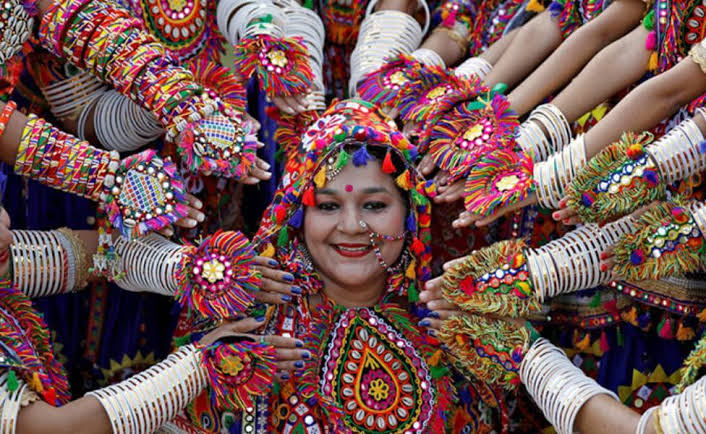
Discover 16 famous cultural festivals in India, from Diwali and Holi to Rath Yatra and the Pushkar Camel Fair, celebrating the country’s rich heritage (more…)

Continue Reading

Trending