Culture
Sanwo-Olu: Lagos Commits to Tourism Devt, Tours Badagry, Visits Heritage Sites
Published
3 years agoon
By
Lanre
Lagos State Governor, Mr. Babajide Sanwo-Olu, has reiterated his administration’s commitment to tourism development, even as he stated his resolve to make the Badagry axis of the state a tourist attraction city.
Sanwo-Olu, who spoke yesterday during a working visit to Badagry’s historical sites and projects, said the ancient city of Badagry, with many historical and tourist sites, has a lot to offer in tourism.
Accompanied by Chairman/CEO of the Nigerians in Diaspora Commission (NiDCOM), Hon. Abike Dabiri-Erewa, members of the Lagos State Executive Council and Lagos State House of Assembly, as well as officials of the Lagos State Diaspora Commission, he visited the Slave Market Museum International Vlekete Badagry, which was recently restored and upgraded by the administration.
He also visited the Badagry Heritage Museum, the seat of the fallen Agia Tree, where Christianity was first preached in 1842, the first-storey building in Nigeria, the first Christian burial site, the Hospital Road construction project, and the Old Governor’s Lodge, a purpose-built 70-room and hotel complex.
The visit was considered a testament to Sanwo-Olu’s commitment to gaining firsthand knowledge of the needs and challenges of the people of Badagry, paving the way for continued progress and development.
Sanwo-Olu also took a boat ride to the Point of No Return, where slaves were taken to different parts of the world during the slave trade era.
Speaking to journalists during the working tour, Sanwo-Olu said his administration would complete ongoing projects in Badagry and restore some of the heritage sites to tell a compelling story about what Badagry holds for the tourism potential of Nigeria.
“The visit is really part of our tourism ecosystem, and I have had to come and see things for myself to evaluate what we have done, additional things that we need to do, and how we intentionally make Badagry, an all of the tourism potential that it has, a real destination.
“For us, it is to complete the ongoing projects that we have seen, to restock some of the heritage sites that we have seen, to generally preserve what we have, and to speak a compelling story about what Badagry holds for the tourism potential of our country.
“You have also seen that Badagry actually has a major face. There are lots of roads that you have seen, including dual carriage roads that are nearing completion, and you have all seen that we came around the last time to open a hospital. You have seen roads that have been done extensively.
“Indeed, I am very impressed with Badagry because it is actually wearing a more cleaner road. We all came by road from Lagos Island, and you could see that it took us just about an hour and a half from Lagos and down to Badagry.
“So, these are journeys that have hitherto taken almost four hours. We have experienced it ourselves, and I can see that the citizens are very excited.”
Related
You may like

Exeter Bids for 2029 City of Culture to Celebrate Heritage, Innovation, and Sport

Sanwo-Olu Pledges Support for Africa’s Creative Economy at AFRIMA

Ogun State to Host Annual Drums Festival, Boosting Culture and Tourism

Promising Ogun Cultural Economy Vision Unveiled by Abiodun

Vibrant Guinness Calabar Carnival Sponsorship Unveiled

Oyo State Launches Vibing December Festival to Boost Tourism
Culture
Ofala festival: Obi of Onitsha marks 25 Years on throne
Published
1 day agoon
October 23, 2026
Ofala Festival 2026 celebrated Onitsha’s royal heritage as Obi Nnaemeka Achebe marked 25 years on the throne and addressed Nigeria’s economic challenges.
Related
Culture
Crowds Gather for Rare Sunrise at Egypt’s Abu Simbel Temple
Published
1 day agoon
October 23, 2026
Hundreds of tourists gathered at Egypt’s Abu Simbel temple to witness the twice-yearly sunrise ceremony illuminating Pharaoh Ramses II’s statue
Hundreds of tourists gathered at Egypt’s Abu Simbel temple on Thursday to witness a spectacular sunrise phenomenon in which sunlight illuminated the face of the statue of Pharaoh Ramses II, an event that occurs only twice a year.
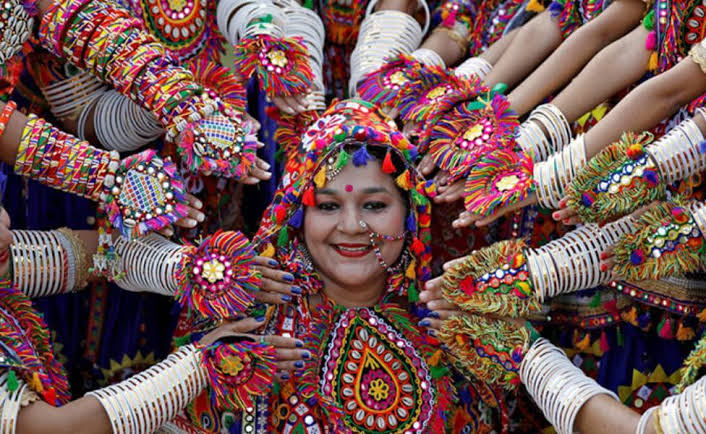
Also read: 16 Famous Cultural Festivals That Define India
The ancient astronomical ceremony drew visitors from different parts of the world to the archaeological site in southern Egypt on October 22, one of two dates associated with the phenomenon.
The second occurrence takes place on February 22, when the rising sun illuminates the temple’s interior.
Egyptian tour guide Yasser Fouad described the occasion as extraordinary, saying some visitors had stayed overnight to secure the opportunity to witness the event.
“Today is an extraordinary day, everyone is keen, there are people who stayed over the night, foreigners who actually spent the night in Abu Simbel to see this phenomenon,” Fouad said.
The Great Temple of Ramses II at Abu Simbel dates back to the 13th century BC and is among Egypt’s most prominent archaeological attractions.
Built during the reign of Ramses II, one of ancient Egypt’s most powerful pharaohs, the temple is renowned for its monumental statues and sophisticated architectural design.
The twice-yearly sunrise phenomenon is a major attraction, drawing visitors eager to witness the interaction between sunlight and the temple’s ancient structure.
The dates have traditionally been associated with significant moments in Ramses II’s life.
October 22 is commonly linked to his birthday, while February 22 is associated with his accession to the throne.
However, the precise historical reasons behind the dates remain debated.
Some archaeologists have proposed alternative explanations, including that they may have marked the pharaoh’s coronation and birthday.
Abu Simbel underwent a major international rescue operation in the 1960s, when archaeologists and engineers relocated the temples to protect them from flooding caused by the construction of the Aswan High Dam.
The monumental structures were cut into large blocks and reassembled at a higher location, preserving the site for future generations.
The relocation was one of the most significant archaeological preservation projects of the 20th century.
Despite the move, the temple continues to attract visitors for its ancient Egyptian art, monumental architecture and remarkable alignment with the rising sun.
Also read: 16 Famous Cultural Festivals That Define India
The annual gatherings highlight the enduring appeal of Egypt’s archaeological heritage and the continuing fascination with the astronomical knowledge and engineering achievements of its ancient civilisation.
Related

Ofala festival: Obi of Onitsha marks 25 Years on throne

Crowds Gather for Rare Sunrise at Egypt’s Abu Simbel Temple

16 Famous Cultural Festivals That Define India
Trending
Culture4 years agoThe Four Igbo Market Days and Their Significance In Omenala ÌGBÒ
Business4 years agoOoni of Ife Discusses Business and Peace Initiative in Kenya
Events4 years agoGlamour, glitz as B’obagunwa Omo’ba Obinrin Akile Ijebu celebrates New Year party (Photos)
Culture4 years agoOutrage as Ezendigbo of Ibadanland confers chieftaincy title on Olubadan
Events4 years agoOnitoomu of Ito-Omu installs two new chiefs (Video, Photos)
Events2 years agoEgbe Bobasete: The New Fashion Sensation Elevates 2024 Ojude Oba Festival (Video, Photos)
Events3 years agoNANTAP Convention 2023: Reshaping Nigerian Theatre Arts for economic growth
Paranormal4 years agoBlack Cat Superstition: Good and Bad Luck Beliefs