
Culture
Alado of Ado Awaye Strengthens Ancestral Bond with Otta

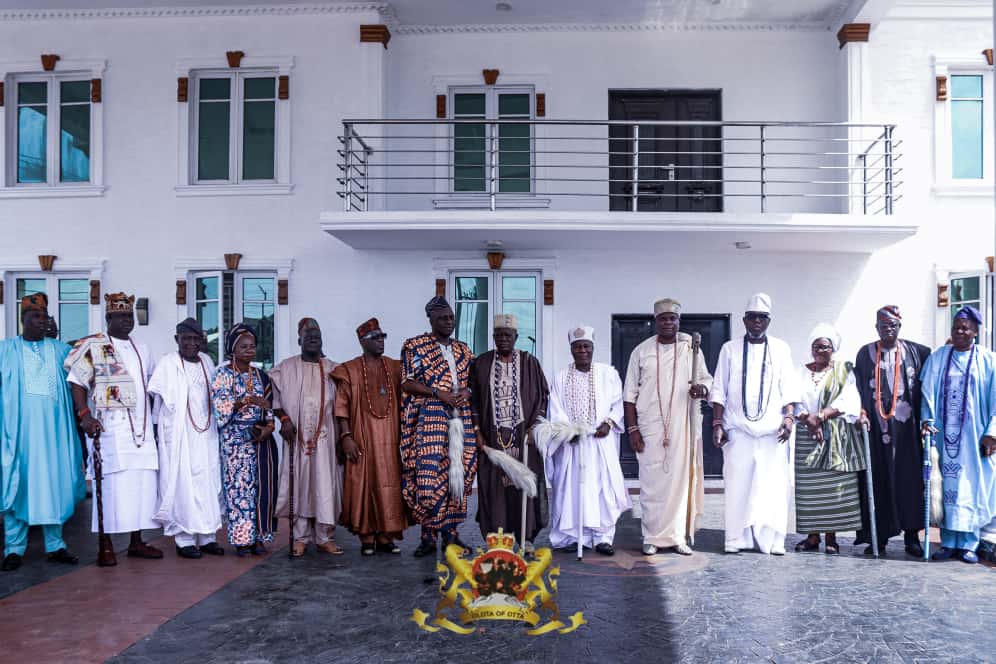
The Alado of Ado Awaye visits Otta, reaffirming ancestral ties and the origins of the sacred suspended Iyake Lake with the Awori kingdom
Alado of Ado Awaye visits Otta in a momentous cultural and historical event, His Royal Majesty, Oba Ademola Olugbile Folakanmi (Makuledoye II, Asoludero I), the Alado of Ancient Ado Awaye, on Tuesday, 21st October 2025, paid a symbolic and emotional visit to his maternal hometown, Otta, in Ogun State.
Also read: Olota of Otta Awori Kingdom Leads Celebration of Nigerian Culture at Vienna’s Adire Festival (Photos)
The revered monarch was received in grand style by the Olota of Otta, His Majesty, Professor Adeyemi Obalanlege, Ph.D (Lanlege Ekun II, Arole Iganmode, Olofin Apesin Olode), at the Ipeti Royal Square, Olota’s Palace, Enu Owa, Otta.
The gathering drew eminent traditional rulers, high chiefs, and cultural dignitaries from across the Awori Kingdom.
In his address, the Alado recounted the ancient ancestral link between Otta and Ado Awaye, tracing his lineage to Koyi, the son of Arugba Ifa Otta and Alaafin Oluaso, the 7th Alaafin of Oyo.
Koyi, he said, departed Oyo after the ascension of his younger brother, Olugbogi, and while returning to his mother’s homeland, Otta, settled in what is now known as Ado Awaye, becoming the first Alado.
Oba Folakanmi further narrated the spiritual origin of the sacred Iyake Lake, one of only two suspended lakes in the world, located in Ado Awaye.
According to oral history, a woman of Otta descent transformed into the lake after facing ridicule — a transformation that made Iyake Lake a revered site of spirituality and pilgrimage, celebrated for its mystical powers.
During the event, the Alado formally invited the Olota of Otta to serve as Chairman and Royal Guest at the forthcoming Ado Awaye Day and Iyake Lake Celebration, slated for 21st–22nd November 2025.
Responding, Oba Obalanlege welcomed the Alado with warmth and reverence, describing the visit as a divine affirmation of long-acknowledged ancestral truths.
The Olota noted that the timing of the visit — during the “Eta” phase of the world-famous Otta Egungun Festival — was symbolic of cultural unity and divine timing.
“When I visited the late Alaafin Adeyemi Iku Baba Yeye, he confirmed these same ancestral links between Otta and Oyo,” the Olota remarked.
“However, some misinterpreted my statements as a distortion of history. Today, Kabiyesi Alado’s visit is a validation from history itself.”
The Olota expressed gratitude to Eledumare (God) for reaffirming the bond and pledged his commitment to strengthening the historical and cultural relationship between the Awori people of Otta and their Ado Awaye kinsmen.
Prominent traditional rulers and chiefs joined the Olota in receiving the Alado, including Oba Clement Akinyemi (Ajana of Otta), Oba Akeem Odunaro (Onikotun of Otta), Oba Wadudu Deinde (Akogun Oloruba of Otta), High Chief Olarenwaju Bashorun (Seriki of Otta), High Chief Oyedele Deinde (Oluwo of Otta), and High Chief Rufiat Ojugbele-Mathew (Iyalode of Otta), among others.
Also present were members of the Otta Awori Cultural Development Committee, led by Omooba Adewale Adeyanju, alongside youth leaders, cultural custodians, and representatives of traditional societies.
The historic visit concluded with mutual blessings, cultural displays, and prayers for unity. It reaffirmed the deep-rooted kinship, shared heritage, and spiritual connection between Otta the revered home of the Iyamis — and Ado Awaye, the ancient town of the mystical suspended lake.
Also read: Olota of Otta advocates cultural preservation during European tour, visit Nigerian Embassy in Rome, Italy
“Aje le l’Ado, Osalo Sí Otta, Ẹyẹ le l’Ado o, Osalọ Sí Otta, Akiyeye o mo pe Aye yeye l’Ota”







Why Nigeria needs the All-Nigeria Rotary Peace Summit

Pasuma, Malaika Headline Star-Studded Owode Ifa Festival

Dexter Loko Wins Prestigious 2026 Chinua Achebe Prize


 Culture4 years ago
The Four Igbo Market Days and Their Significance In Omenala ÌGBÒ
- Business4 years ago
Ooni of Ife Discusses Business and Peace Initiative in Kenya
- Events4 years ago
Glamour, glitz as B’obagunwa Omo’ba Obinrin Akile Ijebu celebrates New Year party (Photos)
- Culture4 years ago
Outrage as Ezendigbo of Ibadanland confers chieftaincy title on Olubadan
- Events4 years ago
Onitoomu of Ito-Omu installs two new chiefs (Video, Photos)
- Events2 years ago
Egbe Bobasete: The New Fashion Sensation Elevates 2024 Ojude Oba Festival (Video, Photos)
 Events3 years ago
NANTAP Convention 2023: Reshaping Nigerian Theatre Arts for economic growth
- Paranormal4 years ago
Black Cat Superstition: Good and Bad Luck Beliefs


