Connect with us

Culture

Ogun Oro Festival Curfew Slammed as Rights Violation by Muslim Leaders

Published

on

Ijebu Ode Oro Curfew

Ogun Oro Festival Curfew draws backlash as Muslim leaders petition Gov. Abiodun, calling it unconstitutional and a violation of citizens’ rights in Ipokia

Ogun Oro Festival Curfew has sparked intense backlash as the League of Imams and Alfas in Ogun State has petitioned Governor Dapo Abiodun, urging him to halt what they describe as an unconstitutional restriction of residents’ freedoms in Ikolaje and Idiroko, Ipokia Local Government Area.

Also read: Orosun Festival boosts Ondo tourism hopes

The controversy stems from traditional rites being conducted in honor of the late Oniko of Ikoland, Oba John Olakunle.

The rituals, which began on July 21 and are scheduled to run until August 19, 2025, are reportedly forcing residents to remain indoors during the day and close their shops—actions the Muslim leaders call a gross violation of their rights.

In their formal petition, signed by Secretary-General Imam Tajudeen Mustapha Adewunmi, the League strongly condemned the Ogun Oro Festival Curfew, citing legal precedents including a 2017 High Court ruling which barred any group from imposing movement restrictions for traditional rites.

“We unequivocally condemn any attempt to forcefully compromise the fundamental rights of law-abiding citizens,” the petition read.

The leaders also cited stakeholder agreements from 2019 and 2020, which collectively restricted Oro rituals to midnight–4 a.m. and prohibited interference with daily life.

The petition was copied to the Commissioner of Police, the DSS, and other key officials, demanding immediate action to stop what they called harassment and intimidation.

The League stressed that while it respects traditional religious practices, such rites must not override constitutional rights to freedom of movement, dignity, and lawful business operations.

Calling on Governor Abiodun to uphold the law and protect public peace, the Muslim leaders warned that continued violations must result in accountability for those responsible.

Also read: Protest: Oro festival, like other religious activities, Lagos not involved, says govt

This powerful appeal highlights ongoing tensions between cultural tradition and constitutional governance in Ogun State.

Continue Reading
Click to comment

Leave a Reply

Culture

Ofala festival: Obi of Onitsha marks 25 Years on throne

Published

on

 Ofala Festival 2026 celebrated Onitsha’s royal heritage as Obi Nnaemeka Achebe marked 25 years on the throne and addressed Nigeria’s economic challenges.

(more…)

Continue Reading

Culture

Crowds Gather for Rare Sunrise at Egypt’s Abu Simbel Temple

Published

on

Abu Simbel

Hundreds of tourists gathered at Egypt’s Abu Simbel temple to witness the twice-yearly sunrise ceremony illuminating Pharaoh Ramses II’s statue

Hundreds of tourists gathered at Egypt’s Abu Simbel temple on Thursday to witness a spectacular sunrise phenomenon in which sunlight illuminated the face of the statue of Pharaoh Ramses II, an event that occurs only twice a year.

Also read: 16 Famous Cultural Festivals That Define India

The ancient astronomical ceremony drew visitors from different parts of the world to the archaeological site in southern Egypt on October 22, one of two dates associated with the phenomenon.

The second occurrence takes place on February 22, when the rising sun illuminates the temple’s interior.

Egyptian tour guide Yasser Fouad described the occasion as extraordinary, saying some visitors had stayed overnight to secure the opportunity to witness the event.

“Today is an extraordinary day, everyone is keen, there are people who stayed over the night, foreigners who actually spent the night in Abu Simbel to see this phenomenon,” Fouad said.

The Great Temple of Ramses II at Abu Simbel dates back to the 13th century BC and is among Egypt’s most prominent archaeological attractions.

Built during the reign of Ramses II, one of ancient Egypt’s most powerful pharaohs, the temple is renowned for its monumental statues and sophisticated architectural design.

The twice-yearly sunrise phenomenon is a major attraction, drawing visitors eager to witness the interaction between sunlight and the temple’s ancient structure.

The dates have traditionally been associated with significant moments in Ramses II’s life.

October 22 is commonly linked to his birthday, while February 22 is associated with his accession to the throne.

However, the precise historical reasons behind the dates remain debated.

Some archaeologists have proposed alternative explanations, including that they may have marked the pharaoh’s coronation and birthday.

Abu Simbel underwent a major international rescue operation in the 1960s, when archaeologists and engineers relocated the temples to protect them from flooding caused by the construction of the Aswan High Dam.

The monumental structures were cut into large blocks and reassembled at a higher location, preserving the site for future generations.

The relocation was one of the most significant archaeological preservation projects of the 20th century.

Despite the move, the temple continues to attract visitors for its ancient Egyptian art, monumental architecture and remarkable alignment with the rising sun.

Also read: 16 Famous Cultural Festivals That Define India

The annual gatherings highlight the enduring appeal of Egypt’s archaeological heritage and the continuing fascination with the astronomical knowledge and engineering achievements of its ancient civilisation.

Continue Reading

Culture

16 Famous Cultural Festivals That Define India

Published

on

India

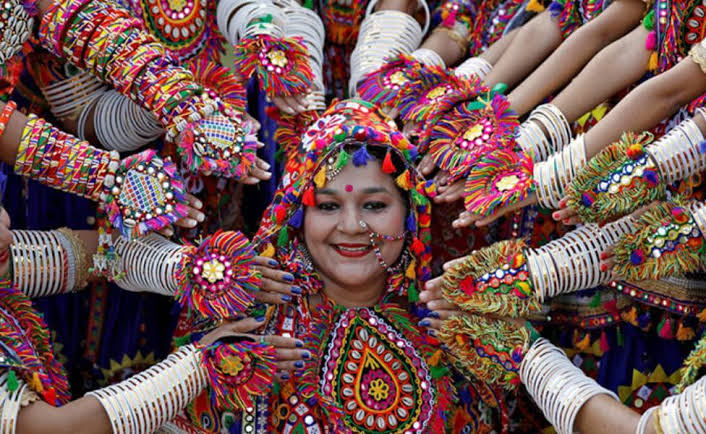
Discover 16 famous cultural festivals in India, from Diwali and Holi to Rath Yatra and the Pushkar Camel Fair, celebrating the country’s rich heritage (more…)

Continue Reading

Trending