Connect with us

Culture

Yoruba Cultural Preservation: Oluwo, YCE Unite for Reform

Published

on

Yoruba Cultural Preservation

Yoruba Cultural Preservation gains traction as Oluwo and Yoruba Council of Elders unite to protect ancestral land, promote reform, and safeguard traditions

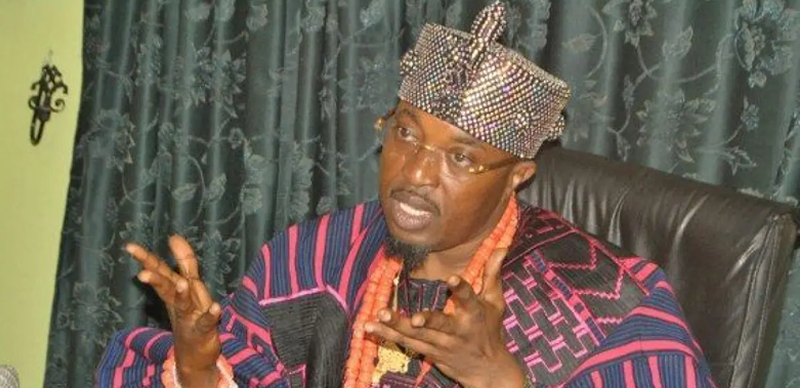
Yoruba Cultural Preservation received a major boost on Wednesday as the Oluwo of Iwo, Oba Abdulrosheed Akanbi, and the Yoruba Council of Elders (YCE) pledged to work together to safeguard the heritage, traditions, and ancestral lands of the Yoruba people.

Also read: Oluwo Names Daughter After Only Female Olofin Adimula, Luwo Gbagida

The meeting, held at the Oluwo’s palace in Iwo, Osun State, was led by the YCE National President, Chief Ajibade Oyekan.

The high-level engagement focused on strengthening cultural identity, curbing land encroachment, and detaching deity worship from Yoruba tradition.

Oba Akanbi, a vocal proponent of cultural modernization, emphasized that true Yoruba Cultural Preservation does not equate to idolatry. “Culture is not religion. I stand for a clean, progressive Yoruba culture that promotes love, dignity, and respect,” he stated.

He also urged the elders to caution monarchs making unverified historical claims, especially those attributing the origins of other ethnic groups to the Yoruba, calling such statements divisive and unproductive.

The monarch declared that no land had been sold under his reign, reinforcing his stance against land grabbing—a growing issue in Yorubaland.

“I see myself as a cleaner. We must clean our house. I’m ready to work with YCE to sanitize and unify the Yoruba race,” Oba Akanbi added, showing readiness for bold reform.

In response, Chief Oyekan praised the Oluwo’s transparency and commitment, noting that the meeting aimed to foster harmony among monarchs and protect Yoruba territories from infiltration and illegal acquisitions.

“Even culture is dynamic. Our monarchs must adapt to modern realities while holding firm to cultural pride,” Oyekan stressed.

The Yoruba Cultural Preservation dialogue also explored the separation of faith from culture, with both parties agreeing that such distinction can revive tourism, strengthen identity, and modernize traditional governance.

Also read: Preservation of Lagos History Key to Cultural Identity, Fashola Declares

This united front signals a renewed determination to protect Yoruba identity, ensuring it evolves meaningfully—without losing its soul.

Culture

Dexter Loko Wins Prestigious 2026 Chinua Achebe Prize

Published

on

 Dexter Loko Wins Chinua Achebe Prize for his 170,000-word fantasy novel, The Bako of Zereshé, at the 2026 ANA convention in Abuja

(more…)

Continue Reading

Culture

Ofala festival: Obi of Onitsha marks 25 Years on throne

Published

on

 Ofala Festival 2026 celebrated Onitsha’s royal heritage as Obi Nnaemeka Achebe marked 25 years on the throne and addressed Nigeria’s economic challenges.

(more…)

Continue Reading

Culture

Crowds Gather for Rare Sunrise at Egypt’s Abu Simbel Temple

Published

on

Abu Simbel

Hundreds of tourists gathered at Egypt’s Abu Simbel temple to witness the twice-yearly sunrise ceremony illuminating Pharaoh Ramses II’s statue

Hundreds of tourists gathered at Egypt’s Abu Simbel temple on Thursday to witness a spectacular sunrise phenomenon in which sunlight illuminated the face of the statue of Pharaoh Ramses II, an event that occurs only twice a year.

Also read: 16 Famous Cultural Festivals That Define India

The ancient astronomical ceremony drew visitors from different parts of the world to the archaeological site in southern Egypt on October 22, one of two dates associated with the phenomenon.

The second occurrence takes place on February 22, when the rising sun illuminates the temple’s interior.

Egyptian tour guide Yasser Fouad described the occasion as extraordinary, saying some visitors had stayed overnight to secure the opportunity to witness the event.

“Today is an extraordinary day, everyone is keen, there are people who stayed over the night, foreigners who actually spent the night in Abu Simbel to see this phenomenon,” Fouad said.

The Great Temple of Ramses II at Abu Simbel dates back to the 13th century BC and is among Egypt’s most prominent archaeological attractions.

Built during the reign of Ramses II, one of ancient Egypt’s most powerful pharaohs, the temple is renowned for its monumental statues and sophisticated architectural design.

The twice-yearly sunrise phenomenon is a major attraction, drawing visitors eager to witness the interaction between sunlight and the temple’s ancient structure.

The dates have traditionally been associated with significant moments in Ramses II’s life.

October 22 is commonly linked to his birthday, while February 22 is associated with his accession to the throne.

However, the precise historical reasons behind the dates remain debated.

Some archaeologists have proposed alternative explanations, including that they may have marked the pharaoh’s coronation and birthday.

Abu Simbel underwent a major international rescue operation in the 1960s, when archaeologists and engineers relocated the temples to protect them from flooding caused by the construction of the Aswan High Dam.

The monumental structures were cut into large blocks and reassembled at a higher location, preserving the site for future generations.

The relocation was one of the most significant archaeological preservation projects of the 20th century.

Despite the move, the temple continues to attract visitors for its ancient Egyptian art, monumental architecture and remarkable alignment with the rising sun.

Also read: 16 Famous Cultural Festivals That Define India

The annual gatherings highlight the enduring appeal of Egypt’s archaeological heritage and the continuing fascination with the astronomical knowledge and engineering achievements of its ancient civilisation.

Continue Reading

Trending