Connect with us

Culture

Oyo Mesi faction opposes fresh selection process for Alaafin

Published

on

Oyo Mesi faction opposes fresh selection process for Alaafin

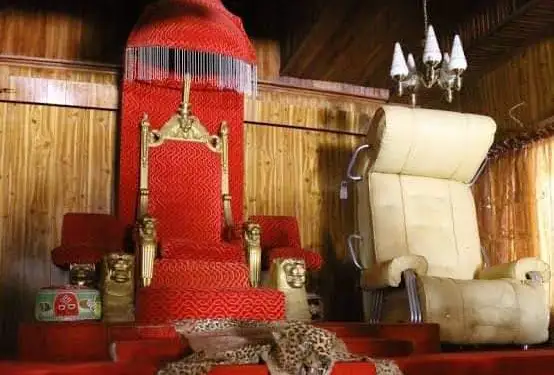
A faction of the Oyo town kingmakers, known as the Oyo Mesi, have kicked against any plan by the Oyo State Government to commence a fresh process to select the Alaafin of Oyo.

Counsel for the kingmakers, Kunle Sobaloju (SAN), wrote the Oyo State Governor, Seyi Makinde, warning against restarting the process to select a new Alaafin of Oyo.

The kingmakers, through Sobaloju, were reacting to a media report suggesting the move to discard the process concluded initially by the kingmakers

He advised the governor not to do anything that could prejudice pending appeals in courts.

Following the death of the Alaafin of Oyo, Oba Lamidi Adeyemi, on April 22, 2022, there was a crisis as the Oyomesi engaged the Oyo State government in a legal battle over the selection of the new monarch.

After a nomination process by the valid ruling house, the kingmakers met, screened the 82 contestants and chose Prince Lukman Gbadegesin, whose name was forwarded to the Oyo State government for ratification.

Following opposition to the choice of Gbadegesin by three of the kingmakers, the Oyo State government ordered a repeat of the exercise.

The majority of kingmakers, led by the Bashorun of Oyo, High Chief Yusuf Ayoola, however, took the government to court.

The Ibadan-based lawyer representing the Oyomesi in court, in his letter to Makinde, stated, “We wish to restate that in view of the pending appeals in Appeal No: CA/IB/134/24 High Chief Yusuf Akinade Ayoola Layinka & Ors v. Governor of Oyo State & Ors and the pending application for interlocutory orders of injunction restraining Your Excellency, servants, agents, assigns, and or privies or otherwise and howsoever from aborting the process for the selection/appointment of the candidate for filling the vacant stool of Alaafin of Oyo, duly conducted by the kingmakers of Alaafin of Oyo Chieftaincy and or removing the appellants/applicants as the kingmakers of the Oyo Alaafin or dissolving the Oyomesi in Council and or appointing or selecting warrant chiefs to conduct or start a fresh process or exercise for the filling of the vacant stool of Alaafin of Oyo, pending the determination of the appeal against the ruling of Justice Akintola of High Court of Oyo, delivered on 16th ofApril 2024, it would be subjudice for Your Excellency to take any step that may render the decisions of the Court of Appeal nugatory.”

He said if the governor proceeded to commence the fresh process to fill the vacant stool of the Alaafin of Oyo, such action “would be sub judice and tantamount to lawlessness and disregard of the superior courts of record, an act which Your Excellency ought to distance yourself from.”

He said the Supreme Court, the highest court in the land, had at various times frowned on parties before the court engaging in self-help.

“Particular reference is made to the decision of the Supreme Court in the case of Ajuwon & Ors v. Governor of Oyo State & Ors. (2021) LPELR-55339(SC), where the Supreme Court states ‘…it is unthinkable for a democratically elected governor to embark on unwholesome and undemocratic tendencies.

“We, therefore, once more request and urge Your Excellency to suspend any plan to kick-start a fresh process for the filling of the vacant stool of Alaafin of Oyo during the pendency of a motion for injunction pending appeal, in obedience to the law and integrity of our courts,” the letter added.

Culture

Dexter Loko Wins Prestigious 2026 Chinua Achebe Prize

Published

on

 Dexter Loko Wins Chinua Achebe Prize for his 170,000-word fantasy novel, The Bako of Zereshé, at the 2026 ANA convention in Abuja

(more…)

Continue Reading

Culture

Ofala festival: Obi of Onitsha marks 25 Years on throne

Published

on

 Ofala Festival 2026 celebrated Onitsha’s royal heritage as Obi Nnaemeka Achebe marked 25 years on the throne and addressed Nigeria’s economic challenges.

(more…)

Continue Reading

Culture

Crowds Gather for Rare Sunrise at Egypt’s Abu Simbel Temple

Published

on

Abu Simbel

Hundreds of tourists gathered at Egypt’s Abu Simbel temple to witness the twice-yearly sunrise ceremony illuminating Pharaoh Ramses II’s statue

Hundreds of tourists gathered at Egypt’s Abu Simbel temple on Thursday to witness a spectacular sunrise phenomenon in which sunlight illuminated the face of the statue of Pharaoh Ramses II, an event that occurs only twice a year.

Also read: 16 Famous Cultural Festivals That Define India

The ancient astronomical ceremony drew visitors from different parts of the world to the archaeological site in southern Egypt on October 22, one of two dates associated with the phenomenon.

The second occurrence takes place on February 22, when the rising sun illuminates the temple’s interior.

Egyptian tour guide Yasser Fouad described the occasion as extraordinary, saying some visitors had stayed overnight to secure the opportunity to witness the event.

“Today is an extraordinary day, everyone is keen, there are people who stayed over the night, foreigners who actually spent the night in Abu Simbel to see this phenomenon,” Fouad said.

The Great Temple of Ramses II at Abu Simbel dates back to the 13th century BC and is among Egypt’s most prominent archaeological attractions.

Built during the reign of Ramses II, one of ancient Egypt’s most powerful pharaohs, the temple is renowned for its monumental statues and sophisticated architectural design.

The twice-yearly sunrise phenomenon is a major attraction, drawing visitors eager to witness the interaction between sunlight and the temple’s ancient structure.

The dates have traditionally been associated with significant moments in Ramses II’s life.

October 22 is commonly linked to his birthday, while February 22 is associated with his accession to the throne.

However, the precise historical reasons behind the dates remain debated.

Some archaeologists have proposed alternative explanations, including that they may have marked the pharaoh’s coronation and birthday.

Abu Simbel underwent a major international rescue operation in the 1960s, when archaeologists and engineers relocated the temples to protect them from flooding caused by the construction of the Aswan High Dam.

The monumental structures were cut into large blocks and reassembled at a higher location, preserving the site for future generations.

The relocation was one of the most significant archaeological preservation projects of the 20th century.

Despite the move, the temple continues to attract visitors for its ancient Egyptian art, monumental architecture and remarkable alignment with the rising sun.

Also read: 16 Famous Cultural Festivals That Define India

The annual gatherings highlight the enduring appeal of Egypt’s archaeological heritage and the continuing fascination with the astronomical knowledge and engineering achievements of its ancient civilisation.

Continue Reading

Trending