
Culture
OLOJO….Ile Ife’s September Gift To Culture

By Halima Adaba,
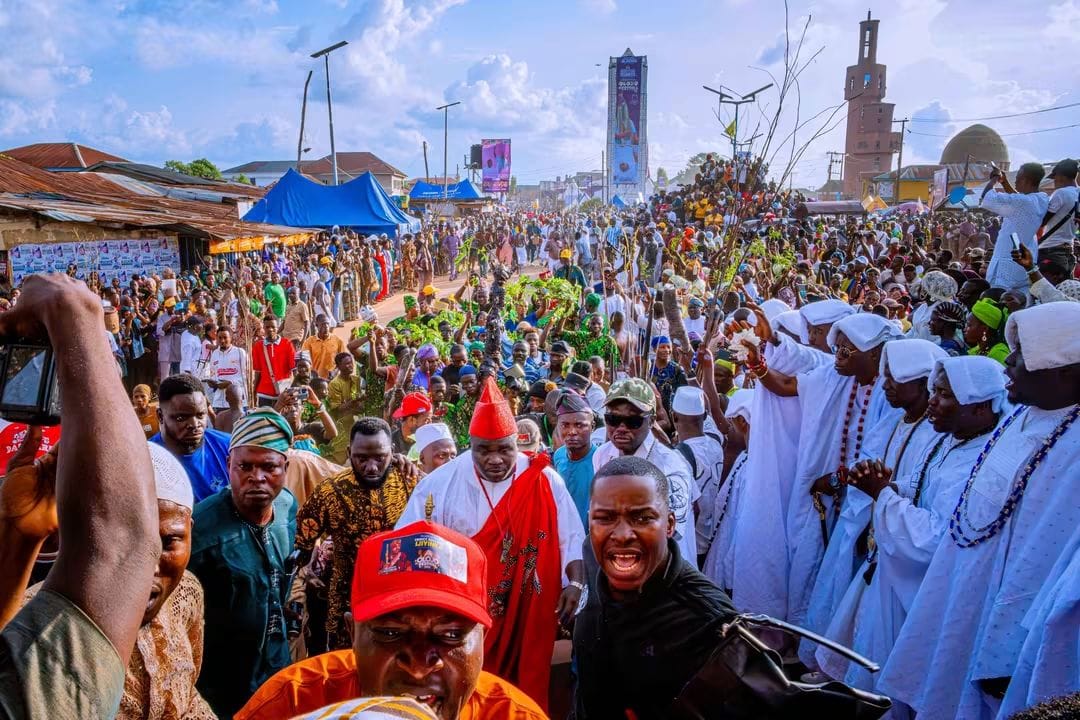
It was a featubal if the people. It was for the anciebt town of Ile Ife, which the Yoruba race refards as the Source.
Also read: Olojo Festival 2026: Ooni Urges Leaders to Prioritise Citizens
And ut was a festivsl for the King, Arole Oduduwa, Oonirisa, Adeyeye Enitan Ogunwusi, Ojaja II.
And so between September 24 and 28th 2026, the annual featuval dazzjed in all its white glory.
Tge Monarch paid the traditional ancestral homage and offered propitiation as part of the sacred rites of the Olojo Festival.
It was a powerful expression of Yoruba heritage, spirituality, and enduring tradition.
Call it a collection of beautiful moments, faces, colours and cultural expressions.
Every frame tells a story.
Every face carries the energy.
Every moment keeps the heritage alive.
Undoubtedly one of the most sacred cultural celebrations in Ilé-Ifẹ̀. It marked a day associated with creation, thanksgiving, ancestral heritage, and the sacred appearance of the Ooni of Ife wearing the revered Aàrẹ crown.
There were also the devotees of the famed god of thunder – Sàngó who were hardly conspicuous at the festival.
Many other traditional groups came out with candor, showing a powerful expression of Yoruba cultural identity, spiritual devotion, and respect for the ancient traditions of Ilé-Ifẹ̀.
Devotees of Sàngó bekieved the ‘appearance’ of the god of thunder on Seotember 26th could be understood as a symbolic meeting of ancestral heritage, spiritual devotion, and the celebration of creation.
It was a moment when the sounds of drums, chants, and traditional praise poetry brought the history of the Yoruba people to life.
Although Olojo is closely associated with Ogun, the god of iron, and the sacred traditions of Ile-Ife, the presence of Sàngó devotees reflected the rich diversity of Yoruba spiritual heritage.
Also read: Olojo Festival 2026: Ooni Urges Leaders to Prioritise Citizens
As a participant enthused at the festival, “To witness Sàngó Olúkòso emerge on Olojo Festival day is to witness a living expression of history, identity, and ancestral pride.”




Ofala festival: Obi of Onitsha marks 25 Years on throne

Crowds Gather for Rare Sunrise at Egypt’s Abu Simbel Temple

16 Famous Cultural Festivals That Define India


 Culture4 years ago
The Four Igbo Market Days and Their Significance In Omenala ÌGBÒ
- Business4 years ago
Ooni of Ife Discusses Business and Peace Initiative in Kenya
- Events4 years ago
Glamour, glitz as B’obagunwa Omo’ba Obinrin Akile Ijebu celebrates New Year party (Photos)
- Culture4 years ago
Outrage as Ezendigbo of Ibadanland confers chieftaincy title on Olubadan
- Events4 years ago
Onitoomu of Ito-Omu installs two new chiefs (Video, Photos)
- Events2 years ago
Egbe Bobasete: The New Fashion Sensation Elevates 2024 Ojude Oba Festival (Video, Photos)
 Events3 years ago
NANTAP Convention 2023: Reshaping Nigerian Theatre Arts for economic growth
- Paranormal4 years ago
Black Cat Superstition: Good and Bad Luck Beliefs


