Connect with us

Culture

Lagos monuments restoration underway to boost cultural heritage, tourism

Published

on

Lagos Monuments Restoration

Lagos State Government is actively undertaking Lagos Monuments Restoration, with 11 of 30 key heritage sites already completed to boost cultural preservation and tourism

The Lagos State Government has announced a significant drive in Lagos Monuments Restoration, with plans to revitalise 30 key heritage sites across the state.

Also read: Hakuna Malaya Theme Park thrives as Easter holiday hotspot in Lagos

The Commissioner for Tourism, Arts and Culture, Mrs. Toke Benson-Awoyinka, confirmed that this extensive effort is being spearheaded by the Monuments Management Department of her ministry.

During a recent Ministerial Press Briefing at Alausa, Ikeja, Benson-Awoyinka revealed that 11 of the targeted monuments have already been fully restored.

The remaining sites are at various stages of implementation, from contract award to active construction, all poised to significantly boost the state’s cultural preservation and infrastructure revitalisation efforts upon completion.

“To date, 11 of the 30 targeted monuments have been fully restored, while the remaining are at various stages of implementation, ranging from contract award to active construction,” she stated.

The Commissioner described this heritage initiative as a bold step by the Sanwo-Olu administration to protect and celebrate the rich cultural history of Lagos and preserve its collective memory.

Among the notable monuments undergoing restoration are the historic Ejirin Post Office in Epe, recognised as Nigeria’s first post office and a vital symbol of early communication, as well as the redevelopment of the Agia Tree Cenotaph in Badagry, which commemorates the arrival of Christianity in Nigeria.

Other significant projects include the construction of the ‘Door of Return’, the installation of a statue of Alhaji Lateef Jakande, and the Eyo Masquerade Statue at the J. Randle Centre for Yoruba Culture and History.

“These monuments are more than just cultural artefacts; they are anchors of identity, legacy, and community pride,” the commissioner affirmed. “By investing in their restoration, we are ensuring that the past remains a guiding light for the future.”

Speaking further, Mrs. Benson-Awoyinka also announced that the ongoing reconstruction of the Lagos Theatre, Oregun, which was among the public assets destroyed during the #EndSARS protests of October 2020, is on track for timely completion.

Describing the project as a “symbol of cultural rebirth,” the commissioner said the rebuilt theatre will emerge as a state-of-the-art performance and creative hub, capable of hosting concerts, stage plays, film screenings, training sessions, and various community-based events.

“The new Lagos Theatre is being designed to international standards. It will not only serve as a platform for nurturing local talent but also as a magnet for global artistic collaborations,” she said. “This is part of the Sanwo-Olu administration’s broader vision to make Lagos the cultural and creative heartbeat of Africa.”

The commissioner reiterated that both the heritage monuments and the creative infrastructure projects are deeply rooted in the state government’s commitment to cultural preservation, education, and tourism promotion.

“With these initiatives, we are reaffirming Lagos as a land of deep heritage, dynamic creativity, and resilient spirit,” she concluded.

Continue Reading
Click to comment

Leave a Reply

Culture

Ofala festival: Obi of Onitsha marks 25 Years on throne

Published

on

 Ofala Festival 2026 celebrated Onitsha’s royal heritage as Obi Nnaemeka Achebe marked 25 years on the throne and addressed Nigeria’s economic challenges.

(more…)

Continue Reading

Culture

Crowds Gather for Rare Sunrise at Egypt’s Abu Simbel Temple

Published

on

Abu Simbel

Hundreds of tourists gathered at Egypt’s Abu Simbel temple to witness the twice-yearly sunrise ceremony illuminating Pharaoh Ramses II’s statue

Hundreds of tourists gathered at Egypt’s Abu Simbel temple on Thursday to witness a spectacular sunrise phenomenon in which sunlight illuminated the face of the statue of Pharaoh Ramses II, an event that occurs only twice a year.

Also read: 16 Famous Cultural Festivals That Define India

The ancient astronomical ceremony drew visitors from different parts of the world to the archaeological site in southern Egypt on October 22, one of two dates associated with the phenomenon.

The second occurrence takes place on February 22, when the rising sun illuminates the temple’s interior.

Egyptian tour guide Yasser Fouad described the occasion as extraordinary, saying some visitors had stayed overnight to secure the opportunity to witness the event.

“Today is an extraordinary day, everyone is keen, there are people who stayed over the night, foreigners who actually spent the night in Abu Simbel to see this phenomenon,” Fouad said.

The Great Temple of Ramses II at Abu Simbel dates back to the 13th century BC and is among Egypt’s most prominent archaeological attractions.

Built during the reign of Ramses II, one of ancient Egypt’s most powerful pharaohs, the temple is renowned for its monumental statues and sophisticated architectural design.

The twice-yearly sunrise phenomenon is a major attraction, drawing visitors eager to witness the interaction between sunlight and the temple’s ancient structure.

The dates have traditionally been associated with significant moments in Ramses II’s life.

October 22 is commonly linked to his birthday, while February 22 is associated with his accession to the throne.

However, the precise historical reasons behind the dates remain debated.

Some archaeologists have proposed alternative explanations, including that they may have marked the pharaoh’s coronation and birthday.

Abu Simbel underwent a major international rescue operation in the 1960s, when archaeologists and engineers relocated the temples to protect them from flooding caused by the construction of the Aswan High Dam.

The monumental structures were cut into large blocks and reassembled at a higher location, preserving the site for future generations.

The relocation was one of the most significant archaeological preservation projects of the 20th century.

Despite the move, the temple continues to attract visitors for its ancient Egyptian art, monumental architecture and remarkable alignment with the rising sun.

Also read: 16 Famous Cultural Festivals That Define India

The annual gatherings highlight the enduring appeal of Egypt’s archaeological heritage and the continuing fascination with the astronomical knowledge and engineering achievements of its ancient civilisation.

Continue Reading

Culture

16 Famous Cultural Festivals That Define India

Published

on

India

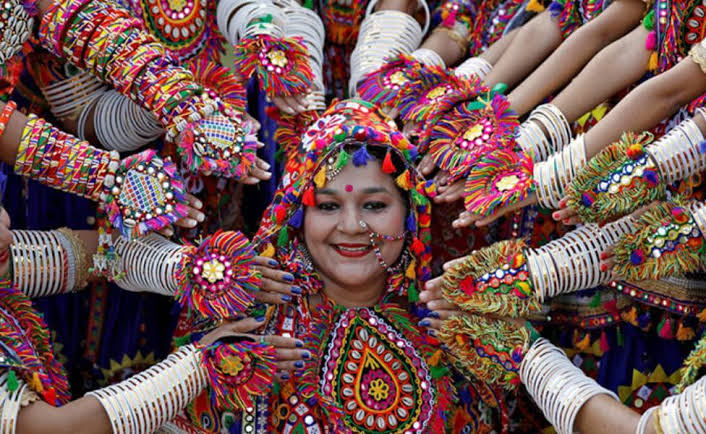
Discover 16 famous cultural festivals in India, from Diwali and Holi to Rath Yatra and the Pushkar Camel Fair, celebrating the country’s rich heritage (more…)

Continue Reading

Trending