Connect with us

Culture

Lagos celebrates world tourism day 2024 with focus on peace and inclusivity

Published

on

Lagos World Tourism Day 2024 celebration

Lagos State marked World Tourism Day 2024 with the theme “Tourism and Peace,” highlighting tourism as a catalyst for peace and cultural exchange.


Commissioner Toke Benson-Awoyinka emphasised Lagos’ commitment to promoting tourism for economic growth and societal unity.

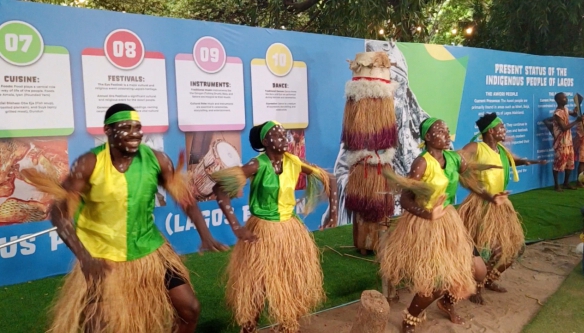
The event, held at Muri Okunola Park, featured cultural exhibitions and panel discussions with notable figures.


Also read: South-East South-South tourism summit 2024 to boost culture and economy


The 2024 World Tourism Day celebration in Lagos, themed “Tourism and Peace,” showcased the city’s dedication to using tourism as a tool for unity and economic development.

Organised by the Lagos State Ministry of Tourism, Arts and Culture under Commissioner Mrs. Toke Benson-Awoyinka, in collaboration with Sterling Bank, the event took place at Muri Okunola Park, Victoria Island, transforming the venue into a vibrant cultural exhibition space.

In her opening remarks, Commissioner Benson-Awoyinka stressed the importance of tourism in fostering peace, breaking cultural barriers, and promoting mutual respect.

She highlighted Lagos’ ongoing efforts to position itself as a global tourism hub while ensuring inclusivity for all its citizens. “Through tourism, we connect with the world, break down cultural barriers, and celebrate our differences,” she said.

The event featured a keynote address by HRM Oba Abdulwasiu Omogbolahan Lawal, Oniru of Iruland, who spoke extensively on the relationship between tourism and peace.

He drew attention to Paul Collier’s Theory on Conflict and Peace, the role of tourism in conflict resolution, and how Lagos can leverage tourism for social cohesion and youth employment.

A panel discussion followed, featuring experts like Ms. Abiola Adelana of Sterling Bank, Mr. Chike Ogeah of Mac Folly, and SSA to the Governor, Ms. Damilola Ayinde Marshal, who explored the relevance of tourism to nation-building.

Veteran actress Joke Silva and other notable figures delivered goodwill messages, further reinforcing the significance of tourism in promoting peace and sustainable development.

The event concluded with an exhibition tour, allowing attendees to experience the rich cultural heritage on display, reinforcing the message that Lagos is not only a state of aquatic splendour but also a beacon of peace and cultural diversity.

Culture

Dexter Loko Wins Prestigious 2026 Chinua Achebe Prize

Published

on

 Dexter Loko Wins Chinua Achebe Prize for his 170,000-word fantasy novel, The Bako of Zereshé, at the 2026 ANA convention in Abuja

(more…)

Continue Reading

Culture

Ofala festival: Obi of Onitsha marks 25 Years on throne

Published

on

 Ofala Festival 2026 celebrated Onitsha’s royal heritage as Obi Nnaemeka Achebe marked 25 years on the throne and addressed Nigeria’s economic challenges.

(more…)

Continue Reading

Culture

Crowds Gather for Rare Sunrise at Egypt’s Abu Simbel Temple

Published

on

Abu Simbel

Hundreds of tourists gathered at Egypt’s Abu Simbel temple to witness the twice-yearly sunrise ceremony illuminating Pharaoh Ramses II’s statue

Hundreds of tourists gathered at Egypt’s Abu Simbel temple on Thursday to witness a spectacular sunrise phenomenon in which sunlight illuminated the face of the statue of Pharaoh Ramses II, an event that occurs only twice a year.

Also read: 16 Famous Cultural Festivals That Define India

The ancient astronomical ceremony drew visitors from different parts of the world to the archaeological site in southern Egypt on October 22, one of two dates associated with the phenomenon.

The second occurrence takes place on February 22, when the rising sun illuminates the temple’s interior.

Egyptian tour guide Yasser Fouad described the occasion as extraordinary, saying some visitors had stayed overnight to secure the opportunity to witness the event.

“Today is an extraordinary day, everyone is keen, there are people who stayed over the night, foreigners who actually spent the night in Abu Simbel to see this phenomenon,” Fouad said.

The Great Temple of Ramses II at Abu Simbel dates back to the 13th century BC and is among Egypt’s most prominent archaeological attractions.

Built during the reign of Ramses II, one of ancient Egypt’s most powerful pharaohs, the temple is renowned for its monumental statues and sophisticated architectural design.

The twice-yearly sunrise phenomenon is a major attraction, drawing visitors eager to witness the interaction between sunlight and the temple’s ancient structure.

The dates have traditionally been associated with significant moments in Ramses II’s life.

October 22 is commonly linked to his birthday, while February 22 is associated with his accession to the throne.

However, the precise historical reasons behind the dates remain debated.

Some archaeologists have proposed alternative explanations, including that they may have marked the pharaoh’s coronation and birthday.

Abu Simbel underwent a major international rescue operation in the 1960s, when archaeologists and engineers relocated the temples to protect them from flooding caused by the construction of the Aswan High Dam.

The monumental structures were cut into large blocks and reassembled at a higher location, preserving the site for future generations.

The relocation was one of the most significant archaeological preservation projects of the 20th century.

Despite the move, the temple continues to attract visitors for its ancient Egyptian art, monumental architecture and remarkable alignment with the rising sun.

Also read: 16 Famous Cultural Festivals That Define India

The annual gatherings highlight the enduring appeal of Egypt’s archaeological heritage and the continuing fascination with the astronomical knowledge and engineering achievements of its ancient civilisation.

Continue Reading

Trending