Connect with us

Culture

Fusengbuwa Ruling House Crisis Escalates to Ogun Court

Published

on

Fusengbuwa Ruling House Crisis

The Fusengbuwa ruling house crisis deepens as three royal families sue Otunba Owoyemi over leadership claims. Ogun High Court to decide succession dispute.

The Fusengbuwa ruling house crisis has intensified, as three royal families—Adeberu, Olufadi, and Ayora/Tunwase—dragged the Ogun State Government and prominent individuals, including Otunba Abdulateef Owoyemi and Dr Kunle Hassan, before the Ogun State High Court in Ijebu Ode over a contentious leadership tussle.

Also read: Awujale Succession: Owoyemi Denies Screening Committee

The families are contesting Owoyemi’s claim as Olori Ebi (head) of the Fusengbuwa ruling house, which is next in line to produce the Awujale of Ijebu land, following the death of Oba Sikiru Kayode Adetona in July 2025 after a 65-year reign.

In court documents dated 17 September 2025, representatives Adedokun Ajidagba, Adeleke Adeyemi, and Ademola Sonaya argued that Owoyemi has no ancestral ties to Ile-Nla, Agunsebi—the traditional home of the Fusengbuwa family—and therefore lacks the standing to claim the headship.

Ajidagba asserted that his own appointment as Olori Ebi was officially ratified on 23 November 2023, with due notification sent to the Ogun State Ministry of Local Government and Chieftaincy Affairs as well as the late monarch.

He is asking the court to bar Owoyemi from parading himself as the ruling house’s leader.

However, Owoyemi, a former National President of the Institute of Chartered Accountants of Nigeria (ICAN), insists that his leadership was upheld by the Ibadan Court of Appeal in November 2024, following a years-long dispute.

He explained that he was first appointed Deputy Olori Ebi in 2011 and became head of the family in 2013 after the passing of Prince Fasasi Adeyemi.

Although a 2018 judgment by the Ijebu Ode High Court did not explicitly name him as Olori Ebi, he appealed the ruling and won on all seven counts.

The appellate court dismissed allegations of fraud and affirmed his legitimate appointment, a decision that Owoyemi says the late Oba Adetona himself recognised during a reconciliation meeting in early 2025.

He further revealed that internal factions—previously led by Dr Kunle Hassan and others—have since accepted the appellate court’s verdict, formally acknowledging his position on 31 August 2025.

In his remarks, Owoyemi maintained his roots are firmly planted in Ijebu land, specifically Idowa Ijebu, and urged all family members to prioritise unity and peace ahead of the selection of the next Awujale.

“I remain a bona fide son of Ijebu land. Let us bury our differences and work towards a transparent and peaceful succession process,” he said.

Also read: Awujale Succession Dispute: Fusengbuwa Ruling House sets Record Straight

While the court has yet to fix a hearing date, the case underscores the deepening Fusengbuwa ruling house crisis and its implications for the Awujale succession—a matter of significant historical and cultural importance in Ogun State.

Continue Reading
Click to comment

Leave a Reply

Culture

Ofala festival: Obi of Onitsha marks 25 Years on throne

Published

on

 Ofala Festival 2026 celebrated Onitsha’s royal heritage as Obi Nnaemeka Achebe marked 25 years on the throne and addressed Nigeria’s economic challenges.

(more…)

Continue Reading

Culture

Crowds Gather for Rare Sunrise at Egypt’s Abu Simbel Temple

Published

on

Abu Simbel

Hundreds of tourists gathered at Egypt’s Abu Simbel temple to witness the twice-yearly sunrise ceremony illuminating Pharaoh Ramses II’s statue

Hundreds of tourists gathered at Egypt’s Abu Simbel temple on Thursday to witness a spectacular sunrise phenomenon in which sunlight illuminated the face of the statue of Pharaoh Ramses II, an event that occurs only twice a year.

Also read: 16 Famous Cultural Festivals That Define India

The ancient astronomical ceremony drew visitors from different parts of the world to the archaeological site in southern Egypt on October 22, one of two dates associated with the phenomenon.

The second occurrence takes place on February 22, when the rising sun illuminates the temple’s interior.

Egyptian tour guide Yasser Fouad described the occasion as extraordinary, saying some visitors had stayed overnight to secure the opportunity to witness the event.

“Today is an extraordinary day, everyone is keen, there are people who stayed over the night, foreigners who actually spent the night in Abu Simbel to see this phenomenon,” Fouad said.

The Great Temple of Ramses II at Abu Simbel dates back to the 13th century BC and is among Egypt’s most prominent archaeological attractions.

Built during the reign of Ramses II, one of ancient Egypt’s most powerful pharaohs, the temple is renowned for its monumental statues and sophisticated architectural design.

The twice-yearly sunrise phenomenon is a major attraction, drawing visitors eager to witness the interaction between sunlight and the temple’s ancient structure.

The dates have traditionally been associated with significant moments in Ramses II’s life.

October 22 is commonly linked to his birthday, while February 22 is associated with his accession to the throne.

However, the precise historical reasons behind the dates remain debated.

Some archaeologists have proposed alternative explanations, including that they may have marked the pharaoh’s coronation and birthday.

Abu Simbel underwent a major international rescue operation in the 1960s, when archaeologists and engineers relocated the temples to protect them from flooding caused by the construction of the Aswan High Dam.

The monumental structures were cut into large blocks and reassembled at a higher location, preserving the site for future generations.

The relocation was one of the most significant archaeological preservation projects of the 20th century.

Despite the move, the temple continues to attract visitors for its ancient Egyptian art, monumental architecture and remarkable alignment with the rising sun.

Also read: 16 Famous Cultural Festivals That Define India

The annual gatherings highlight the enduring appeal of Egypt’s archaeological heritage and the continuing fascination with the astronomical knowledge and engineering achievements of its ancient civilisation.

Continue Reading

Culture

16 Famous Cultural Festivals That Define India

Published

on

India

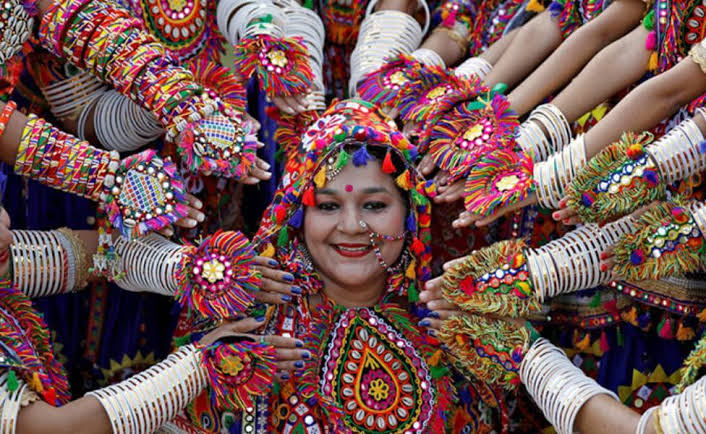
Discover 16 famous cultural festivals in India, from Diwali and Holi to Rath Yatra and the Pushkar Camel Fair, celebrating the country’s rich heritage (more…)

Continue Reading

Trending