
News
Fuel subsidy debate: Between economic reform and political expediency

Published
2 months agoon
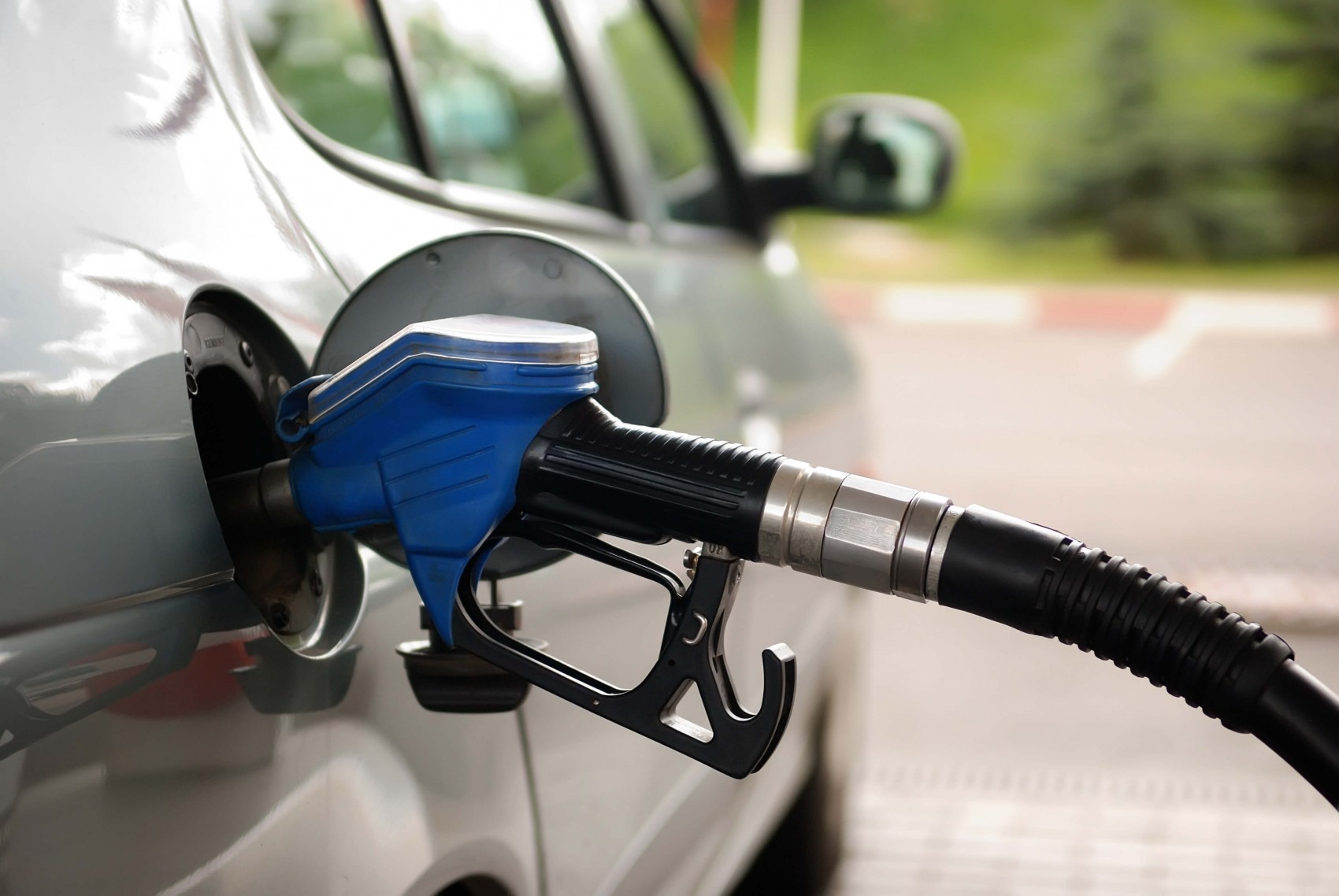
Atiku petrol subsidy plans have reignited Nigeria’s 2027 debate as the ADC candidate promises relief while the Presidency demands clarity
Nigeria’s worsening cost-of-living crisis has turned petrol subsidy into one of the most politically sensitive issues ahead of the 2027 presidential election.
Also read: Tinubu’s Bold Moves Spark Economic Turnaround: From Subsidy Shocker to Foreign Investment Surge
The debate was reignited by former Vice President Atiku Abubakar, the presidential candidate of the African Democratic Congress (ADC), who has promised to restore petrol subsidy if elected president on January 16, 2027.
The date is the official presidential and National Assembly election date announced by the Independent National Electoral Commission (INEC).
Atiku’s declaration has predictably generated political fireworks.
The Presidency and All Progressives Congress (APC) voices have attacked the proposal, while some Nigerians, understandably exhausted by high prices, have welcomed the prospect of cheaper petrol.
Other opposition figures, including Peter Obi, have questioned the wisdom of returning to the old subsidy regime.
At the heart of the argument is a deceptively simple question: should an oil-producing country such as Nigeria subsidise petrol for its citizens? Atiku says yes.
His argument is that Nigeria is sufficiently endowed with crude oil resources to provide affordable energy to its people.
He has also questioned what happened to the savings from subsidy removal and argued that Nigerians have not received commensurate benefits from the reform.
But is this serious economic policy or simply political speak ahead of an election? The answer may lie somewhere between the two.
President Bola Ahmed Tinubu set the tone for his administration’s economic policy on May 29, 2023, when, immediately after taking the oath of office, he declared: “The fuel subsidy is gone.”
The announcement was dramatic because it ended a policy that had existed for decades and had become deeply embedded in Nigeria’s political economy.
Petrol prices immediately rose, with NNPC Limited adjusting pump prices within days to between N488 and N557 per litre in different parts of the country.
The reform was not isolated.
Tinubu’s administration also unified the foreign-exchange market, allowing the naira to depreciate substantially, while subsequently implementing other reforms affecting electricity and public finances.
The economic logic was compelling.
Nigeria could no longer afford to spend enormous amounts of public money keeping petrol artificially cheap, particularly when the country was importing most of its refined petroleum products.
Nigeria’s economy was in bad shape due to decades of horrifying mismanagement.
In 2022 alone, petrol subsidies cost Nigeria about $10 billion, according to Reuters.
Nigeria had effectively been exporting crude oil, importing refined petrol and then borrowing or diverting scarce public resources to make imported petrol cheaper at the pump.
The subsidy was therefore not simply an energy policy – it was a major fiscal burden. But there was a problem.
The economic argument for removing subsidy was stronger than the social protection programme that accompanied its removal.
That is where the Tinubu administration has struggled.
For the average Nigerian, macroeconomic arguments about fiscal consolidation mean little when the price of petrol has risen several hundred percent.
Petrol that sold for about N175 per litre before the May 2023 announcement has, depending on location and market conditions, risen to around N1,250-N1,300 or more.
That represents an extraordinary increase in the cost of one of the most important commodities in the Nigerian economy.
Petrol is not merely petrol in Nigeria; it is transportation and electricity for millions of homes and businesses that rely on generators.
The politics of petrol is inexorably intertwined with our lives as a useful and ever-present commodity.
Petrol is also the cost of moving food from farms to markets and running factories, shops and small businesses.
Consequently, when petrol prices rise, the shock travels through the entire economy and it is mostly felt by long-suffering Nigerians.
The current cost-of-living crisis is therefore not simply about the price of food, but the cumulative effect of fuel prices, exchange-rate depreciation, electricity costs, housing, transportation and weak household purchasing power.
Nigeria’s headline inflation has moderated considerably from the extraordinary levels recorded after the 2023 reforms.
The National Bureau of Statistics reported headline inflation at 15.91 per cent in June 2026, while food inflation stood at 17.52 per cent.
That improvement is significant, but inflation falling does not mean prices have fallen. It merely means prices are rising more slowly.
A Nigerian who bought a bag of food at N20,000 two years ago does not feel relief because the rate at which its price is increasing has fallen.
The price may still be painfully high relative to his income. That is why the cost-of-living crisis remains politically explosive.
So, should subsidy return? Atiku’s argument deserves serious consideration rather than automatic dismissal.
Nigeria is an oil-producing country which makes it reasonable for citizens to ask why they should pay international-market prices for petrol when their country produces crude oil.
It is a valid argument.
But that argument has a fundamental weakness because producing crude oil does not mean producing cheap petrol. Nigeria must account for crude production costs, refining, transportation, distribution, exchange rates, infrastructure and other market realities.
For years, the country compounded the problem by failing to refine sufficient quantities of its own crude.
That was how the Dangote Refinery came to Nigeria’s rescue.
The emergence of the refinery, with installed capacity of 650,000 barrels per day, provides Nigeria with an opportunity to fundamentally change that model by reducing dependence on imported refined petroleum products.
But even domestic refining does not automatically justify a blanket subsidy.
The real question should be: what is the most efficient way of making energy affordable for Nigerians without bankrupting the government? That is a different question from simply asking whether subsidy should return.
Was subsidy really removed? This question introduces an uncomfortable complication in the ongoing debate.
The government’s declaration in May 2023 did not immediately eliminate every form of petrol price support.
The World Bank reported that an implicit subsidy continued until late 2024, while NNPC’s revenue remittances were affected by the transition.
This matters because the Nigerian public has repeatedly heard conflicting claims about how much has actually been saved.
In July 2026, Finance Minister Taiwo Oyedele said reforms had generated N15.8 trillion in additional resources, while acknowledging that Nigerians understandably wanted to know where the savings went.
The government has said much of the benefit has been absorbed by higher debt-servicing costs and increased government spending.
This is precisely where Atiku’s argument gains political traction. If Nigerians are told that subsidy removal saves trillions of naira, they naturally ask: where is the dividend? If the answer is that the money has largely gone into debt servicing, then government must explain why Nigerians should continue enduring higher petrol prices without seeing visible improvements in public services.
The failure is therefore not necessarily the decision to remove subsidy; it is the failure to establish a sufficiently convincing social contract around the reform.
Atiku’s position should not be dismissed as mere political opportunism, neither should it be accepted without interrogation.
There is an unmistakable electoral incentive in promising cheaper petrol in a country where millions are struggling and wallowing in extreme poverty.
Fuel subsidy is perhaps the easiest economic policy to sell politically because its benefit is immediate and visible. The presidential election is less than five months from now.
The danger, however, is that restoring the old subsidy without fundamental changes could simply recreate the problem that successive administrations failed to solve.
The country spent trillions of naira subsidising petrol, while schools, hospitals, roads, electricity and other public services remained underfunded.
Subsidies also disproportionately benefited people who consumed more petrol, including wealthier households and businesses with generators.
The old subsidy regime turned briefcase contractors with access to privileges into emergency billionaires! A return to an opaque, unlimited subsidy implementation would therefore be difficult to defend economically.
But Atiku has raised an equally important issue: what is the alternative?
If government removes subsidy, it must provide affordable transportation, reliable electricity, targeted cash transfers, functioning public services and an economy capable of generating better-paying jobs.
Otherwise, subsidy removal becomes an accounting victory for government but a welfare defeat for citizens.
Nigeria needs a new bargain.
The real debate should therefore move beyond “subsidy or no subsidy.” What Nigeria needs is a new social and economic bargain.
There’s no point returning to the old system which is not what Atiku wants to hear.
Instead, government could consider a targeted energy subsidy for vulnerable Nigerians, public transportation, farmers, critical industries and other clearly defined groups.
Such assistance should be transparent, time-bound and independently audited.
At the same time, domestic refining must be encouraged, competition strengthened and the petroleum market made genuinely transparent.
Government must also publish a credible account of the savings generated by subsidy removal and demonstrate how those savings are being converted into infrastructure, healthcare, education, mass transit, electricity and productive investment.
This is where President Tinubu’s reform programme faces its biggest political test.
The administration can point to stronger public finances, increased investor confidence and a more stable macroeconomic environment.
Reuters recently reported that investors have responded positively to the reforms even as ordinary Nigerians continue to struggle with higher living costs.
Both realities can be true at the same time. Nigeria can be economically healthier at the macro level while millions of Nigerians remain economically miserable.
That is the paradox of the Tinubu reforms. However, this is not a Tinubu problem alone – state governors and their local council administrators must rise up to the occasion because they are now receiving more money every month.
What are they doing with increased revenues from FAAC? In July, the federal government, states and local governments shared N3.007 trillion – that’s a lot of money.
President Tinubu has repeatedly asked state governors to “make the grass greener on the other side” by prioritising poor and vulnerable Nigerians in their respective states and stop wasting money on flyovers.
Atiku has thrown a politically potent question into the 2027 election: what is the value of economic reform if ordinary Nigerians cannot feel its benefits? Tinubu’s supporters will argue that subsidy removal was necessary to save Nigeria from fiscal collapse and that reversing it would return the country to the bad old days.
Atiku, on the other hand, will argue that Nigerians have sacrificed enough and deserve immediate relief.
Both arguments contain elements of truth, but Nigerians should demand more than political slogans.
Atiku must explain how much subsidy he intends to pay, for how long, from which revenue source, and how he will prevent corruption and diversion.
He should also reconcile his current position with his earlier support for subsidy removal.
The Tinubu administration must answer an equally difficult question: if subsidy removal has saved trillions of naira, when will Nigerians begin to experience the benefits in their daily lives? That is the real debate.
My view is that Nigeria does not need a return to an inefficient subsidy regime merely because petrol is expensive, neither does it need to worship the doctrine of subsidy removal while citizens are pushed deeper into poverty.
What we need is affordable energy, accountable government and an economy that converts its enormous natural-resource wealth into broad-based prosperity.
The ultimate test of any economic policy is not whether economists approve of it, nor whether politicians can defend it.
Also read: Umo Eno’s ₦200 Billion Project Savings Power Infrastructure Development
The test is whether ordinary Nigerians can live better because of it. As January 16, 2027 approaches, the politics of petrol may well become a referendum on that simple question.
Related

You may like


Tinubu – Time To Resign Or Be Impeached
-
APC Unveils Tinubu’s 2027 Campaign Team, Names Yari DG
-
Top 10 African Central Banks Dominating International Reserves in 2026
-
Dangote Refinery Shields Nigeria from Global Energy Market Shocks, Says S&P
-
Tinubu Praises Babatunde Ogala’s Distinguished Career on His 65th Birthday
-
Tinubu Pays Emotional Tribute to Veteran Journalist Tunji Bello on 65th Birthday




News
Blue Lagos Commences Five Solar-Powered Borehole Projects

Published
2 weeks agoon
October 15, 2026
Blue Lagos begins five solar-powered borehole projects across Lagos riverine communities, alongside medical, humanitarian and livelihood support in Badagry (more…)
Related
Events
Alexander Chukwu, Former Rotary Club of Ikoyi Metro President, Turns 50
Published
1 month agoon
September 22, 2026
Engr. Alexander Chukwu celebrates his 50th birthday with family, friends and colleagues under the theme, “Celebrating 50 Years of God’s Faithfulness.”
Related
News
URGENT APPEAL FOR SUPPORT FOR H.E. ADEBOWALE (DEBO) ADESINA, FORMER NIGERIAN AMBASSADOR TO TOGO.
Published
2 months agoon
August 29, 2026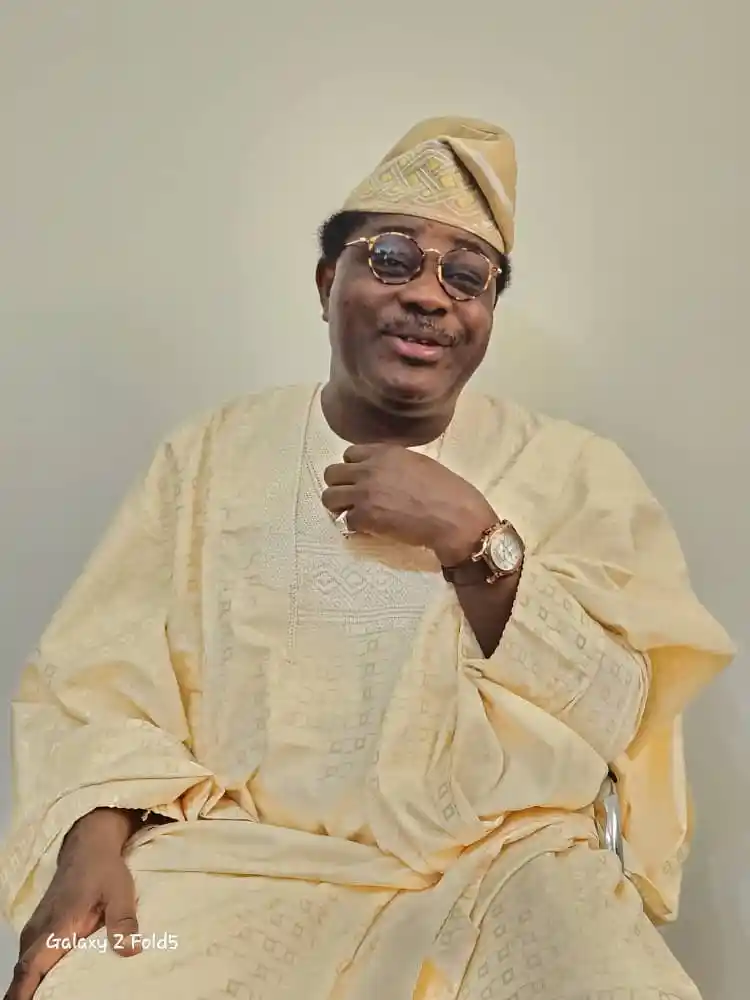
The former Nigerian envoy to Togo has remained hospitalised in Canada after suffering a massive stroke, with outstanding medical bills exceeding CAD $205,000
Related

Poor Funding, Restrictions Stifle Northern Film Industry

Ofala festival: Obi of Onitsha marks 25 Years on throne

Crowds Gather for Rare Sunrise at Egypt’s Abu Simbel Temple


Trending
- Culture4 years ago
The Four Igbo Market Days and Their Significance In Omenala ÌGBÒ
- Business4 years ago
Ooni of Ife Discusses Business and Peace Initiative in Kenya
- Events4 years ago
Glamour, glitz as B’obagunwa Omo’ba Obinrin Akile Ijebu celebrates New Year party (Photos)
- Culture4 years ago
Outrage as Ezendigbo of Ibadanland confers chieftaincy title on Olubadan
- Events4 years ago
Onitoomu of Ito-Omu installs two new chiefs (Video, Photos)
- Events2 years ago
Egbe Bobasete: The New Fashion Sensation Elevates 2024 Ojude Oba Festival (Video, Photos)
 Events3 years ago
NANTAP Convention 2023: Reshaping Nigerian Theatre Arts for economic growth
- Paranormal4 years ago
Black Cat Superstition: Good and Bad Luck Beliefs


