
News
Biashara Afrika in Lome 2026: From AfCFTA talkshop to trade action

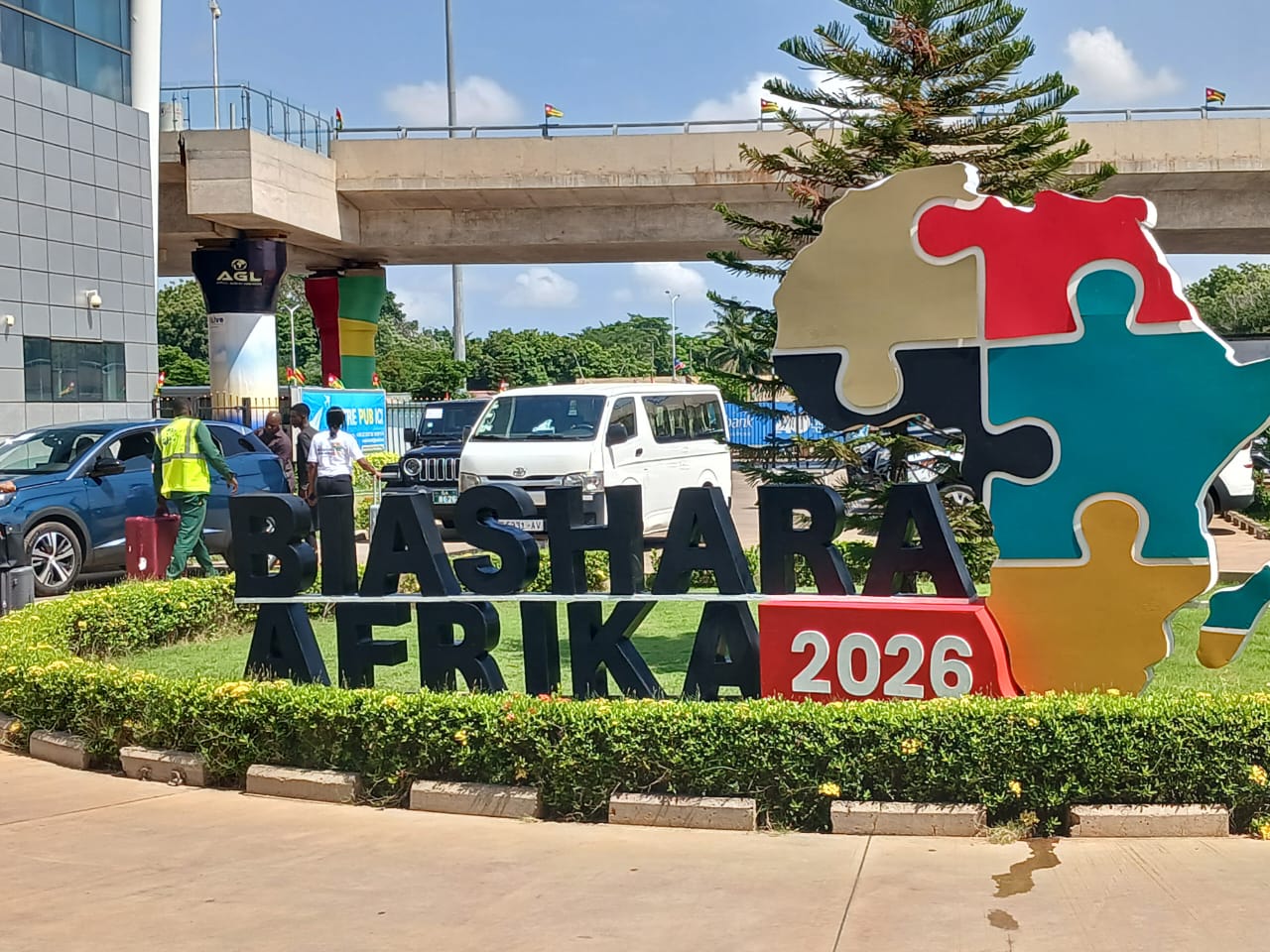
Biashara Afrika 2026 in Lomé advanced AfCFTA implementation, trade facilitation and investment partnerships across Africa
On Sunday May 17, 2026, we flew from Lagos and landed in Lome, the capital of Togo in the West African sub-region for the third edition of Biashara Afrika, the premier continental business forum that brings together African heads of state, ministers, policy makers, SMEs, investors, and entrepreneurs to accelerate the African Continental Free Trade Area Agreement (AfCFTA) implementation, and explore intra-African trade collaborations.
Also read: Africa Must Unite on AI Governance, Media Rights Agenda Urges
Hosted by the government of the Togolese Republic and the AfCFTA Secretariat, Biashara Afrika 2026 doubled as both a trade and investment forum, and the platform for several policy and partnership announcements.
By the way, the name “Biashara” – Kiswahili for “trade” or “business” – reflects the forum’s intent to make African entrepreneurs, SMEs, women, and youth the centre of the AfCFTA story.
The Lome summit which was held at Palais des Congres from May 18 – 20, with the theme, “Powering Africa’s Economic Transformation through the AfCFTA,” marked a shift in AfCFTA implementation – away from protocols and toward practical measures that moved goods, services, and people across borders.
AfCFTA is a flagship initiative of the Africa Union under Agenda 2063.
As of 2025, 54 AU member states have signed the Agreement and 50 have ratified it, making AfCFTA the largest free trade area in the world by membership, launched in 2018, but trading started in 2021.
The AfCFTA Agreement is composed of a framework of Agreement and legally binding protocols. The protocols adopted to date include:
Trade in Goods, Trade in Services, Rules and Procedures on the Settlement of Disputes, Competition Policy, Intellectual Property Rights, Investment, Digital Trade, and Women & Youth in Trade.
After the two previous editions which held in Cape Town and Kigali, conversations during Biashara Afrika 3.0 in Lome can be framed as “Africa for Africa” or “One Africa, One Market” to foster regional integration, unlock value chains, and drive Africa’s economic transformation in a borderless continent with AfCFTA at the helm.
The aim is to create a single market of 54 countries, instead of 54 fragmented markets.
A combined GDP of $3.4 billion and a population of 1.4 billion people gives African companies a huge market and excellent opportunities to scale, without worrying about competition from the US, EU, China, etc.
By reducing trade barriers, and harmonising policies, AfCFTA facilitates cross-border business and investment flows, positioning Africa as a unified economic bloc in global trade where the Pan-African Payment and Settlement System (PAPSS) launched by Afreximbank lets businesses pay in local currencies.
According to Wamkele Mene, Secretary General of AfCFTA Secretariat, “AfCFTA is no longer an aspiration; it is a functioning instrument of integration, powered by institutions, backed by political will, and increasingly owned by the private sector.”
This is the point Tony Elumelu, billionaire entrepreneur and chairman, The Tony Elumelu Foundation, makes all the time with his Africapitalism philosophy, stating how Africa should develop.
Elumelu says the private sector, especially African entrepreneurs and long-term investors, should power Africa’s economic and social development, and unleash wealth and prosperity across the continent.
It explains why he has invested over $100 million since 2015 to train, mentor and fund young African entrepreneurs.
As of the 2024 cohort, the Foundation had selected more than 18,000 beneficiaries across all 54 African countries. Each beneficiary gets $5,000 seed capital, business training, and mentorship.
I am one of the mentors of the programme. In terms of impact, these entrepreneurs have created over 400,000 jobs and generated more than $1.5 billion in revenue collectively.

Nigerian-American Chamber of Commerce delegates
Biashara Afrika and Tony Elumelu’s Africapitalism are, in view, two sides of the same coin because they have similar objectives: to transform Africa economically and create wealth that lifts society.
“But to achieve this moment of economic consequence,” says Mene, “African countries must be ready to power it.”
At the opening plenary in Lome on May 18, different speakers were lined up.
The first to mount the stage to welcome summit delegates was Togo’s Minister of Economy and Strategic Monitoring, Badanam Patoku. He was followed by Nigeria’s Minister of Industry, Trade and Investment, Dr. Jumoke Oduwole.
After her, the AU Champion for AfCFTA, former president Mahamadou Issoufou of Niger, spoke followed by Wamkele Mene, and then the Executive Head of Government/President of the Council of Ministers of Togo, Faure Gnassingbe, in that order.
When Oduwole spoke, she had the courage and presence of mind to announce to the audience that two delegates were denied entry into Togo with their ECOWAS passports, with Gnassingbe listening from his VVIP seat.
It was like a bombshell. As I found out later, the two persons involved were a Nigerian (male), and Ghanaian (female).
The Nigerian delegate had his Nigerian and EU passports while the Ghanaian who lives in Paris has Ghanaian and US passports.
Since they were not arriving from their respective home countries, the immigration officials at the airport insisted that they must obtain the Togolese visa, paid for, on their foreign passports, valid for 48 hours only.
According to the female delegate whom I later met during lunch, she simply said what transpired at the airport was “ridiculous.”
The Nigerian, according to Oduwole, was so angry that he said he may not even think of investing in Togo anymore.
So, you can imagine how Oduwole felt as she narrated the story. She is the incoming Chair of the AfCFTA Council of Ministers, made up of trade/industry ministers from AfCFTA member states.
Her mandate includes focusing on moving AfCFTA from policy paper to actual trade, eliminating non-tariff barriers (cut customs delays, port delays, logistics friction), digital trade infrastructure (roll out standardised single-window platforms for customs clearance), and trade facilitation (make movement of goods and services seamless across Africa).
By the time Gnassingbe spoke, he did not hide his frustration and embarrassment as he directed the relevant authorities in charge of immigration and border control to resolve the visa restrictions highlighted by Oduwole immediately.
The Togolese government reacted appropriately and declared that African passport holders and investors can now enter Togo without visa for stays of up to 30 days, provided they possess valid national passports and complete an online travel declaration before arrival.
Announced by the Minister of Security and Civil Protection, Mr. Calixte Batossie Madjoulba, on May 18 on the sidelines of the summit, the move was welcomed by AfCFTA Secretariat and Afreximbank as a “major breakthrough for mobility, trade, and investment across Africa.”
Participants at the forum had repeatedly stressed that facilitating the movement of African citizens, entrepreneurs, and investors is an essential enabler of inter-African trade.
Togo’s decision provides a practical test case for what visa liberalisation can do for business travel and cross-border trade. All other countries in Africa with visa restrictions for Africans should follow the Togolese example.
Let it be known that Togo was an excellent host of Biashara Afrika 2026 as the country positions itself as a logistics and transport hub for West and Central Africa, thanks to its deep-water port and early AfCFTA implementation.
In moving away from talks to trade action, Nigeria’s Minister Oduwole put it bluntly at the forum: “Africa has spent years negotiating agreements and signing protocols.
Now, Africa must focus on practical implementation that delivers economic opportunities for businesses and citizens.”
Biashara Afrika in Lome embodied that shift.
The conversations were less about tariff schedules and more bout how SMEs actually clear goods, access finance, and find buyers.
The summit emphasisied B2B engagements and side events on trade finance, value chains, and partnerships.
AfCFTA Secretary General Mene stressed that the success of the agreement “will ultimately be measured by the extent to which African businesses are able to trade across borders with greater ease and opportunity.”
The renewed partnership between the AfCFTA Secretariat and the International Trade Centre (ITC), signed on the sidelines, is aimed directly at that goal – creating practical commercial opportunities for SMEs, women-owned, and youth-led businesses.
ITC estimates that that intra-African trade could increase by an additional $22 billion annually by 2029 under AfCFTA through tariff reductions and regional value chain development. The partnership aims to help businesses capture that value.
As a platform for policy breakthroughs, Biashara Afrika functions as a policy accelerator. When governments are ready to announce reforms, the forum provides the continental audience. That dynamic played out clearly in Lome.
A recurring theme was Africa’s need to move beyond raw material export. Speakers highlighted that while Morocco’s automotive sector, Kenya’s fintech, and Nigeria’s new refinery are success stories, they remain isolated.
“What Africa needs from global partners is not charity, but collaboration – technology transfer, fair access to markets, and investment in regional value chains,” one speaker noted.
The summit called for clear financing commitments for value-added industries, cross-border supply chains, logistics, power, and regional manufacturing hubs aligned with AfCFTA.
The low intra-African trade at around 15-18 percent of total trade was often cited as worrisome, compared to over 60 percent in Europe and Asia. The gap is not due to lack of agreements, but to barriers in transport, finance, information and mobility.
When Dr Hortense Me, Executive Secretary, AfCFTA Abidan-Lagos Corridor, disclosed that there are 41 “official” check points between Abidjan and Lagos, the audience was not amused.
Each check point across Africa is a major trade barrier undermining the vision of AfCFTA.
Biashara Afrika 2026 in Lome was not just another talkshop – it was a working session on how to make AfCFTA real for African businesses.
Also read: Africa Soft Power Summit 2026 Explores Culture, Capital and Growth
As I listened to different speakers, there is enough evidence to conclude that Africa is moving from aspiration to action.



News
URGENT APPEAL FOR SUPPORT FOR H.E. ADEBOWALE (DEBO) ADESINA, FORMER NIGERIAN AMBASSADOR TO TOGO.



Nigerian Film ‘Anu (Mercy)’ Wins Best Nollywood Award in Toronto

OLOJO….Ile Ife’s September Gift To Culture

Lateef Adedimeji Honours First 10 Baba Eta Challenge Winners


 Culture4 years ago
The Four Igbo Market Days and Their Significance In Omenala ÌGBÒ
- Business3 years ago
Ooni of Ife Discusses Business and Peace Initiative in Kenya
- Events4 years ago
Glamour, glitz as B’obagunwa Omo’ba Obinrin Akile Ijebu celebrates New Year party (Photos)
- Culture4 years ago
Outrage as Ezendigbo of Ibadanland confers chieftaincy title on Olubadan
- Events4 years ago
Onitoomu of Ito-Omu installs two new chiefs (Video, Photos)
- Events2 years ago
Egbe Bobasete: The New Fashion Sensation Elevates 2024 Ojude Oba Festival (Video, Photos)
- Paranormal4 years ago
Black Cat Superstition: Good and Bad Luck Beliefs
 Events3 years ago
NANTAP Convention 2023: Reshaping Nigerian Theatre Arts for economic growth


