Connect with us

Culture

Anambra losing N40bn yearly for ignoring Ogbunike cave

Published

on

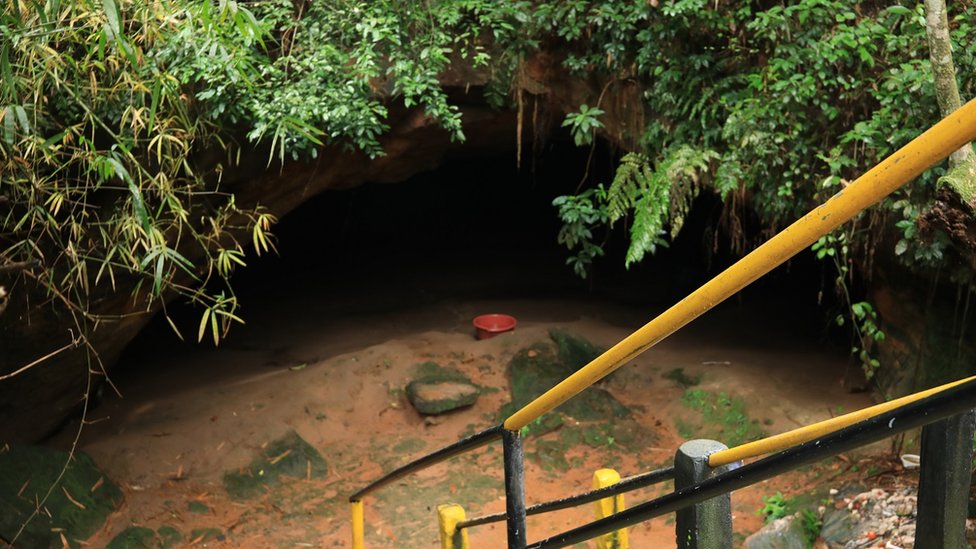
A group, Team Make Ogbunike Great (TMOG) has lamented that Anambra state government was losing about N40 billion internally generated revenue (IGR) yearly, over the failure to invest on and utilise Ogbunike cave, a tourist hub in Oyi local government area of the state.

The TMOG coordinator, Dr. Harris Chuma, who disclosed this at a media parley, described the cave as a billion dollar economic hub with potential to improve the state IGR significantly if well harnessed.

He called on Governor Chukwuma Soludo to consider investing in the Ogbunike cave as according to him, it would help the state diversify her economy, especially as the state will on August 27, 2023 mark her 32 years anniversary.

“It is no longer news that the United Nations Educational, Scientific and Cultural Organization, UNESCO has acknowledged this fact by recognizing the Ogbunike Cave as a World Heritage Centre. This badge of honour is yet to be fully exploited by successive governments of the state, and has been lying fallow, not minding the enormous advantages therein.

“It is pertinent to note that the location of our town Ogbunike is quite strategic. With close proximities to Onitsha, Asaba Airport as well as the Anambra International Cargo Airport, it is a proof that this will be a gold mine when harnessed properly. Apart from the Cave as a structural beauty, Ogbunike Town is blessed with numerous cultural festivals like Nwafor, New Yam Festival, etc, which span across seasons and months of the year, and could be cojoined.

“An independent survey carried out by TMOG has revealed that Ogbunike Town has the potential to add N40bn annually to the economy of Anambra state, if her tourism possibilities are well harnessed. These will come from inflows from tourists, patronage of hospitality resorts and taxes from workers in the hospitality sector of the town.

“Any government interested in increasing the IGR of the state and doesn’t factor in the Ogbunike cave and other revenues surrounding the facility, including the market, parks and other businesses, is not serious. Ogbunike holds a very powerful resource base for the state. If government builds a 5-star hotel around the cave just as it did by Agulu lake, people will come from all areas of the world to explore the cave,” he stated

Culture

Dexter Loko Wins Prestigious 2026 Chinua Achebe Prize

Published

on

 Dexter Loko Wins Chinua Achebe Prize for his 170,000-word fantasy novel, The Bako of Zereshé, at the 2026 ANA convention in Abuja

(more…)

Continue Reading

Culture

Ofala festival: Obi of Onitsha marks 25 Years on throne

Published

on

 Ofala Festival 2026 celebrated Onitsha’s royal heritage as Obi Nnaemeka Achebe marked 25 years on the throne and addressed Nigeria’s economic challenges.

(more…)

Continue Reading

Culture

Crowds Gather for Rare Sunrise at Egypt’s Abu Simbel Temple

Published

on

Abu Simbel

Hundreds of tourists gathered at Egypt’s Abu Simbel temple to witness the twice-yearly sunrise ceremony illuminating Pharaoh Ramses II’s statue

Hundreds of tourists gathered at Egypt’s Abu Simbel temple on Thursday to witness a spectacular sunrise phenomenon in which sunlight illuminated the face of the statue of Pharaoh Ramses II, an event that occurs only twice a year.

Also read: 16 Famous Cultural Festivals That Define India

The ancient astronomical ceremony drew visitors from different parts of the world to the archaeological site in southern Egypt on October 22, one of two dates associated with the phenomenon.

The second occurrence takes place on February 22, when the rising sun illuminates the temple’s interior.

Egyptian tour guide Yasser Fouad described the occasion as extraordinary, saying some visitors had stayed overnight to secure the opportunity to witness the event.

“Today is an extraordinary day, everyone is keen, there are people who stayed over the night, foreigners who actually spent the night in Abu Simbel to see this phenomenon,” Fouad said.

The Great Temple of Ramses II at Abu Simbel dates back to the 13th century BC and is among Egypt’s most prominent archaeological attractions.

Built during the reign of Ramses II, one of ancient Egypt’s most powerful pharaohs, the temple is renowned for its monumental statues and sophisticated architectural design.

The twice-yearly sunrise phenomenon is a major attraction, drawing visitors eager to witness the interaction between sunlight and the temple’s ancient structure.

The dates have traditionally been associated with significant moments in Ramses II’s life.

October 22 is commonly linked to his birthday, while February 22 is associated with his accession to the throne.

However, the precise historical reasons behind the dates remain debated.

Some archaeologists have proposed alternative explanations, including that they may have marked the pharaoh’s coronation and birthday.

Abu Simbel underwent a major international rescue operation in the 1960s, when archaeologists and engineers relocated the temples to protect them from flooding caused by the construction of the Aswan High Dam.

The monumental structures were cut into large blocks and reassembled at a higher location, preserving the site for future generations.

The relocation was one of the most significant archaeological preservation projects of the 20th century.

Despite the move, the temple continues to attract visitors for its ancient Egyptian art, monumental architecture and remarkable alignment with the rising sun.

Also read: 16 Famous Cultural Festivals That Define India

The annual gatherings highlight the enduring appeal of Egypt’s archaeological heritage and the continuing fascination with the astronomical knowledge and engineering achievements of its ancient civilisation.

Continue Reading

Trending