Connect with us

Culture

ADUN Lagos set for 12th biannual Awka Day 2024

Published

on

ADUN Lagos set for 12th biannual Awka Day 2024

The Awka Development Union, Nigeria, Lagos State chapter, the umbrella body of indigenes of the community in Lagos, has outlined a series of events to celebrate the rich cultural heritage and traditions of Awka town in Anambra State at its 12th biannual Awka Day celebration.

The events lined for this year’s celebrations are weaved together with tradition, regality, and opulence.

Chief Francis Sequence Anagor, Chairman of Awka Day 2024 Planning Committee, said that the weeklong event will feature youth day, couples’ night and empowerment day for indigents of the community.

According to Anagor, the event will end on November 23 with a march past by all the villages as well as awards to some deserving members of the community.

He said: “Importantly, there will be live display of our blacksmithing craft.

“Like you are aware, blacksmithing products of Awka of different shapes adorn homes, offices and museums across the world especially in British and American museums.

“All of these tell the story of the Awka man as the originator of blacksmithing trade across the world.

“The event is very important to us because it brings together seven Igbo groups sharing common blood lineage divided into two sections.

“Ifite Section, the senior section, comprises four groups, Ayom-na-Okpala, Nkwelle, Amachalla, and Ifite-Oka followed by Ezinator section, which consists of three groups, Amikwo, Ezi-Oka and Agulu. Each of these groups has a number of villages. All together, Awka comprises 33 villages.”

Anagor said that ADUN Lagos has been an agency through which innovations and development purposes are achieved for the community.

As an agent of social change, ADUN Lagos has demonstrated that, through collective action, it can improve on their material conditions of existence, mobilise against the out-group, and defend a common cause.

Awka is the capital of Anambra State and the region in ancient times was the site of the Nri Civilisation that produced the earliest documented bronze works in Sub-Saharan Africa around 800 AD.

Prior to the 20th century, Awka was famous for metal working.

Its blacksmiths were prized throughout the region for making farming implements, weapons and tools.

Continue Reading
Click to comment

Leave a Reply

Culture

Ofala festival: Obi of Onitsha marks 25 Years on throne

Published

on

 Ofala Festival 2026 celebrated Onitsha’s royal heritage as Obi Nnaemeka Achebe marked 25 years on the throne and addressed Nigeria’s economic challenges.

(more…)

Continue Reading

Culture

Crowds Gather for Rare Sunrise at Egypt’s Abu Simbel Temple

Published

on

Abu Simbel

Hundreds of tourists gathered at Egypt’s Abu Simbel temple to witness the twice-yearly sunrise ceremony illuminating Pharaoh Ramses II’s statue

Hundreds of tourists gathered at Egypt’s Abu Simbel temple on Thursday to witness a spectacular sunrise phenomenon in which sunlight illuminated the face of the statue of Pharaoh Ramses II, an event that occurs only twice a year.

Also read: 16 Famous Cultural Festivals That Define India

The ancient astronomical ceremony drew visitors from different parts of the world to the archaeological site in southern Egypt on October 22, one of two dates associated with the phenomenon.

The second occurrence takes place on February 22, when the rising sun illuminates the temple’s interior.

Egyptian tour guide Yasser Fouad described the occasion as extraordinary, saying some visitors had stayed overnight to secure the opportunity to witness the event.

“Today is an extraordinary day, everyone is keen, there are people who stayed over the night, foreigners who actually spent the night in Abu Simbel to see this phenomenon,” Fouad said.

The Great Temple of Ramses II at Abu Simbel dates back to the 13th century BC and is among Egypt’s most prominent archaeological attractions.

Built during the reign of Ramses II, one of ancient Egypt’s most powerful pharaohs, the temple is renowned for its monumental statues and sophisticated architectural design.

The twice-yearly sunrise phenomenon is a major attraction, drawing visitors eager to witness the interaction between sunlight and the temple’s ancient structure.

The dates have traditionally been associated with significant moments in Ramses II’s life.

October 22 is commonly linked to his birthday, while February 22 is associated with his accession to the throne.

However, the precise historical reasons behind the dates remain debated.

Some archaeologists have proposed alternative explanations, including that they may have marked the pharaoh’s coronation and birthday.

Abu Simbel underwent a major international rescue operation in the 1960s, when archaeologists and engineers relocated the temples to protect them from flooding caused by the construction of the Aswan High Dam.

The monumental structures were cut into large blocks and reassembled at a higher location, preserving the site for future generations.

The relocation was one of the most significant archaeological preservation projects of the 20th century.

Despite the move, the temple continues to attract visitors for its ancient Egyptian art, monumental architecture and remarkable alignment with the rising sun.

Also read: 16 Famous Cultural Festivals That Define India

The annual gatherings highlight the enduring appeal of Egypt’s archaeological heritage and the continuing fascination with the astronomical knowledge and engineering achievements of its ancient civilisation.

Continue Reading

Culture

16 Famous Cultural Festivals That Define India

Published

on

India

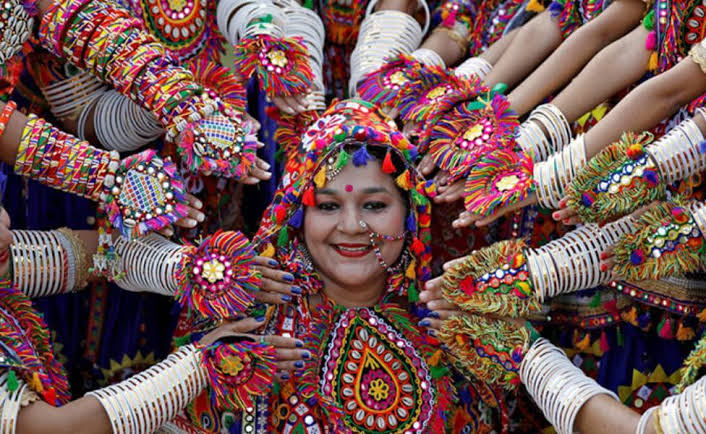
Discover 16 famous cultural festivals in India, from Diwali and Holi to Rath Yatra and the Pushkar Camel Fair, celebrating the country’s rich heritage (more…)

Continue Reading

Trending