Connect with us

Culture

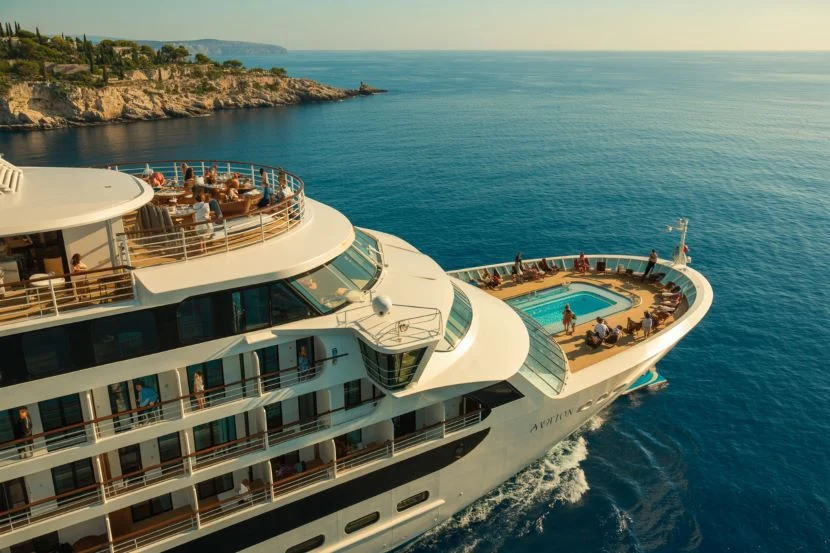
Luxury Cruises Transform into Floating Art Galleries

Published

on

Luxury Cruises

Luxury cruises now feature Picasso, Warhol, and Fabergé, offering art workshops, auctions, and interactive cultural experiences at sea

The world of luxury cruising is undergoing a remarkable transformation, merging high-end travel with world-class art.

Also read: Exeter Bids for 2029 City of Culture to Celebrate Heritage, Innovation, and Sport

Passengers now encounter works by iconic artists such as Pablo Picasso, Andy Warhol, Joan Miró, and Damien Hirst, while also participating in workshops that bring creativity to life at sea.

Luxury ships like Regent Seven Seas Cruises’ Seven Seas Grandeur boast over 1,600 curated art pieces, including the first Fabergé egg permanently displayed at sea.

Similarly, Oceania Cruises features more than 2,000 original artworks, from Cuban masters like Wifredo Lam to contemporary icons, making these vessels floating galleries where each piece complements the ship’s sophisticated ambiance.

Cruises now offer passengers more than passive observation. Windstar Cruises hosts art-themed sailings, including live installations and painting workshops.

Park West Gallery collaborates with cruise lines to run auctions, giving travelers opportunities to acquire works by famous artists like Alexandre Renoir, often accompanied by entertainment and champagne.

Celebrity Cruises offers glassblowing sessions with Hollywood Hot Glass, letting guests craft personalized sculptures under expert guidance.

Art is woven throughout the ships’ interiors. Uniworld’s SS Beatrice features life-sized glass sculptures by Pino Signoretto, Murano chandeliers, and marble floors, while Regent Seven Seas Cruises displays a 12-meter hand-woven tapestry by Walter Goldfarb in its atrium. Every corner becomes an immersive experience in craftsmanship and design.

Luxury cruises are redefining the journey itself, turning ships into floating art museums. Passengers enjoy curated collections, workshops, auctions, and immersive installations, offering a blend of culture, sophistication, and creativity.

Also read: Exeter Bids for 2029 City of Culture to Celebrate Heritage, Innovation, and Sport

By integrating art into travel, these cruises elevate the onboard experience and set a new standard for cultural enrichment at sea.

Continue Reading
Click to comment

Leave a Reply

Culture

Dexter Loko Wins Prestigious 2026 Chinua Achebe Prize

Published

on

 Dexter Loko Wins Chinua Achebe Prize for his 170,000-word fantasy novel, The Bako of Zereshé, at the 2026 ANA convention in Abuja

(more…)

Continue Reading

Culture

Ofala festival: Obi of Onitsha marks 25 Years on throne

Published

on

 Ofala Festival 2026 celebrated Onitsha’s royal heritage as Obi Nnaemeka Achebe marked 25 years on the throne and addressed Nigeria’s economic challenges.

(more…)

Continue Reading

Culture

Crowds Gather for Rare Sunrise at Egypt’s Abu Simbel Temple

Published

on

Abu Simbel

Hundreds of tourists gathered at Egypt’s Abu Simbel temple to witness the twice-yearly sunrise ceremony illuminating Pharaoh Ramses II’s statue

Hundreds of tourists gathered at Egypt’s Abu Simbel temple on Thursday to witness a spectacular sunrise phenomenon in which sunlight illuminated the face of the statue of Pharaoh Ramses II, an event that occurs only twice a year.

Also read: 16 Famous Cultural Festivals That Define India

The ancient astronomical ceremony drew visitors from different parts of the world to the archaeological site in southern Egypt on October 22, one of two dates associated with the phenomenon.

The second occurrence takes place on February 22, when the rising sun illuminates the temple’s interior.

Egyptian tour guide Yasser Fouad described the occasion as extraordinary, saying some visitors had stayed overnight to secure the opportunity to witness the event.

“Today is an extraordinary day, everyone is keen, there are people who stayed over the night, foreigners who actually spent the night in Abu Simbel to see this phenomenon,” Fouad said.

The Great Temple of Ramses II at Abu Simbel dates back to the 13th century BC and is among Egypt’s most prominent archaeological attractions.

Built during the reign of Ramses II, one of ancient Egypt’s most powerful pharaohs, the temple is renowned for its monumental statues and sophisticated architectural design.

The twice-yearly sunrise phenomenon is a major attraction, drawing visitors eager to witness the interaction between sunlight and the temple’s ancient structure.

The dates have traditionally been associated with significant moments in Ramses II’s life.

October 22 is commonly linked to his birthday, while February 22 is associated with his accession to the throne.

However, the precise historical reasons behind the dates remain debated.

Some archaeologists have proposed alternative explanations, including that they may have marked the pharaoh’s coronation and birthday.

Abu Simbel underwent a major international rescue operation in the 1960s, when archaeologists and engineers relocated the temples to protect them from flooding caused by the construction of the Aswan High Dam.

The monumental structures were cut into large blocks and reassembled at a higher location, preserving the site for future generations.

The relocation was one of the most significant archaeological preservation projects of the 20th century.

Despite the move, the temple continues to attract visitors for its ancient Egyptian art, monumental architecture and remarkable alignment with the rising sun.

Also read: 16 Famous Cultural Festivals That Define India

The annual gatherings highlight the enduring appeal of Egypt’s archaeological heritage and the continuing fascination with the astronomical knowledge and engineering achievements of its ancient civilisation.

Continue Reading

Trending