Connect with us

Culture

Creative economy: Ogun, FG sign MoU to boost tourism and cultural projects

Published

on

Creative economy

The Federal Government and Ogun State have signed an MoU to boost Nigeria’s creative economy, establish a cultural village, and promote youth empowerment through tourism and heritage

Creative economy advancement has taken a decisive step forward as the Federal Ministry of Art, Culture, Tourism and the Creative Economy signed a landmark Memorandum of Understanding (MoU) with the Ogun State Government.

Also read: Ogun Governor Dapo Abiodun pledges transformation of Olumo Rock into top tourism destination

The agreement, sealed on Monday by Governor Dapo Abiodun and Minister Hannatu Musawa, is designed to implement strategic cultural and creative projects across the state.

The MoU will see the establishment of a Renewed Hope Cultural Village, the preservation of historical landmarks, capacity-building programmes for young creatives, and the promotion of economic empowerment through culture and tourism.

Governor Abiodun hailed the agreement as a bold stride towards repositioning Ogun State as a leading hub for cultural tourism and creative enterprise.

“Tourism provides employment opportunities by keeping people engaged. Culture, on the other hand, unites our people,” he said.

He emphasised the state’s investment in infrastructure to support tourism and highlighted major events such as Orona Day, Lisabi Day, Remo Day, and the globally acclaimed Ojude Oba Festival as vital assets in the tourism ecosystem.

“Our people are naturally creative but often lack the platform to express their talents,” Abiodun added. “We are witnessing a reawakening of identity and pride in our roots. With increased interest from young people, we want to use tourism as a platform to project our state even further.”

The governor also referenced ongoing work to rehabilitate key heritage sites, including Olumo Rock, Centenary Hall, and Nigeria’s first church and Bible, which he described as national treasures with international appeal.

Minister Musawa, representing the Federal Government, reiterated President Bola Tinubu’s directive to collaborate directly with states to revitalise Nigeria’s diverse cultural landscape.

“Mr President earlier this year announced a plan for the federal government to do a handshake with the states. This MoU is that handshake — one aimed at building a sustainable cultural economy and boosting job creation,” she said.

Under the Renewed Hope Initiative, states will identify their cultural priorities while the Federal Government offers strategic backing. Musawa noted that Ogun’s rich legacy and historical landmarks uniquely position it to lead this new era of cultural revival.

Also read: Ogun to establish art gallery at Olumo Rock in partnership with Nike Art Gallery

The Renewed Hope Cultural and Creative Project is one of the key pillars of Tinubu’s vision to harness Nigeria’s soft power—through arts, music, heritage, and tourism—as a cornerstone of national development.

Continue Reading
Click to comment

Leave a Reply

Culture

Crowds Gather for Rare Sunrise at Egypt’s Abu Simbel Temple

Published

on

Abu Simbel

Hundreds of tourists gathered at Egypt’s Abu Simbel temple to witness the twice-yearly sunrise ceremony illuminating Pharaoh Ramses II’s statue

Hundreds of tourists gathered at Egypt’s Abu Simbel temple on Thursday to witness a spectacular sunrise phenomenon in which sunlight illuminated the face of the statue of Pharaoh Ramses II, an event that occurs only twice a year.

Also read: 16 Famous Cultural Festivals That Define India

The ancient astronomical ceremony drew visitors from different parts of the world to the archaeological site in southern Egypt on October 22, one of two dates associated with the phenomenon.

The second occurrence takes place on February 22, when the rising sun illuminates the temple’s interior.

Egyptian tour guide Yasser Fouad described the occasion as extraordinary, saying some visitors had stayed overnight to secure the opportunity to witness the event.

“Today is an extraordinary day, everyone is keen, there are people who stayed over the night, foreigners who actually spent the night in Abu Simbel to see this phenomenon,” Fouad said.

The Great Temple of Ramses II at Abu Simbel dates back to the 13th century BC and is among Egypt’s most prominent archaeological attractions.

Built during the reign of Ramses II, one of ancient Egypt’s most powerful pharaohs, the temple is renowned for its monumental statues and sophisticated architectural design.

The twice-yearly sunrise phenomenon is a major attraction, drawing visitors eager to witness the interaction between sunlight and the temple’s ancient structure.

The dates have traditionally been associated with significant moments in Ramses II’s life.

October 22 is commonly linked to his birthday, while February 22 is associated with his accession to the throne.

However, the precise historical reasons behind the dates remain debated.

Some archaeologists have proposed alternative explanations, including that they may have marked the pharaoh’s coronation and birthday.

Abu Simbel underwent a major international rescue operation in the 1960s, when archaeologists and engineers relocated the temples to protect them from flooding caused by the construction of the Aswan High Dam.

The monumental structures were cut into large blocks and reassembled at a higher location, preserving the site for future generations.

The relocation was one of the most significant archaeological preservation projects of the 20th century.

Despite the move, the temple continues to attract visitors for its ancient Egyptian art, monumental architecture and remarkable alignment with the rising sun.

Also read: 16 Famous Cultural Festivals That Define India

The annual gatherings highlight the enduring appeal of Egypt’s archaeological heritage and the continuing fascination with the astronomical knowledge and engineering achievements of its ancient civilisation.

Continue Reading

Culture

16 Famous Cultural Festivals That Define India

Published

on

India

Discover 16 famous cultural festivals in India, from Diwali and Holi to Rath Yatra and the Pushkar Camel Fair, celebrating the country’s rich heritage (more…)

Continue Reading

Culture

Netherlands Returns Historic Benin Artefact to Oba Ewuare II

Published

on

Netherlands returns Benin artefact to Oba Ewuare II as the restitution of African cultural treasures gains momentum during his 10th coronation anniversary

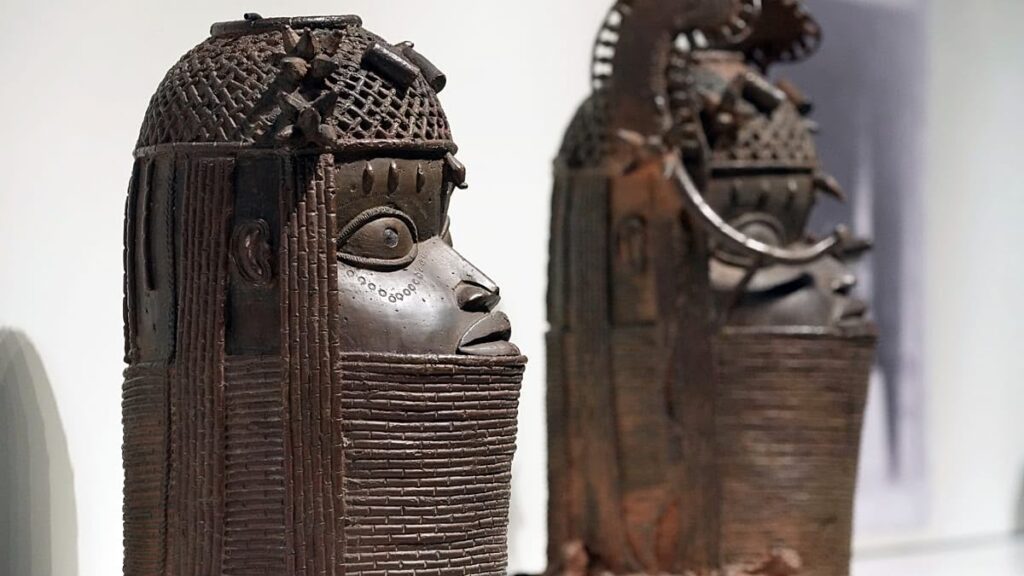
The Kingdom of the Netherlands has returned a centuries-old Benin artefact to the Oba of Benin, Oba Ewuare II, in Benin City, Edo State, as part of activities marking the monarch’s 10th coronation anniversary on October 21, 2026, in a move that adds momentum to international efforts to restore African cultural heritage to its place of origin.

Also read: Detty December Fest Adds DJ Tunez, Tungba Christmas

The artefact, which had been held in the collection of Museum de Fundatie in the Netherlands since 1937, was presented to the monarch by the museum’s executive director, Beatrice von Bormann, in the presence of Portugal’s Ambassador to Nigeria, Paulo Martins Santos.

The handover highlights renewed efforts by museums and governments to address the history of African cultural objects held in foreign collections and reconnect communities with artefacts of historical, cultural and spiritual significance.

Speaking during the presentation, von Bormann said investigations had traced the artefact’s origins to the 18th century.

She expressed satisfaction at its return to the Benin Kingdom, noting that the object had travelled across different parts of the world before reaching its place of origin.

She also explained that the artefact carried spiritual symbolism associated with reincarnation and Olokun, the Benin deity linked to the sea and wealth.

The return comes amid a broader international campaign to secure the restitution of African cultural treasures taken during colonial encounters.

The Benin Kingdom has been at the centre of these efforts, with historical objects from the former Benin Kingdom dispersed among museums and private collections across several countries.

Receiving the artefact, Oba Ewuare II reflected on the longstanding historical relationship between the Benin Kingdom and Portugal, recalling contacts between the two societies dating back to the 15th century.

The monarch said early encounters included efforts to introduce Catholicism into the kingdom but stressed that the Benin people had maintained their traditional religious beliefs and spiritual practices.

“We have a very unique link with the Portuguese. When I was told that the Portuguese Ambassador was around, it was like telepathy, because I had been thinking already about Portugal,” Oba Ewuare II said.

The monarch also expressed surprise at learning that the Vatican recognised African traditional religions, describing the development as significant to wider discussions about the recognition of indigenous African spirituality.

The presentation added historical and cultural significance to the celebrations marking Oba Ewuare II’s 10th coronation anniversary, while drawing attention to the role of restitution in preserving the identity and heritage of the Benin Kingdom.

The return of the artefact also reinforces calls for continued cooperation between African institutions and international museums to establish the origins of disputed objects and facilitate their return where appropriate.

Also read: Detty December Fest Adds DJ Tunez, Tungba Christmas

For the Benin Kingdom, the recovery represents more than the return of an old object. It offers an opportunity to preserve historical knowledge, sustain cultural traditions and pass an important part of the kingdom’s heritage to future generations.

Continue Reading

Trending