
Opinion
Published
1 year agoon

Nosa Osaikhuiwu
Nigeria ethics reform is driving hope as experts call for moral and ethical transformation to end corruption and build a responsible society
Nigeria’s problems have been extensively analyzed, but the solutions proposed and applied to date have been unsuccessful, ineffective and a total failure due to a misdiagnosis of the issues.
Also read: From Ejigbo to the National Stage: The Humble Rise of a Reluctant Politician
Applying wrong medication to an ailment does not cure the condition, but could at times make things worse.
While corruption, poor leadership, unemployment, and decaying infrastructures are commonly cited problems, they are merely symptoms of the underlying ailment afflicting the nation.
A thorough and clinical examination of Nigeria’s situation reveals that the root causes of its problems are unethical behavior and lack of moral compass.
This conclusion was reached by applying mathematical principles of probability.
High moral and ethical standards compels good behaviors, doing the right thing and avoidance of greed and corruption, while its absence is a catalyst for corruption, deceit, criminality and other social vices.
Thus the importance of these values in shaping and ensuring good governance and in nation cannot be overemphasized.
For instance, if we consider two baskets of tomatoes, one with good samples and the other with bad samples, the probability of randomly selecting a good tomato from the good basket is near 100%, while the probability of selecting a bad tomato from the same basket is near 0%.
Conversely, the probability of selecting a good tomato from the bad basket is near 0%, while the probability of selecting a bad tomato is near 100%.
Applying this analogy to Nigeria, it becomes clear that our political leaders are a reflection of our society and that if we have a moral and ethical society, then our leadership will be a reflection of that.
Consequently, there is an urgent need to transform our society morally and ethically- culture change.
However, to effect meaningful change, a cultural and ethical transformation is necessary.
This can be achieved by introducing ethics, integrity, and moral values into school curricula, promoting public awareness campaigns, and encouraging civil society organizations to promote accountability and personal responsibility.
Ultimately, this transformation will require a collective efforts to change the values and norms that have become entrenched in Nigerian society.
The efficacy of culture change from the bottom up and ethical transformation is apparent when you consider the boiling water theory. For example when is been heated, the hot molecules at the bottom migrates to the top while
Adapting the following could be a good starting point:
Changing school curriculum to include the teaching of ethics, moral values and integrity.
Facilitate the emergence of civil society organizations that will promote culture change, accountability and personal responsibility.
Embark on public awareness campaigns to educate the people on the importance of ethics, high moral values and integrity.
Use movies and documentaries to promote the right values and the importance of citizenship.
Enlist the support of other organizations like labor and youth groups in promoting the fight against “Oga Abeg” syndrome.
Call for the eradication of state of origin or local government of origin in all government processes and its replacement with state and local government area of residence.
Educate the people to embrace the concept of atonement, and restitution before forgiveness.
Educate the people on the evils of corruption and how Naira spraying is a gateway to corruption.
Work with various governmental agencies and civil society to promote the training on ethical standards and high moral values.
Promoting a more robust engagement from the National Orientation Agency.
Advocate for passage of lifestyle audit for all public officials
Call for the appointment of a tenured special prosecutor or independent counsel to prosecute all cases of corruption and violation of ethical standards.
There is no question that if our society embraces culture change and apply the above recommendations, we will be on our way to having an ethical nation free from the vices of greed, corruption, and lawlessness.
Also read: Akwa Ibom Food Festival to Showcase 156 Local Dishes
So, let the journey to new Nigeria begin with you and continually ask yourself how are my actions today helping to create the Nigeria of my dreams.
Related
You may like

Why Nigeria needs the All-Nigeria Rotary Peace Summit

When Port Harcourt hosted Wole Soyinka

Nigeria Consulate in South Africa Condemns Fresh Wave of Xenophobic Violence Against Businesses, Churches

Chief Obafemi Awolowo and the fabric of Nigeria’s history and society

Nigeria’s Olayinka Babalola Becomes Rotary International President in Global Breakthrough

The Three-Month Sprint (2): Vocabulary. Concepts. Metaphors
News
Olufuye Urges Stronger Digital Protection of Nigerian Heritage
Published
54 minutes agoon
November 27, 2026
Digital protection of Nigerian heritage takes centre stage as Dr Jimson Olufuye calls for stronger safeguards against cultural exploitation
Related
Opinion
Why Nigeria needs the All-Nigeria Rotary Peace Summit
Published
3 weeks agoon
November 3, 2026
The All-Nigeria Rotary Peace Summit will examine how good governance, justice and equity can help Nigeria build lasting peace
Related
Entertainment
Reel Momentum: Nollywood Releases That Defined Q3
Published
1 month agoon
October 21, 2026
By Olayinka Akanbi
The third quarter of 2026 offered a clear picture of where Nollywood stands today. Across July, August and September, filmmakers told stories centred on family, culture, history, identity and everyday life.
Some films looked inward at personal struggles, while others drew from folklore, real-life events and Nigeria’s past.
Also read: Orlando Owoh Music Festival Set for November 7 in Lagos
There were also signs of change in how films are distributed, with streaming platforms increasing their investment in original content.
July was defined by personal, character-driven stories.

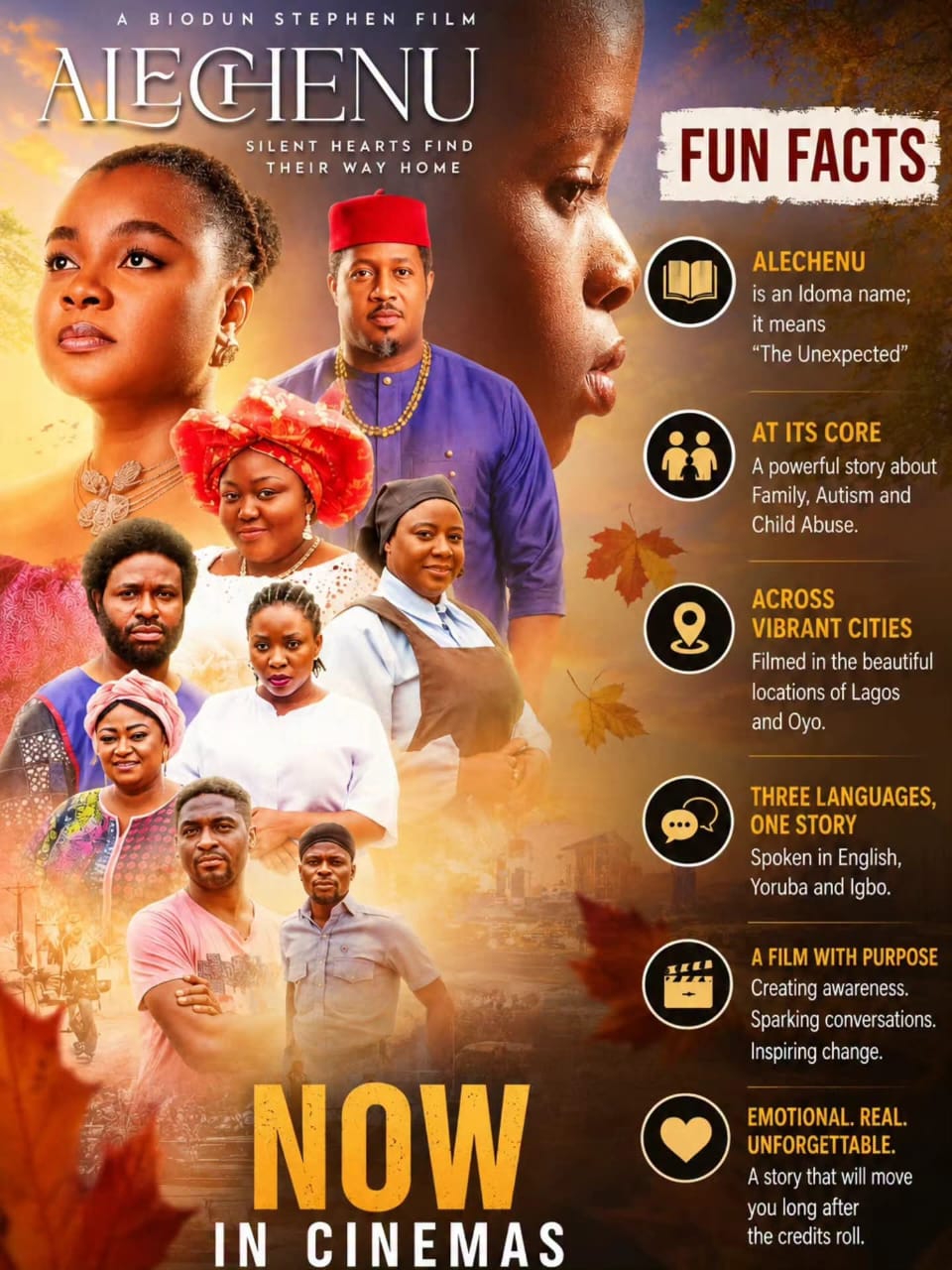
One of the standout releases was Alechenu, directed by Biodun Stephen, which followed the journey of an autistic teenager travelling from Oyo State to Lagos in search of the mother he had never met.
The film explored themes of family, identity and perseverance through a simple yet emotional narrative.
Around the same period, Lami focused on the life of a retired soldier grappling with the emotional effects of war, examining trauma, healing and second chances through the experience of one man trying to rebuild his life.

Another notable release, The Return of Omotara Johnson, marked the return of veteran actress Bukky Wright in a crime drama centred on family secrets and unresolved past conflicts.

Later in the month, films such as Wire Wire and Njem: The Journey continued the trend of storytelling rooted in real-life experiences and social issues.
In August, attention shifted towards history, tradition and culture.

The month opened with Sweet 16, a coming-of-age family drama that also drew attention as one of the final completed performances by the late actor Alexx Ekubo.
This was followed by Ikenga: The Last Festival, a story centred on tradition, power and destiny, featuring veteran actors Pete Edochie and Patience Ozokwor.

Released around the same period, Aláhùn (The Weaver) drew heavily from Yoruba mythology and folklore, highlighting a growing interest in indigenous narratives and local fantasy storytelling.

Towards the end of the month, King Kosoko revisited the life of one of Lagos’ most influential historical rulers, reflecting a broader shift by filmmakers towards exploring Nigeria’s history on screen.
By September, the conversation had expanded beyond storytelling to include audience engagement and distribution models.

One of the month’s notable releases was Mama Deola’s Wedding Story, which became the first original production from Nigerian streaming platform Kava. Its release underscored the increasing role of local streaming services in shaping the industry.
Other films focused on contemporary life and younger audiences.
Ordinary People examined the lives of everyday Nigerians, while 19 explored themes of identity, ambition and relationships from a youthful perspective.
One Gidi Night captured the rhythm and character of Lagos, using the city itself as a central narrative element.
The month also saw the release of Black Market, which generated widespread attention due to efforts to stage a Guinness World Record attempt for the largest film screening audience at Tafawa Balewa Square in Lagos.
Taken together, these releases reflect an industry in transition one that is expanding its storytelling range while experimenting with new platforms, audiences and formats.
Also read: Orlando Owoh Music Festival Set for November 7 in Lagos
Nollywood is not only telling more stories; it is also redefining how those stories are created, distributed and experienced.
Related

EU Project Boosts Western Balkans Creative Economy

Soludo Mourns Pete Edochie, Celebrates His Lasting Legacy

Olufuye Urges Stronger Digital Protection of Nigerian Heritage
Trending
Culture4 years agoThe Four Igbo Market Days and Their Significance In Omenala ÌGBÒ
Business4 years agoOoni of Ife Discusses Business and Peace Initiative in Kenya
Events4 years agoGlamour, glitz as B’obagunwa Omo’ba Obinrin Akile Ijebu celebrates New Year party (Photos)
Culture4 years agoOutrage as Ezendigbo of Ibadanland confers chieftaincy title on Olubadan
Events4 years agoOnitoomu of Ito-Omu installs two new chiefs (Video, Photos)
Events2 years agoEgbe Bobasete: The New Fashion Sensation Elevates 2024 Ojude Oba Festival (Video, Photos)
Events3 years agoNANTAP Convention 2023: Reshaping Nigerian Theatre Arts for economic growth
Paranormal4 years agoBlack Cat Superstition: Good and Bad Luck Beliefs


