
News
From Abuja to the World: The Insecurity Triad and Rise of the Independent African Scholar

Published
5 months agoon
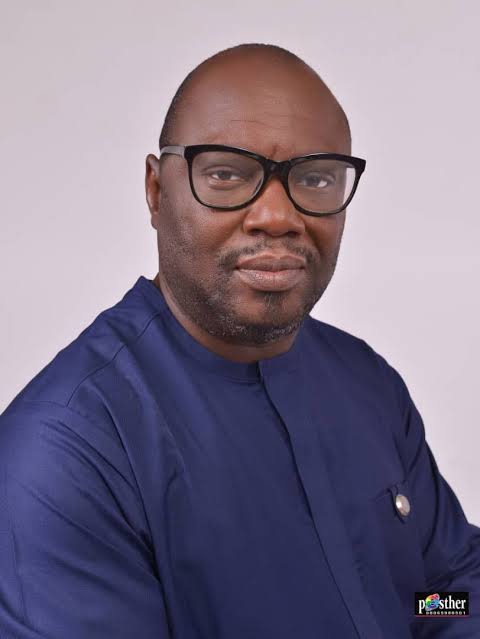
The Insecurity Triad gains global scholarly recognition through ResearchGate, SSRN, Harvard Dataverse, and other platforms
There are moments when an idea moves beyond commentary and begins entering systems.
The week that just ended was one of those moments.
Also read: ‘No Illegality Involved’ — ChannelsTV Defends Acquisition of Abuja Headquarters Land
Within the span of days, The Insecurity Triad experienced three separate but interconnected breakthroughs.
First came the Brussels intervention, last Sunday via an Op-ed piece in BusinessDay by hugely respected Collins Nweke, where the framework was interpreted within a European geopolitical context as an explanatory model for Sahel instability and its implications for Europe’s own strategic future.
Second came its consolidation into the global scholarly archive through repositories including Academia.edu, Harvard Dataverse, Zenodo, SSRN, OSF, and SocArXiv — six distinct platforms representing the full architecture of contemporary open-access scholarship.
Then came a third development whose symbolism may ultimately prove just as significant: my integration into the ResearchGate ecosystem.
At first glance, this may appear procedural. Another profile. Another platform. Another account.
But within the architecture of global scholarship, ResearchGate represents something much larger than social networking.
It is one of the world’s largest academic visibility platforms — a digital meeting ground where researchers, scholars, institutions, laboratories, journals, policy specialists, and interdisciplinary thinkers interact within a continuously evolving scholarly network.
To understand why this matters, one must first understand what ResearchGate actually represents in contemporary academic life.
What ResearchGate Really Is
Founded in 2008 by physicians Ijad Madisch and Sören Hofmayer alongside computer scientist Horst Fischbach, ResearchGate emerged as part of a broader transformation in global scholarship: the migration of academic visibility from closed institutional corridors into digital knowledge ecosystems.
Traditionally, scholarly recognition depended heavily on university affiliation, conference access, institutional journals, and physical academic networks.
ResearchGate altered part of that equation.
With over 25 million researchers from 193 countries, it created a platform where research outputs, citations, working papers, datasets, methodological discussions, and scholarly engagement could circulate beyond the limits of geography and institutional hierarchy.
Today, researchers from universities, think-tanks, laboratories, policy institutes, and independent research environments use the platform to upload publications, track citations, share datasets, engage with disciplinary debates, connect with other scholars, and increase discoverability across fields.
In effect, ResearchGate functions as part archive, part visibility engine, and part intellectual networking infrastructure.
And visibility matters in scholarship.
Because ideas do not influence debates merely by existing. They influence debates by becoming discoverable.
The Platforms and What They Represent
The repositories into which The Insecurity Triad has now been archived are not equivalent. Each represents a distinct layer of global scholarly infrastructure.
Academia.edu, with over 250 million registered users, is the world’s largest platform for academic sharing — the first point of entry into the global research conversation for many independent scholars.
Harvard Dataverse is an open-source repository operated by Harvard University, one of the most trusted and widely indexed academic archives in existence. A deposit there is not a symbolic gesture.
It is a permanent record.
Zenodo, developed under the European OpenAIRE programme and operated by the European Council for Nuclear Research (CERN), assigns each deposit a Digital Object Identifier — a DOI — making it permanently citable in academic literature worldwide regardless of what happens to any journal or institution that might otherwise have hosted it.
OSF — the Open Science Framework — developed by the US Centre for Open Science, supports the full research lifecycle from planning through archiving and dissemination. It has become a standard for researchers committed to transparency and reproducibility.
SocArXiv is a premier open-access repository designed to ensure that social science research is shared rapidly and transparently.
It serves as a vital bridge between rigorous academic inquiry and the public interest.
It was founded in 2016 by Philip N. Cohen, a distinguished Professor of Sociology at the University of Maryland, College Park with a vision to create a “knowledge commons” that returns power to the scholars themselves.
And SSRN — the US-based Social Science Research Network, owned by Elsevier — is where social science scholarship enters the citation economy.
With over one million papers and three million registered users, it is the platform through which working papers reach the global research community before and alongside formal peer review.
It is also, notably, where Nobel Economics laureates Joseph Stiglitz, Esther Duflo, and Paul Krugman circulate their working papers — not because they are required to, but because that is where the serious readership is.
Together, these six platforms represent discovery, archiving, citation, networking, and dissemination.
A coordinated presence across all six creates an unusually broad discoverability footprint for an independent scholar. For a scholar-journalist working from a newsroom in Abuja, it is extraordinary.
The Scholarly Series
Embedded within the developments of the week just ended is a commitment that deserves to be named directly.
Over the next twelve months, The Insecurity Triad will be developed into a ten-part scholarly series — engaging the framework, the Trinity of State Decay theory, and Sahel security dynamics in full academic register. Not as journalism.
Not as commentary. As scholarship.
Part One — The Insecurity Triad (Part 1): Foundations of Convergence and Rival Sovereignty — An Analysis of Money, Land, and Mind (MLM) — has already been published and archived across Academia.edu, Harvard Dataverse, Zenodo, OSF, and SocArXiv, with SSRN forthcoming.
That is the opening instalment of a structured, year-long intellectual undertaking. Nine parts remain.
Why Admission Matters for an Independent Scholar
This is where the significance of these developments becomes clear.
Admission into these global scholarly platforms from outside formal academia carries symbolic and structural weight because it challenges one of the oldest assumptions within global intellectual culture: that legitimate scholarship must originate exclusively from institutional spaces.
For generations, the architecture of scholarship has largely been built around universities as gatekeepers of credibility.
The university conferred identity. The institution supplied legitimacy. The department validated intellectual existence.
But digital scholarly ecosystems are increasingly disrupting that monopoly.
An independent scholar operating from Abuja can now enter the same searchable research environment inhabited by professors in London, policy researchers in Brussels, doctoral candidates in Toronto, and analysts in Pretoria.
That does not erase institutional inequalities. But it narrows intellectual distance.
And that narrowing matters enormously for African thinkers working outside formal academic systems.
The African Reality of Intellectual Production
Across Africa, some of the continent’s most original analytical work often emerges under structurally difficult conditions.
Many researchers operate without university grants, funded research assistants, subscription journal access, institutional methodological support, conference travel funding, or formal research laboratories.
Yet despite these constraints, important ideas continue to emerge.
This is partly because African intellectual production has historically developed through hybrid spaces: journalism, activism, policy observation, civil society, strategic commentary, and independent inquiry.
In many cases, African thinkers are forced to become researchers, archivists, editors, publishers, and distributors simultaneously.
That reality makes entry into global scholarly ecosystems especially important.
Because platforms like Harvard Dataverse, SSRN, ResearchGate and others do more than host publications.
They insert researchers into discoverability networks where their work can be found, cited, discussed, questioned, and expanded upon.
For an independent scholar, that visibility is not cosmetic. It is infrastructural.
The Insecurity Triad’s Expanding Scholarly Geography
Taken together, this sequence reveals the expanding geography of the framework’s circulation
The Insecurity Triad is no longer confined to one medium, one geography, or one intellectual ecosystem.
It now exists simultaneously across media discourse, policy interpretation, repository preservation, and scholarly networking systems.
From Abuja’s grounded observation of insecurity dynamics, to Brussels’ geopolitical interpretation of Sahel instability, to integration within global repository and research infrastructures, the framework is beginning to circulate through multiple layers of international knowledge production.
That circulation matters because frameworks gain strength through repeated engagement across different environments.
Some will critique it. Others will refine it. Some may reject aspects of it. Others may adapt it to new contexts.
But circulation itself is the beginning of intellectual life.
Beyond Personal Achievement
It is tempting to read these developments purely as personal achievement.
That would be too narrow.
What makes this moment significant is what it signals for African media institutions, independent scholars, and emerging researchers across the continent who operate outside traditional academic pathways.
It suggests that the global knowledge system — while still unequal — is becoming more permeable.
An idea no longer needs to begin at Oxford, Harvard, or Sciences Po before it can enter international circulation.
It can begin in Abuja.
It can emerge from a newsroom. From a scholar-journalist’s research desk. From a media-backed analytical unit. From a self-funded intellectual project.
And if sufficiently coherent, persistent, and discoverable, it can travel.
The Deeper Meaning of This Convergence
Perhaps the most important lesson of this moment is not institutional.
It is psychological.
For many African thinkers, the greatest barrier has often not been intelligence or originality, but proximity to recognised systems of validation.
The old model suggested: first secure institutional acceptance, then produce ideas.
The emerging reality increasingly suggests the reverse: produce durable ideas, and institutions may eventually begin to engage them.
That is the quiet significance of last week.
From Brussels to ResearchGate, from repositories to scholarly circulation, The Insecurity Triad is beginning to move through systems that were historically difficult for independent African frameworks to enter.
Not as charity. Not as symbolic inclusion. But through interpretive engagement.
And in the evolving geography of global scholarship, that distinction changes everything.
Interlude
In the last eight or nine weeks, this column has birthed The Insecurity Triad, defined its architecture, examined its dynamics, and from there developed the Trinity of State Decay theory.
There is still much more to explore.
But next week, we step briefly away from the Triad and the Trinity to pay tribute to one of the outstanding intellectual giants of twentieth-century Africa.
Thirty years after his passing, Claude Ake remains profoundly missed.
Also read: Abuja Alternate Festival 2026 Returns, Showcases Nigeria’s Alternative Music
Trust Is Sacred. Stay seasoned.
Related

You may like


Events
Alexander Chukwu, Former Rotary Club of Ikoyi Metro President, Turns 50

Published
3 weeks agoon
September 22, 2026
Engr. Alexander Chukwu celebrates his 50th birthday with family, friends and colleagues under the theme, “Celebrating 50 Years of God’s Faithfulness.”
Related
News
URGENT APPEAL FOR SUPPORT FOR H.E. ADEBOWALE (DEBO) ADESINA, FORMER NIGERIAN AMBASSADOR TO TOGO.
Published
1 month agoon
August 29, 2026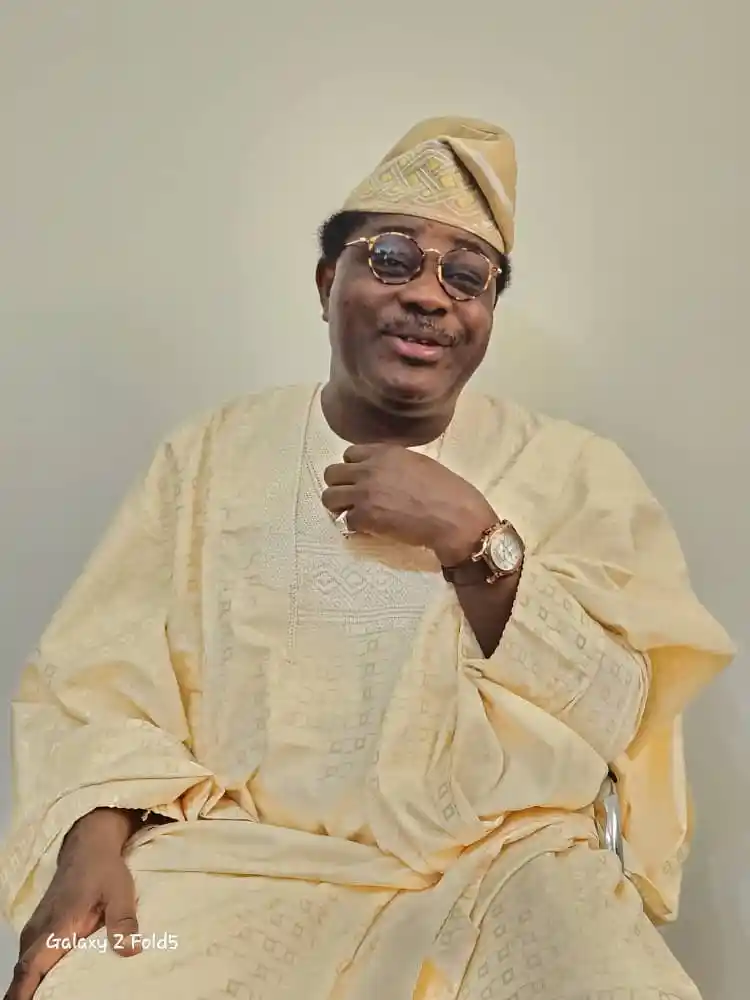
The former Nigerian envoy to Togo has remained hospitalised in Canada after suffering a massive stroke, with outstanding medical bills exceeding CAD $205,000
Related
News
West Africa Project Fair Schedules Education, Promotions Webinar
Published
1 month agoon
August 29, 2026
WAPF will host the virtual session on September 1 to promote regional project opportunities and strengthen partnerships among Rotarians and international supporters
Related

Nigerian Film ‘Anu (Mercy)’ Wins Best Nollywood Award in Toronto

OLOJO….Ile Ife’s September Gift To Culture

Lateef Adedimeji Honours First 10 Baba Eta Challenge Winners


Trending

 Culture4 years ago
The Four Igbo Market Days and Their Significance In Omenala ÌGBÒ
- Business3 years ago
Ooni of Ife Discusses Business and Peace Initiative in Kenya
- Events4 years ago
Glamour, glitz as B’obagunwa Omo’ba Obinrin Akile Ijebu celebrates New Year party (Photos)
- Culture4 years ago
Outrage as Ezendigbo of Ibadanland confers chieftaincy title on Olubadan
- Events4 years ago
Onitoomu of Ito-Omu installs two new chiefs (Video, Photos)
- Events2 years ago
Egbe Bobasete: The New Fashion Sensation Elevates 2024 Ojude Oba Festival (Video, Photos)
- Paranormal4 years ago
Black Cat Superstition: Good and Bad Luck Beliefs
 Events3 years ago
NANTAP Convention 2023: Reshaping Nigerian Theatre Arts for economic growth


